
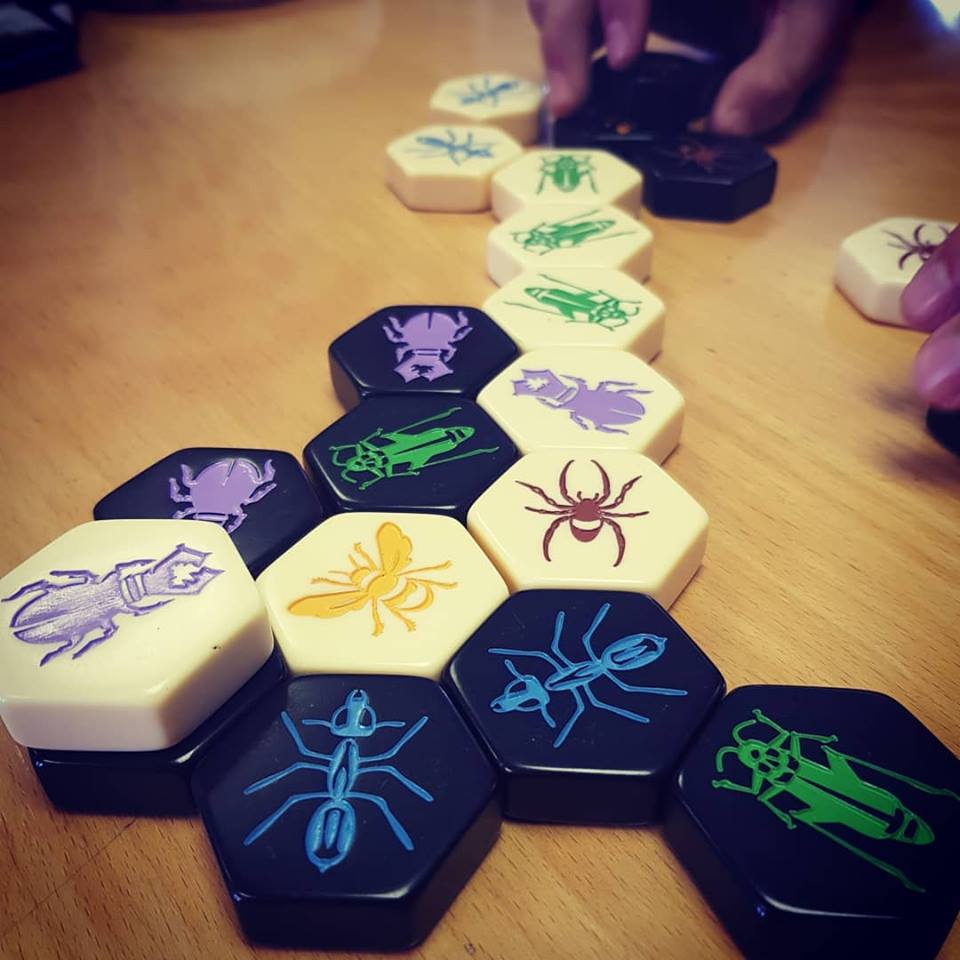
Where is this year even going? That’s us in August already. This is not acceptable. I suppose this means I need to pick a game of the month for July. It’s Hive. You knew that. It’s in the title.
Hive was designed by John Yianni and published by Gen42 Games. Released in 2001, Hive has gained a dedicated fan base and has become a classic among abstract strategy games. The game is for two players and in playing it with gamers and non-gamers, and both children and adults, I’d say it’s pretty accessible to a wide range of players.

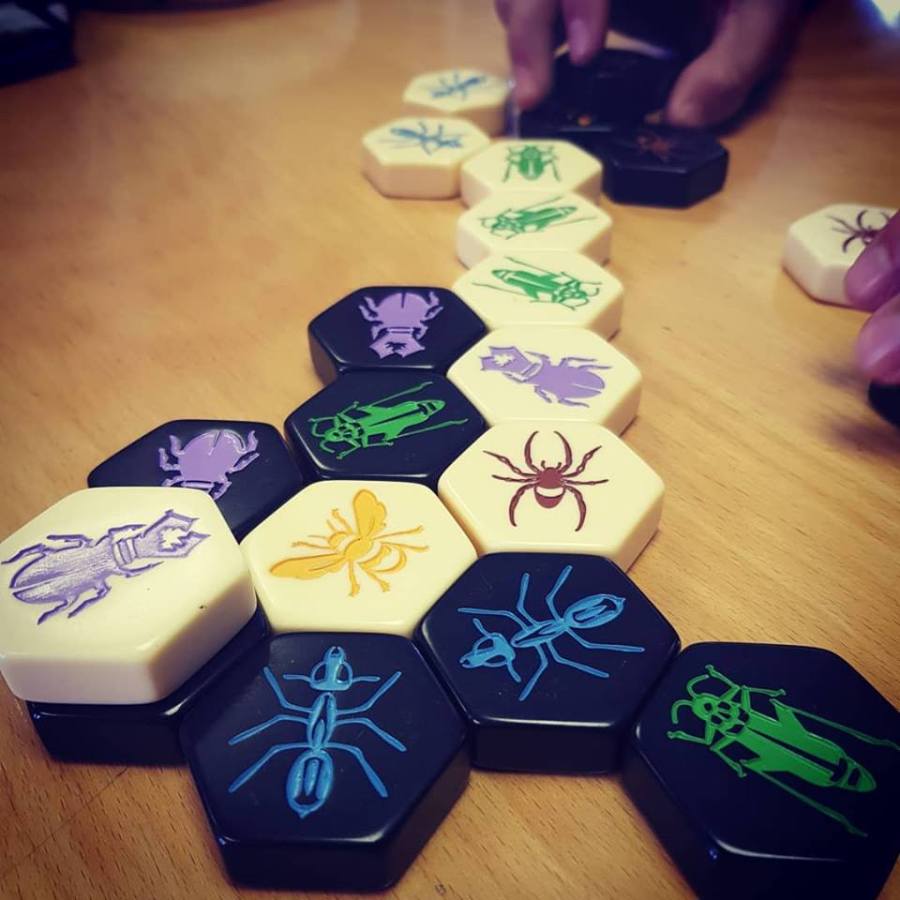
In Hive, players take on the roles of rival insect queens vying for control of the hive. The objective is simple yet challenging: to surround the opponent’s queen bee while protecting one’s own queen bee. The game does not use a traditional game board; instead, it is played using hexagonal tiles representing different insect pieces. Each different insect piece has its own unique movement rules.
At the beginning of the game, the players place two initial tiles and must place their queens within their first four turns. Players take turns placing their tiles adjacent to their own existing tiles (after the initial tiles are placed, a player may not place a tile adjacent to one belonging to their opponent) or moving their pieces according to their individual movement rules. My favourite tile is the Grasshopper. They move by jumping over tiles in a straight line. You can really change the whole feel of the board with a well-placed jump.
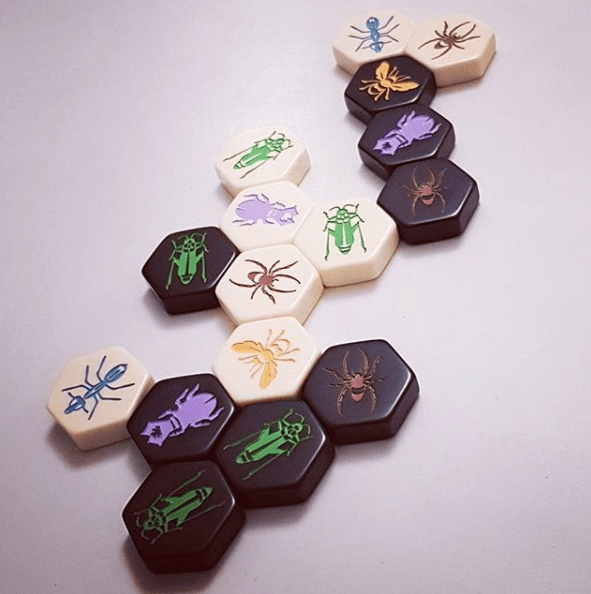
The game’s brilliance lies in its simplicity and the absence of a board. Players must think strategically about the positioning of their insects, as there is no specific grid to adhere to, making each game unique. The goal is to outmaneuver the opponent’s pieces, using the special abilities of each insect to gain an advantage and surround the opposing queen.
Hive is a masterclass in abstract strategy gaming. Its rules are straightforward, making it easy for new players to learn, but the depth of strategy and decision-making opportunities it offers will keep even seasoned players engaged for hours. I rarely play a single round of this game. You have to keep going, you know?
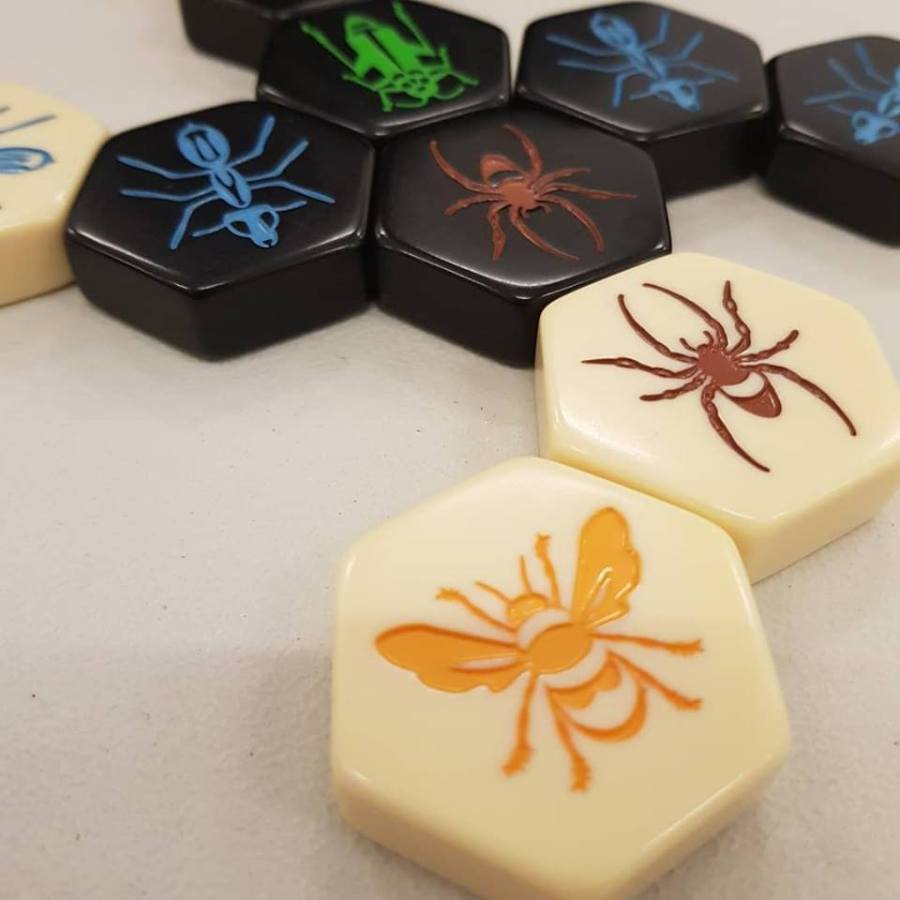
The absence of a game board gives Hive a distinctive and portable nature. I’ve played this at home, at the games club, at work, and down the pub. The hexagonal tiles are durable and have a satisfying weight and feel to them. They are also visually appealing and add a bit of charm to the gameplay.
What makes Hive an unusual pick for me is its perfect information and symmetry. I tend to be more into games built on asymmetry. There are also no luck-based elements, with no dice or cards to rely on. This means that victory depends solely on a player’s strategic prowess, foresight, and ability to adapt to changing situations. The game rewards creativity and clever use of each insect’s abilities.
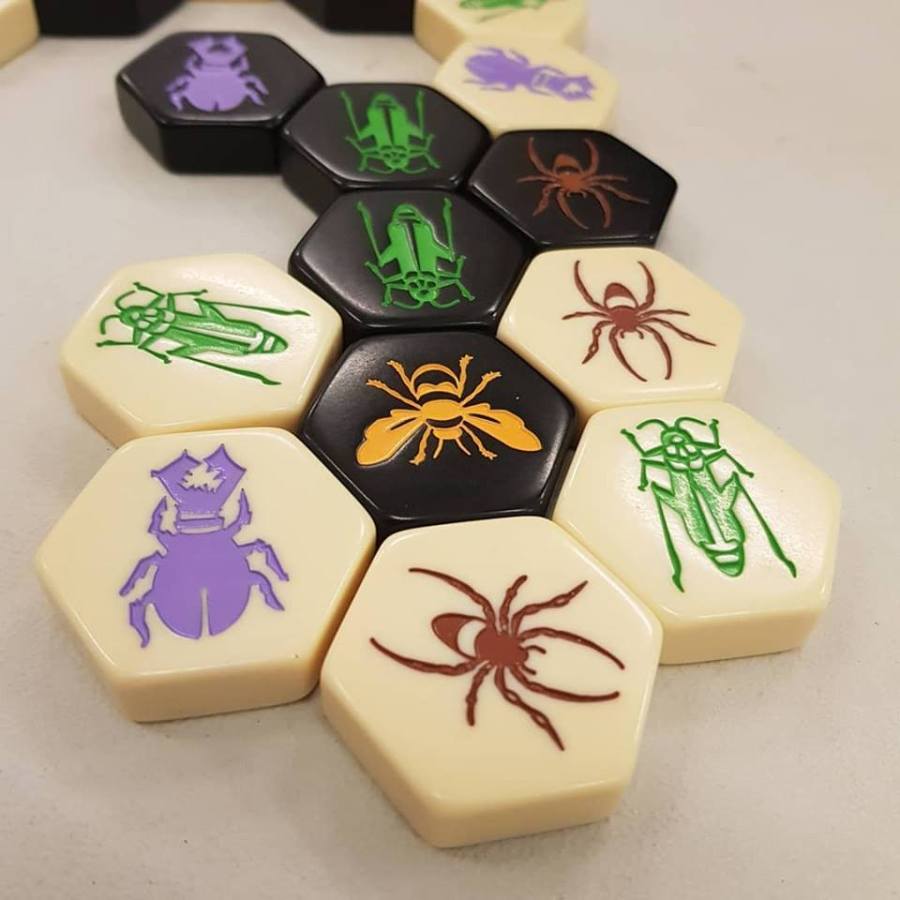
Hive’s short playtime, typically lasting around 20-30 minutes, makes it a solid choice for quick matches or multiple games in a row. The back-and-forth nature of the game builds tension as players continuously anticipate and react to their opponent’s moves.
The only minor drawback is that Hive is designed exclusively for two players. While this ensures a highly focused and intense experience, it may not suit larger gaming groups. However, the game’s brilliance in its simplicity and strategic depth more than makes up for this limitation.
Hive is a timeless classic in the world of tabletop gaming. Its simple and intuitive rules, high portability, and addictive gameplay make it a must-have for any strategy game enthusiast. Whether you’re a seasoned gamer looking for a quick yet mentally stimulating challenge or a beginner seeking an entry point into the world of abstract strategy games, Hive is an excellent choice for this month’s featured game.
 No Rerolls
7 Comments