

The Magic: The Gathering Commander format has seen some significant changes with the latest banlist update, announced on September 23, 2024. The Commander Rules Committee has made bold moves to ensure the format remains balanced and enjoyable for all players. Here’s a breakdown of the recent updates and what they mean for the Commander community.
The Banned Cards
- Dockside Extortionist: This card has been a staple in many Commander decks due to its ability to generate a massive amount of treasure tokens quickly. However, its power level has often led to unbalanced games, prompting its ban.
- Jeweled Lotus: Known for enabling explosive starts, Jeweled Lotus allows players to cast their commanders much earlier than intended. This card’s ban aims to slow down the early game and promote more interactive and strategic play.
- Mana Crypt: Another card that facilitates rapid mana acceleration, Mana Crypt has been a controversial card for its ability to create significant early-game advantages. Its ban is intended to curb these explosive starts and ensure a more balanced mid-game.
- Nadu, Winged Wisdom: This legendary creature has been a point of contention due to its powerful abilities that can dominate games. The ban on Nadu is part of a broader effort to maintain a healthy and diverse metagame.
The Commander format is known for its creativity and social gameplay. The recent bans reflect the Rules Committee’s commitment to fostering an environment where games are slower-paced and more interactive. By removing cards that enable rapid mana acceleration and early-game dominance, the Committee aims to give players more time to develop their strategies and enjoy the unique aspects of Commander.
The recent bans will have a significant impact on various Commander decks, particularly those that relied heavily on the banned cards for their strategies. Here’s a closer look at how some popular archetypes might be affected:
1. Treasure-Based Decks
Dockside Extortionist was a key card in treasure-based decks, providing a massive influx of mana. Without it, these decks will need to find alternative ways to generate treasure tokens. Cards like Smothering Tithe and Revel in Riches might see increased play as replacements.
2. Fast Mana Decks
Decks that relied on Jeweled Lotus and Mana Crypt for explosive starts will be significantly slowed down. These decks will need to adjust by incorporating more traditional ramp spells like Cultivate and Kodama’s Reach to maintain their mana acceleration.
3. Combo Decks
Many combo decks used Mana Crypt and Jeweled Lotus to quickly assemble their combo pieces. The bans will force these decks to adopt a more balanced approach, potentially incorporating more card draw and tutoring effects to compensate for the slower mana development.
4. Nadu, Winged Wisdom Decks

Decks built around Nadu, Winged Wisdom will need to find a new commander. Players might look to other powerful blue commanders like Urza, Lord High Artificer or Jin-Gitaxias, Progress Tyrant to lead their decks. The loss of Nadu will push these decks to explore different strategies and synergies.
Overall, the bans will hopefully lead to a slower, more interactive meta. Players will have more time to develop their boards and interact with opponents, leading to longer and potentially more strategic games. This shift could also encourage the use of underplayed cards and strategies, diversifying the Commander landscape.
As expected, the banlist update has sparked a variety of reactions within the MTG community. Some players support the changes, believing they will lead to more balanced and enjoyable games. Others, however, are disappointed to see some of their favorite cards banned and have even started petitions to reverse the decisions.
In addition to the banlist update, the Rules Committee has announced new initiatives, including updates to the Silver-Bordered Project and other community-focused events. One notable event is the second annual Sheldon Menery Charity Stream, which will take place on September 28 and 29. This event honors the late Sheldon Menery, a beloved figure in the MTG community, and aims to raise funds for cancer research.
The Silver-Bordered Project is an initiative by the Commander Rules Committee to provide guidance on the use of silver-bordered and acorn-stamped cards in the Commander format. The project aims to classify all silver-bordered and acorn-stamped cards into three categories:
These are fine: Cards that could mechanically exist within Magic’s existing rules framework and could be printed in a black-bordered set.
These could be fine if you’re willing to play along: Cards that aren’t fully supported by Magic’s ruleset but are intuitive and non-problematic.
These are not okay: Cards that would likely be banned in Commander due to negative play patterns and interactions.
The project was initiated to address the community’s interest in using silver-bordered cards in Commander games. It was not mandated by Wizards of the Coast but was driven by feedback from players who enjoy the fun and casual nature of these cards.
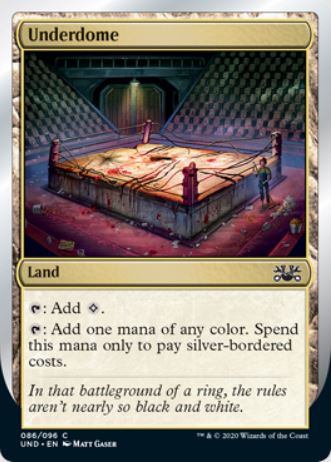
While the project will not change the legality of silver-bordered or acorn-stamped cards in official Commander games, it will provide a comprehensive guide to help players navigate their use in casual settings. This initiative reflects the Rules Committee’s commitment to maintaining a fun and balanced environment for all Commander players.
The Silver Border Project has sparked discussions within the MTG community, with many players excited about the potential for more creative and whimsical gameplay. The Rules Committee has emphasised that this project is about enhancing the social and fun aspects of Commander.
If you’re looking for MTG singles, please consider using our Big Orbit Cards affiliate link to find your cards whilst also supporting our site.
 No Rerolls
4 Comments