
I recently tried out a new (to me) board game; Nucleum. Nucleum is a strategy board game that has been generating quite a buzz in the tabletop community and in our local group. Having only played one game of Nucleum, I thought I’d share some initial thoughts.
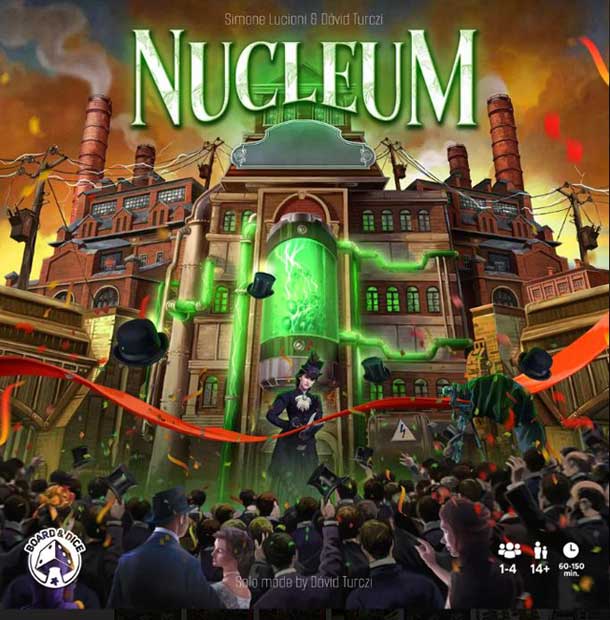
Nucleum is a heavy economic strategy game set in an alternate 19th-century Europe where uranium has been discovered as a power source. Players take on the roles of budding industrialists, aiming to harness this power, supply it to cities, and make a fortune in the process. Capitalism, yo!
The game mechanics are a blend of familiar elements from other strategy games, notably Brass: Birmingham and Barrage. Players lay down tiles to create networks for transporting power, and these same tiles are used to perform various actions. This dual-purpose design adds a layer of strategic depth, as players must carefully plan their moves to optimise both their network and their actions. I actually really liked how the tiles worked, though I don’t think I managed my own tiles very well in this first game. Certainly, there are certain action tiles I would not have burned as early as I did if I had fully understood the implications from the start.
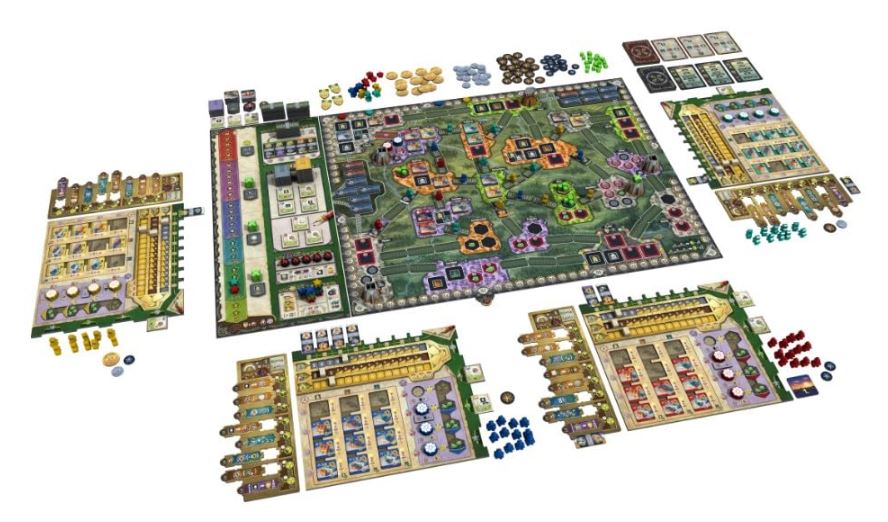
One of the first things I noticed is that Nucleum has a steep learning curve. The rules are dense and can be overwhelming at first, but once you get the hang of it, the game opens up and becomes incredibly engaging. The initial plays might be bumpy, but the complexity adds to the overall challenge and satisfaction. It does become a little frustrating during that first game that you may well have severely limited your later options by making poor, uninformed decisions during the early stages.
As a fan of asymmetry, I enjoyed the fact that there was some variation between players, mostly via player powers and the research paths that each player can take. I also liked the huge number of track/action times that can be acquired, objectives that can be completed, and rotes that can be developed.
In my game, I focused on securing early access to coal, largely because I wasn’t fully understanding how the uranium worked. That helped me to build and power some buildings early on, helping me to get off to a decent start. That said, my game did start to fall behind as other players got access to this more powerful energy source, and expanded out more slowly, but more sustainably, without leaving themselves with fewer options when it came to later actions.
Nucleum feels like a reasonably polished, well-produced game that will appeal to fans of complex strategy games. Usually, that’s me. In this case, I’d be open to playing again and I think I’d enjoy it a lot more second time around, but I’m not champing at the bit to return to it. While it may not be the easiest game to learn (and it’s a lot to set up and tidy away), the depth and strategic options it offers does make it a rewarding experience. If you’re looking for a game that scratches that Brass itch, Nucleum is definitely worth a try.
 No Rerolls
3 Comments