

It’s that time of year again for what might just be the most prestigious gaming award that can be given out by mere mortals! Welcome to the NoRerolls Top 50 Games of 2024 list; an arbitrary ranking of the games that I love.
This is a list of my personal top 50 games at this point in time. My choices are not limited to games from this calendar year, but instead, represent my current thoughts on the top 50 games to me. Next year, some of the games featured may move up and down as my opinions change and I get the chance to play more games or revisit old favourites.
This series will comprise 5 posts, each covering 10 games as we work down from number 50 to number 1.
This year, this section of the list has a couple of new entries, some returning classics, and then a few games that were previously higher on the list. Let’s kick things off, shall we?
40: Mutant Year Zero

Previous Position: 37 (-3)
Year: 2014
Designer: Tomas Härenstam, Petter Bengtsson, Chris Birch, Anders Blixt, Thomas Johansson, Nils Karlén, Kosta Kostulas, Chris Lites
Publisher: Free League
Plays: I dunno, how big is your table? in hours to years, pal
Any book by Free League is a work of art. Mutant: Year Zero is no exception. The game itself is also really good. The underlying system that Free League designed is absolutely solid, and is a fantastic example of a nice, modern dice-pool system. It’s now been rolled out to other games like Alien, Blade Runner, Coriolis, and others.
I’ve had a lot of fun with this game over the past couple of years. My favourite bit is actually not the core system, but rather the base-building aspect, which I’ve written about previously.
My last attempt at running this did not go well. It started fine, but it just ended up drifting apart and was ultimately very unsatisfying. That disappointment might be a factor as to why it dropped quite so much last year, and then a little more this year. With the right group, I’d love to dive back into the wasteland.
39: Clank

Previous Position: 46 (+7)
Year: 2016
Designer: Paul Dennen
Publisher: Renegade Game Studios
Plays: 1-4 players in ~30 to 60 minutes
In 2023, I was feeling a little burnt out on Clank. This year, I’m feeling better about it again and it is rising back up in the rankings. Clank is a union of two genres that I really like. Those are the deck builder and the dungeon crawl. It works really well, with the engine you build with your deck coming to represent your hero and his or her capabilities. Focus and optimise your deck for a focused and optimised hero. Fill it with random nonsense and get… well… not that.
The game can get a tad repetitive, hence the drop in placement in both 2022 and 2023. I love the deck building, but the dungeon crawl gets a little stale if overplayed. Maybe it’s just that it’s the same 2 maps, over and over. There are expansions with new maps (and Catacombs, which generates a randomised map through exploration), but I’ve not picked any of these up. That said, still a great game!
38: Tiny Towns
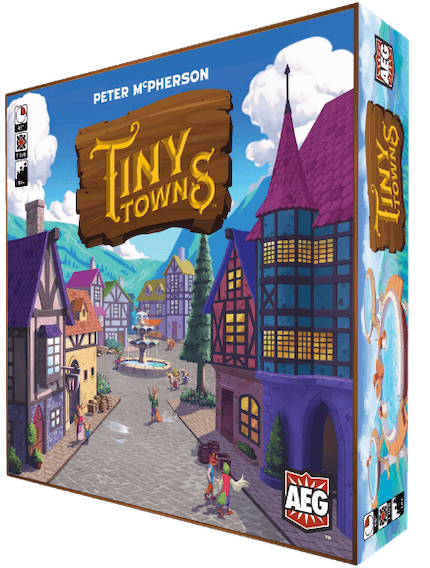
Previous Position: 10 (-28)
Year: 2019
Designer: Peter McPherson
Publisher: AEG
Plays: 1-6 Players in ~45 to 60 minutes
Okay, bear with me on this one. Tiny Towns made it into my top 10 last year but now languishes at number 38? Look, Tiny Towns is still a gem of a tabletop game. The core rules are very accessible, but they quickly give way to the satisfyingly complex experience of building your (tiny) town. It can also be thoroughly infuriating. I’m looking for a bit less fury at the moment, I suppose.
I love the player interaction that’s possible here, the variable powers provided by the different special buildings, and the replayability afforded by the different options that you have for the rules for each type of building. That’s all great.
I could see this game – our Game of the Month for August 2023 – going back up the rankings next year, just depending on how open I am to recreational rage.
37: Love Letter
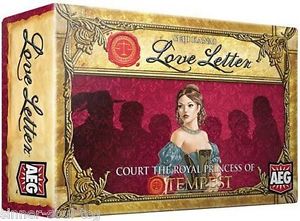
Previous Position: Returning to the list
Year: 2012
Designer: Seiji Kanai
Publisher: AEG
Plays: 2-4 players in ~20 minutes
Love Letter is a game that does a lot with a little. It is a microgame that consists of a few cards and some cubes. Despite such a small and unassuming package, the game packs in a really enjoyable experience with lots of potential for some really good interactions built around bluffing and deduction. Y’all know I really like it.
There are also lots of different versions of this game, which can provide an experience that may be better suited to your group than the dry, courtly theme of the Tempest Universe version that AEG originally released in the West.
This game previously slipped off the list as it had not seen much play, but it’s started making it back onto the table and, indeed, back into my heart. It’s not an exciting game, but it’s a nice experience.
36: Carcassonne

Previous Position: 40 (+4)
Year: 2010
Designer: Klaus-Jürgen Wrede
Publisher: Z-Man Games
Plays: 2-5 players in ~30 to 45 minutes
I’m appreciating simpler games these days and you don’t get much simpler than Carcassonne. As I mentioned in my commentary on Tiny Towns, I’m also looking for less aggravation. Carcassonne ticks that box, definitely. Yeah, Carcassonne continues to be a really cool, really simple game. It’s one that I love playing with kids and adults; with gamers and non-gamers.
There’s just something nice about taking a tile and playing a tile. There’s something rewarding about seeing the map grow with each turn, taking strange twists and turns. There’s something really special about this game. I actually have a few expansions in the German big box edition that I have, but these rarely see play as I just love the purity and simplicity of the original, core game.
35: Dice Miner

Previous Position: 50 (+15)
Year: 2021
Designers: Joshua DeBonis, Nikola Risteski
Publisher: Atlas Games
Plays: 1-4 players in ~20 to 30 minutes
A delightfully innovating dice game, Dice Miners plays around with the physicality of these little luck cubes, having players draft dice to add to their own collections. These are then rolled to generate points, effects, and interactions. The game is really simple at its core, and has a nice tactile element to it.
The game has a good mix of luck and skill. You can plan things out and make good choices on what dice to mine, but you are still ultimately at the mercy of the little blighters. You can stack the odds in your favour, but there’s still the chance that your rolls just won’t back it up. I like this, as it gives newer, less experienced players a chance at victory, even if they’re not as familiar with the different combinations and synergies. There’s even a bit of asymmetrical play – always a big plus for me – with the inclusion of variable player powers.
It rose up the ranks for me this yea by just being fun and interesting. It’s a reliable little game, this.
34: Dominion
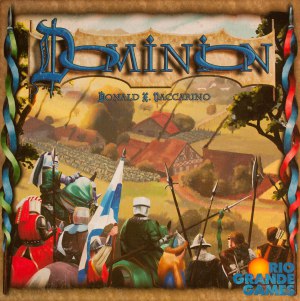
Previous Position: 38 (+4)
Year: 2008
Designer: Donald X. Vaccarino
Publisher: Rio Grande Games
Plays: 3-4 players in ~30 minutes
The big daddy of deck-building games has risen slightly up the ranks this year, following a big tumble last year. I love this game. It’s just the purest of its kind, and it’s a game I can play with lots of different people. It’s also great that my wife loves it, so it can make it onto the table quite often. I’ve not gone overboard with expansions, but I kind of wish I had. There’s still time…
The biggest thing that sets this game apart from many other deck builders is that you actually have to make decisions about what cards to play and what cards to buy. Games like the DC Comics Deck Building Game and Star Realms, although both fantastic, give you no reason to not just play all of your cards on every turn. Dominion only allows you to play one action card and make one purchase as standard. I’ve written about this before, at length, but it really does come down to the structure. I like Dominion’s structure and the decisions it forces the player to make.
33: Euphoria: Build a Better Dystopia

Previous Position: 29 (-4)
Year: 2013
Designers: Jamey Stegmaier, Alan Stone
Publisher: Stonemaier Games
Plays: 2-6 players in ~60 minutes
I backed the Kickstarter for this years ago and it sat on the shelf unplayed for several years until I finally broke it out shortly before the first lockdown. This is not a new story… In this case I was completely missing out. The game is fantastic. I like worker placement games, but I only actually had Lords of Waterdeep, and I was getting bored of that. Adding this game to the mix felt pretty good, and I’ve revisited it a fair bit since.
The game is a fun worker placement with some cool resource management and excellent theming. I love the theme, which sees each player try to build their own little dystopian society in the post-apocalyptic hellscape. Fun!
32: Ark Nova
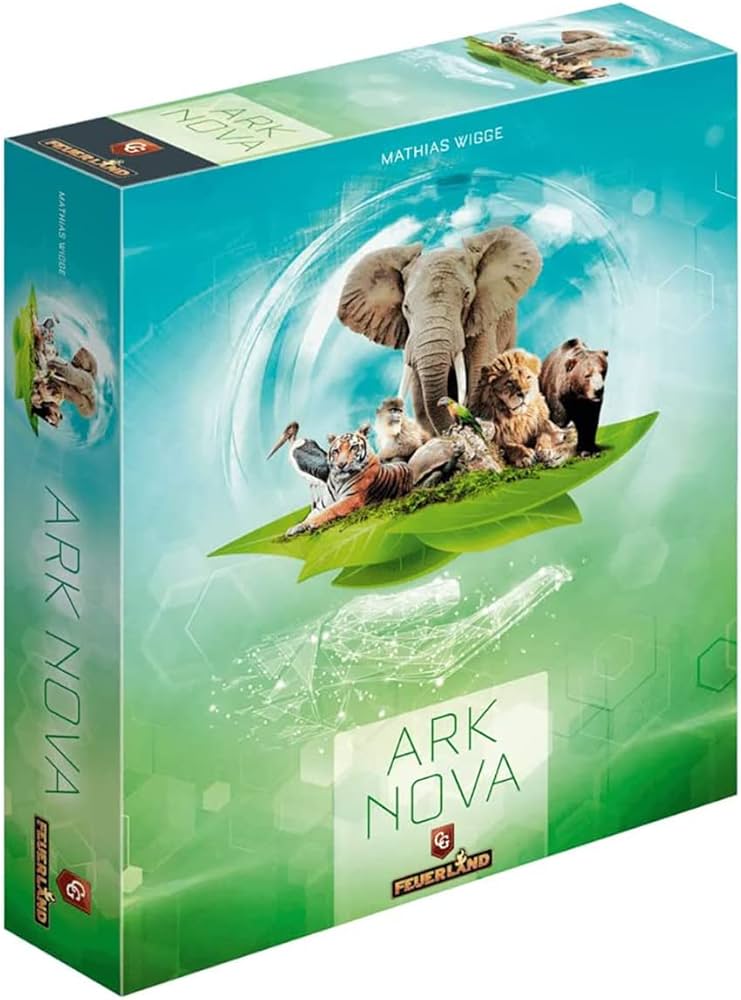
Previous Position: New to the list
Year: 2021
Designer: Mathias Wigge
Publisher: Feuerland Spiele
Plays: 1-4 players in ~90 to 150 minutes
I really enjoyed my games of Ark Nova. I like to describe it as a combination of New York Zoo and Terraforming Mars. Is this a great description? No, but it’s fine.
The game is large and takes up a lot of space, but it’s not quite as complicated as it looks. Something I really appreciate about the game is the fact that it give you options. It gives you a whole range of different things that you can do and/or try to do in your quest for zoological domination.
I feel that this will likely rise higher in the rankings if I can get it onto the table more next year.
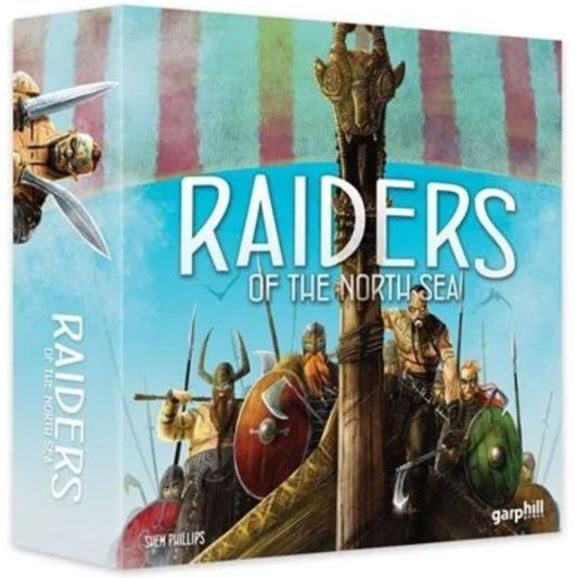
31: Raiders of the North Sea
Previous Position: New to the list
Year: 2015
Designer: Shem Phillips
Publisher: Garphill Games
Plays: 2-4 players in ~60 to 80 minutes
I first played this game back in December 2023, when my list for that year had already been written. I think it would have made it into the 40s then. Today, we’re on the cusp of making it into the top 30.
The game is tricky. The resource management is tight, in a good way. You really have to consider how you use and commit your workers, who takes up slots in your crew, and when to go a-viking. I’d love to get this to the table again in the near future, because the game has really gone in very different directions for me each time I’ve played so far.
 No Rerolls
7 Comments