
Let’s look at some game changers! I’ve got some mixed feelings about WotC’s definition of these powerful cards. They’re staples of the format, and they’re undeniably powerful, but the Game Changer categorisation has the potential to stigmatise their use.
Or does it?
It may well be the case for some groups that by identifying and admitting the power of these cards and defining how many one can include in a deck of a specific tier, it actually gives tacit permission for their use. Go figure.
Whichever way you see it, it’s worth knowing what these cards do. Let’s start with Smothering Tithe!
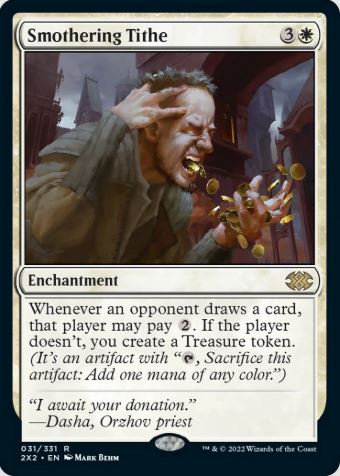
Sure! Smothering Tithe is one of the most impactful cards in Commander, shaping games with its relentless treasure generation. Since its release in Ravnica Allegiance, this enchantment has become a staple in white decks, offering an unparalleled ability to generate treasure tokens. But is it fair? Is it fun? And how should you play around it?
At its core, Smothering Tithe is a simple yet devastatingly effective enchantment. Whenever an opponent draws a card, they must pay 2 mana, or you create a Treasure token. As a reminder, treasure tokens are artifact tokens that can be tapped and sacrificed to give a single mana of any colour. Given that card draw is a fundamental part of Magic, this ability ensures a steady influx of mana for the controller.

So, why is this card so powerful in Commander?
Well, the multiplayer nature of this variant of Magic is a big factor. In a four-player Commander game, Smothering Tithe can generate absurd amounts of treasure. If each opponent draws a card per turn and doesn’t pay, you’re netting three treasures per turn cycle, and that’s before factoring in extra draw effects which will almost-certainly be in play.
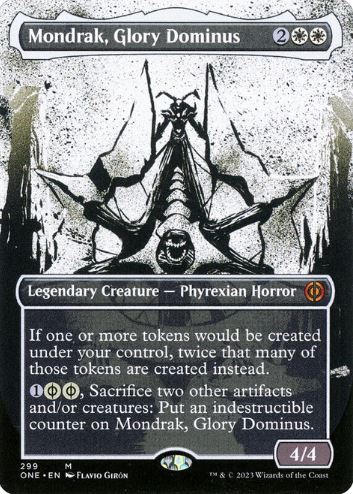
It also has an amazing synergy with wheel effects. Cards like Wheel of Fortune, Windfall, Echo of Eons, and many others force players to draw multiple cards at once, leading to an explosion of treasure tokens. Similarly, token multipliers like Mondrak, Glory Dominus and Academy Manufactor really come into their own.
This definitely accelerates things for a white deck. White has historically struggled with ramp compared to green or blue. Smothering Tithe helps bridge that gap, allowing white decks to keep pace with faster strategies via disposable mana.
Okay, so it’s effective; but is it fair?
The fairness of Smothering Tithe is a hotly debated topic. Some argue that it’s a necessary tool for white decks, while others see it as oppressive. The main complaints include:
- Taxing the Table: Constantly asking opponents if they’ll pay 2 mana can slow down the game.
- Unanswered Advantage: If left unchecked, Smothering Tithe can snowball into overwhelming mana generation.
- Comparison to Rhystic Study: Like Rhystic Study, it creates a dynamic where opponents must constantly decide whether to pay or let you gain resources. That said, it doesn’t seem to generate quite the same level of hatred that Rhystic Study does.

If you’re facing Smothering Tithe, there are some ways to mitigate its impact:
- Destroy It Quickly: Treat it like a priority removal target. Cards like Aura Shards, Krosan Grip, or Cyclonic Rift can deal with it efficiently.
- Limit Card Draw: If you’re playing a deck that draws heavily, consider adjusting your strategy to minimise treasure generation until someone else can remove it.
- Pay the Tax When Possible: If you can afford it, paying 2 mana prevents your opponent from snowballing their mana advantage.
Smothering Tithe is definitely one of the strongest white cards in Commander when it comes to ramp. Whether you love it or hate it, its impact on the format is undeniable. If you’re running it, be mindful of how it affects the game’s pacing. If you’re playing against it, prioritise removal and strategic play to keep it in check.
Myself? I find it very much at home in both my artifact/treasure heavy Mr. House deck and my Enchantment-focused Aminatou deck.
If you’re looking for MTG singles, please consider using our Big Orbit Cards affiliate link to find your cards whilst also supporting our site.
 No Rerolls
2 Comments