

Let’s look at some game changers! I’ve got some mixed feelings about WotC’s definition of these powerful cards. They’re staples of the format, and they’re undeniably powerful, but the Game Changer categorisation has the potential to stigmatise their use.
Or does it?
It may well be the case for some groups that by identifying and admitting the power of these cards and defining how many one can include in a deck of a specific tier, it actually gives tacit permission for their use. Go figure.
Whichever way you see it, it’s worth knowing what these cards do. Today, let’s look at Thassa’s Oracle!

There are cards that win games, and then there are cards that quietly rewrite the rules of engagement. Thassa’s Oracle sits firmly in the latter category. The moment it hits the battlefield, the entire texture of the game shifts. Everyone at the table suddenly knows exactly what’s happening, exactly what’s being threatened, and exactly how little time they have left to do something about it.
Thassa’s Oracle isn’t powerful because it ends the game. It’s powerful because it compresses the game. It takes all the messy, sprawling, unpredictable chaos of Commander and funnels it into a single, binary question: Can you stop this right now? And if the answer is no, the game ends on the spot.
That’s a game changer.
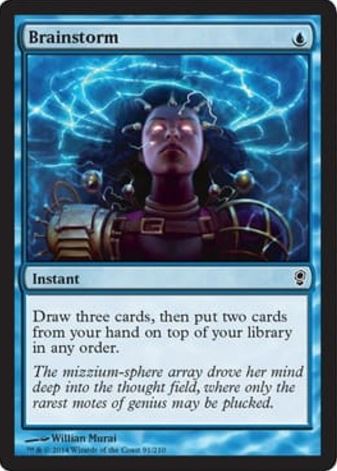
Thassa’s Oracle is more than just a single combo piece. It rewards you for building your deck around inevitability. It turns self‑mill, draw engines, tutors, and even incidental graveyard filling into part of a countdown clock. Every Brainstorm, every fetchland, every looting effect becomes a tiny nudge toward the moment the Oracle resolves.

And the table knows it. That’s the real shift. Oracle changes how people behave in several ways:
- Players hold up interaction longer than they normally would.
- Threat assessment warps around whoever can assemble the fewest cards the fastest.
- Graveyard hate becomes a political tool rather than a sideboard choice.
- The game’s pacing accelerates because everyone is terrified of falling behind the combo curve.
One of the most fascinating things about Thassa’s Oracle is how simple it looks. Two mana. A small body. A triggered ability that reads like a weird Scry variant until you realise what it actually means. It’s the kind of card that newer players underestimate and experienced players fear.
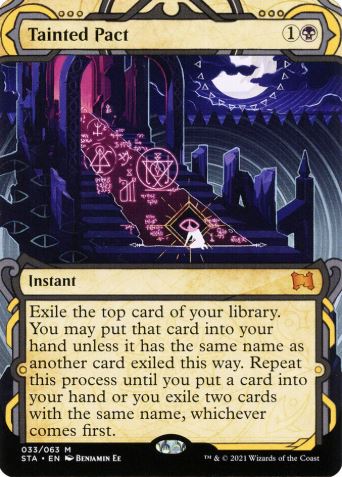
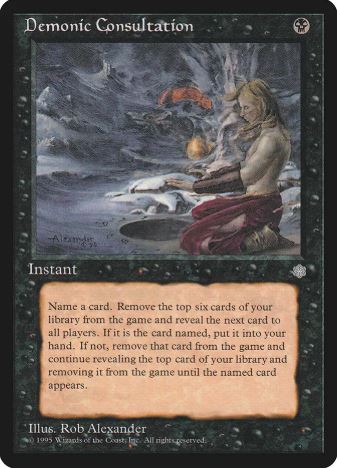
But the simplicity is deceptive. Oracle is the tip of a spear made up of cards like:
- Demonic Consultation
- Tainted Pact
- Doomsday
- Self‑mill engines
- Turbo draw
- Decks that run almost no other win conditions because they don’t need them
It’s a card that invites you to build leaner, faster, more focused decks, and punishes anyone who assumes they have time to set up.
Every Game Changer has a signature emotional footprint, and Oracle’s is unmistakable: tension. The moment someone reveals blue and black mana and starts digging through their deck, the table collectively inhales. You can feel the shift. Conversations stop. Players count their mana. Someone mutters “do we have an answer?” Someone else starts praying the blue player taps out.
Thassa’s Oracle creates moments. Moments of panic, of calculation, of sudden alliances and desperate politics. Moments where the entire table becomes a single organism trying to survive.
That’s what makes it iconic.
Thassa’s Oracle remains a Game Changer because it forces players to confront a truth they often try to ignore: Commander is a format where inevitability matters. You can’t durdle forever. You can’t assume you’ll get to your big splashy turn. You can’t rely on combat damage to solve every problem.
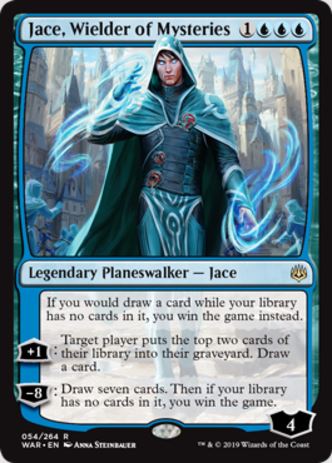
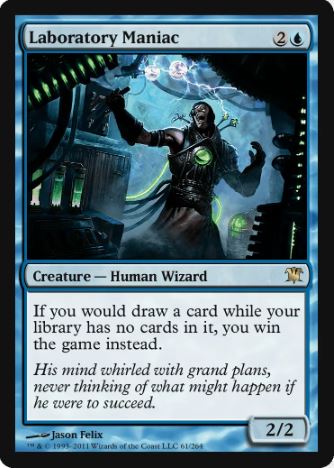
Now, there are rumours that this card might be getting banned. I have thoughts. It would be a real pity if Thassa’s Oracle ever ended up on the ban list, because it fills a niche that Commander has always struggled with: giving self‑mill and deck‑compression strategies a clean, reliable way to actually win the game. Without Thassa’s Oracle, those archetypes collapse back onto the same two ageing alternatives: Jace, Wielder of Mysteries and Laboratory Maniac. Neither of them offers the same elegance, efficiency, or deck‑building freedom. Thassa’s Oracle doesn’t just enable combo; it makes entire styles of play viable. Unless Wizards of the Coast prints new, modern win conditions for “empty library” strategies, banning it would feel less like solving a problem and more like removing the one card that lets those decks exist in the first place
This card is the reminder that someone, somewhere at the table, is quietly assembling a win that doesn’t care about your board state, your blockers, or your life total.
And that reminder changes how everyone plays.
If you’re looking for MTG singles, please consider using our Big Orbit Cards affiliate link to find your cards whilst also supporting our site.
 No Rerolls
1 Comment