

Our club’s Commander typal challenge has arrived, and decks are due in. Here are the decks that have been submitted thus far. I’m expecting a few late entries, and I’ll edit those into the post once they arrive. They are in no particular order, and I’ll offer some initial thoughts on each.
Dragons: Miirym, Sentinel Wyrm
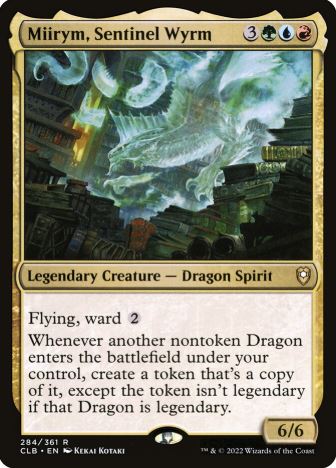
My Miirym, Sentinel Wyrm list is built around one idea: every Dragon should come with a friend. Miirym doubles your biggest threats on entry, and the deck leans into that with a suite of ETB monsters, treasure engines, and copy effects that turn each cast into a small explosion of value. Cards like Goldspan Dragon, Ancient Copper Dragon, Old Gnawbone, and Terror of the Peaks become absurd when you get two of them, and pieces like Sakashima, Spark Double, Roaming Throne, and Panharmonicon push that doubling even further. You’re not just playing Dragons; you’re compounding them!
The rest of the deck is tuned to keep that avalanche rolling. Cost reducers like Dragonlord’s Servant and Dragonspeaker Shaman help you curve out, while Temur Ascendancy, Elemental Bond, and Kindred Discovery ensure you never run out of gas. Flicker tools like Deadeye Navigator, Ghostly Flicker, and Conjurer’s Closet let you retrigger your best ETBs, and token‑doublers like Doubling Season and Parallel Lives turn treasure‑makers into full‑blown ramp engines. Once Miirym is online, every Dragon becomes a board state all by itself, and the table quickly realises they’re not dealing with a single threat, but a multiplying storm of them.
You can click here to view this deck.
Allies: Katara, the Fearless
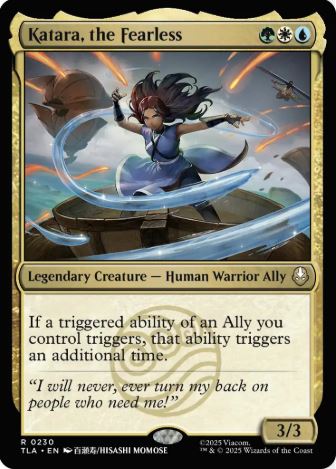
Katara the Fearless and her allies play like a travelling party that never stops moving. The deck leans into the Avatar set’s team‑centric identity, with Katara rewarding constant sequencing and small, coordinated plays that snowball into real pressure. The cast of Aang, Sokka, Suki, and their various incarnations gives you a rotating toolkit of protection, tempo, and value, letting you adapt to whatever the table throws at you.
The real edge comes from the airbending mechanic, which turns your noncreature spells into bursts of momentum. Airbending lets you reposition, protect key pieces, and generate surprise swings that feel exactly like the show’s fast, reactive combat. Combined with Katara’s own ability to keep your board stable and your tempo high, the deck thrives on timing; slipping through cracks, redirecting threats, and turning a modest board into a coordinated strike when opponents least expect it.
You can click here to view this deck.
Merfolk: Talrand, Sky Summoner
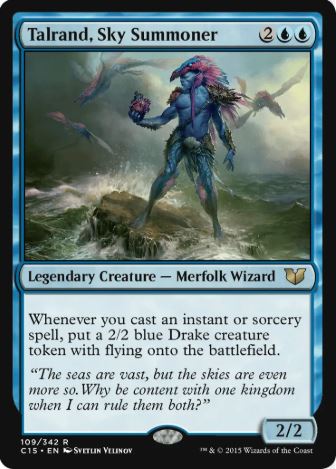
This Talrand, Sky Summoner list is all about keeping the skies full and the table off‑balance. Every cheap cantrip, counter, and bounce spell turns into another Drake, letting you build pressure while never giving opponents a clean window to stabilise. The deck rewards constant casting and smart sequencing, turning even the smallest spell into board presence.
The real strength comes from how naturally the tempo plan feeds Talrand’s token engine. Cards like Aetherize, Aetherspouts, and Run Out of Town buy you time, while Opt, Preordain, and Case the Joint keep the gas flowing. Once the Drakes start piling up, Favorable Winds and evasive threats like Brineborn Cutthroat push the damage through. It’s a deck that wins by staying light on its feet, answering everything, and letting the air force do the rest.
You can click here to view this deck.
Gods: Kratos, Stoic Father and Atreus, Impulsive Son
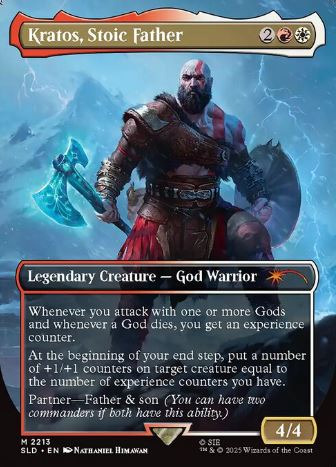
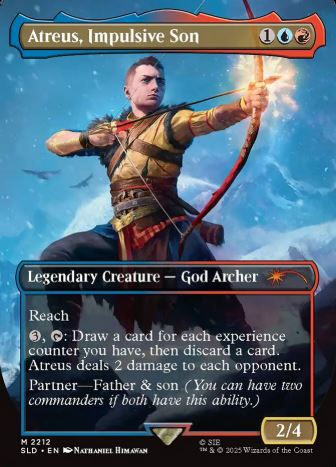
The father and son duo of Kratos and Atreus lead this god-typal list that plays like a pantheon gathering behind a father‑and‑son frontline. Kratos gives you raw, repeatable pressure, while Atreus turns every spell into momentum, letting you scale your board as the game goes on. The deck leans into legendary permanence density and divine synergies – Heliod, Purphoros, Keranos, Thassa, Toralf, Freya, Venat, and more – creating a battlefield that feels mythic, heavy, and increasingly difficult for opponents to meaningfully interact with. Cards like Flowering of the White Tree, The Capitoline Triad, and Roaming Throne push your legends into true god‑mode, while sweepers such as Austere Command, Farewell, and Final Showdown let you reset the world when the mortals get too bold.
The deck’s other axis is counters and growth, with cards like Inexorable Tide, Ripples of Potential, Thrummingbird, and Karn’s Bastion steadily escalating your board until even your support pieces become threats. Divine Visitation and token‑makers give you an army worthy of Olympus, while finishers like Akroma’s Will and Approach of the Second Sun close out games with dramatic finality. It’s a deck that feels like myth in motion: Kratos smashing through obstacles, Atreus shaping the flow of battle, and a chorus of gods rising behind them as the table struggles to keep pace.
You can click here to view this deck.
Rooms: Marina Vendrell
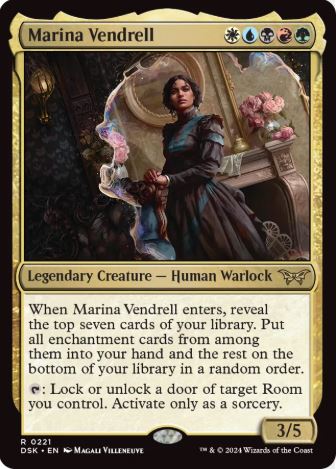
Marina Vendrell leans fully into the theme: the Backrooms, liminal spaces, and the creeping sense that reality is thinning around the edges. Instead of a creature‑type typal, the deck treats rooms and locations as its tribal identity, with Marina and her Grimoire acting as your guides through an ever‑shifting maze. The double‑effect “Room” cards give the deck a wandering, uncanny rhythm where every turn feels like stepping into a new corridor, opening a new door, or discovering something that probably shouldn’t be alive. Cards like Ghostly Prison, Ghostly Dancers, Fear of the Dark, and Come Back Wrong reinforce that unsettling tone, while value engines like Dictate of Kruphix, Wilderness Reclamation, and Aesi keep the exploration flowing.
The deck plays like a slow descent into the uncanny: you’re drawing cards, opening rooms, and letting the environment itself do the heavy lifting. Marina rewards you for navigating these spaces, turning your journey through the game into incremental advantage. Meanwhile, the supporting cast – Professor Onyx, Grand Arbiter, The Lord of Pain, Valgavoth’s Seneschal – adds a sense of lurking danger behind every threshold. It’s a deck that wins by outlasting, out‑drawing, and out‑weirding the table, leaning into its theme so hard that the gameplay feels like wandering deeper into a place you’re not entirely sure you’ll get back out of.
You can click here to view this deck.
Angels: Giada, Font of Hope
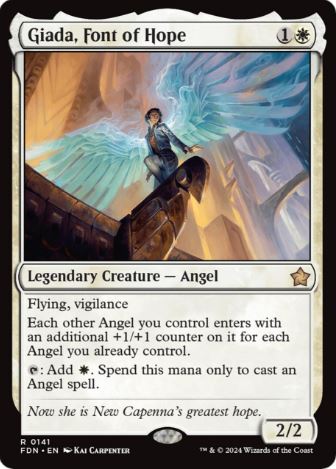
These mono‑white Angels are led by Giada and are tuned to hit the board fast and scale harder than most people expect. Giada turns every Angel into a growing threat, letting your curve start at one and climb into the stratosphere without ever losing tempo. Early lifegain pieces like Soul Warden, Bishop of Wings, and Angel of Vitality keep your life total padded while powering up Righteous Valkyrie and Resplendent Angel. By the time your midgame hits, you’re dropping oversized fliers for a fraction of their cost thanks to Starnheim Aspirant, Herald of War, and Urza’s Incubator, with Giada quietly stacking +1/+1 counters until even your utility Angels are swinging like finishers.
The top end is exactly what you want from an Angel deck: inevitability. Lyra, Archangel of Thune, Valkyrie Harbinger, and Emeria Shepherd turn every turn cycle into value, while Sephara, Serra’s Emissary, and Avacyn lock the game down once you’ve established air superiority. Your sweepers – Austere Command, Hour of Revelation, Akroma’s Vengeance – reset the world without touching your rebuilt board, and support pieces like Smothering Tithe, Herald’s Horn, and The Book of Exalted Deeds keep the engine humming. It’s a deck that wins by overwhelming the table with purity, power, and inevitability. This is exactly the kind of divine escalation Giada was born to lead.
You can click here to view this deck.
Vampires: Clavileño, First of the Blessed
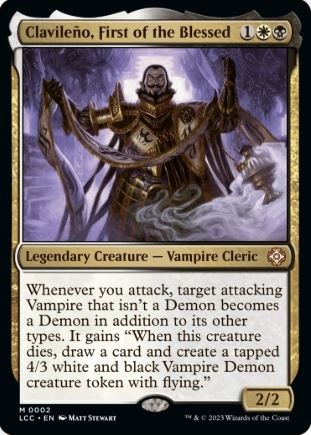
Clavileño leans fully into the Orzhov vampire pattern of steady board development backed by reliable death‑trigger value. Most of the creatures either grow when things die or create more bodies to keep the engine running, and Clavileño slots cleanly into that rhythm by turning your early drops into meaningful threats. Between Blood Artist effects, aristocrat outlets like Viscera Seer, and payoff pieces such as Cordial Vampire, Butcher of Malakir, and Necropolis Regent, the deck rarely wastes a death. Even the support cards like Heirloom Blade, Etchings of the Chosen, and Radiant Destiny reinforce the same plan: keep the board wide, keep the counters flowing, and let incremental advantage do the heavy lifting.
The removal suite and utility lands give the deck enough control to stay stable while it builds momentum. Austere Command, Kindred Dominance, and Olivia’s Wrath let you reset the table on your terms, while Vault of the Archangel and Rogue’s Passage give you ways to close games without relying on a single line. The list also has a surprising amount of recursion and stickiness: Bloodghast, Oathsworn Vampire, Elenda, and Timothar all make it difficult for opponents to cleanly answer your board. This deck feels consistent, resilient, and very good at turning small creatures into a snowball that’s hard to stop once it starts rolling.
You can click here to view this deck.
Hydras: Zaxara, the Exemplary
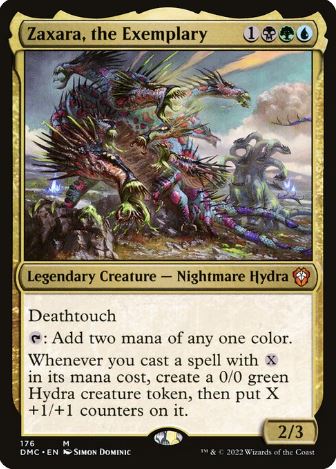
This Zaxara list is Hydra tribal distilled to its most satisfying shape: cast something huge, make a big token, and watch the board buckle under exponential growth. Every X‑spell Hydra becomes a two‑for‑one threat, and pieces like Unbound Flourishing, Branching Evolution, and Corpsejack Menace push those counters into absurd territory. You’re going tall! You’re going tall twice, and then doubling it again. Early ramp like Search for Tomorrow, Growth Spiral, and Kodama’s Reach gets you to the big numbers quickly, while Zaxara quietly turns every X-spell into a fresh Hydra waiting to explode.
Once the engine is running, the deck snowballs hard. Evolution Sage, Karn’s Bastion, and Ripples of Potential keep your counters climbing, while Herald of Secret Streams and Simic Ascendancy turn that growth into inevitability. Finishers like Craterhoof Behemoth, Hydra Broodmaster, and Hydroid Krasis give you multiple ways to close the game, and protection like Heroic Intervention and Swiftfoot Boots keeps your board intact long enough to matter. It’s a deck that compounds, turning each X into a threat the table has to answer immediately or be swallowed whole.
You can click here to view this deck.
Wurms: Baru, Wurmspeaker
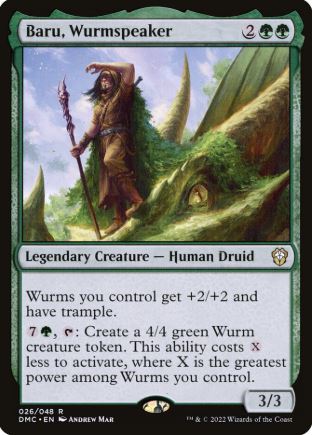
Wurms! This Baru list is a straight, unapologetic celebration of oversized green creatures, and it plays exactly the way it looks: ramp early, drop Wurms on curve, and let Baru turn every one of them into a lethal threat. The mana package is simple but reliable – mana dorks, classic green ramp, and cost‑reducers like Emerald Medallion and Rhonas’s Monument – all pushing you toward the point where a seven‑ or eight‑mana creature is just another play. Once you’re there, the deck snowballs quickly. Baru’s anthem effect turns even middling bodies into finishers, and cards like Defiler of Vigor, Unnatural Growth, and Garruk’s Uprising stack on top to make every Wurm a problem that demands an answer.
The top end is where the deck really leans into its identity. Worldspine Wurm, Impervious Greatwurm, Engulfing Slagwurm, and Elderscale Wurm give you inevitability, while Pelakka Wurm, Sifter Wurm, and Bookwurm keep your life total and hand healthy. Ezuri’s Predation and Crush of Wurms act as board‑shaping events rather than single threats, and The Great Aurora gives you a reset button that often favours the deck built to rebuild fastest. There’s just enough interaction, with cards like Beast Within, Krosan Grip, and Nevinyrral’s Disk, to keep you from folding to early pressure, but the plan is always the same: hit your mana, cast enormous creatures, and let Baru turn raw size into a win condition.
You can click here to view this deck.
o O o
If you’re looking for MTG singles, please consider using our Big Orbit Cards affiliate link to find your cards whilst also supporting our site.
 No Rerolls
2 Comments