
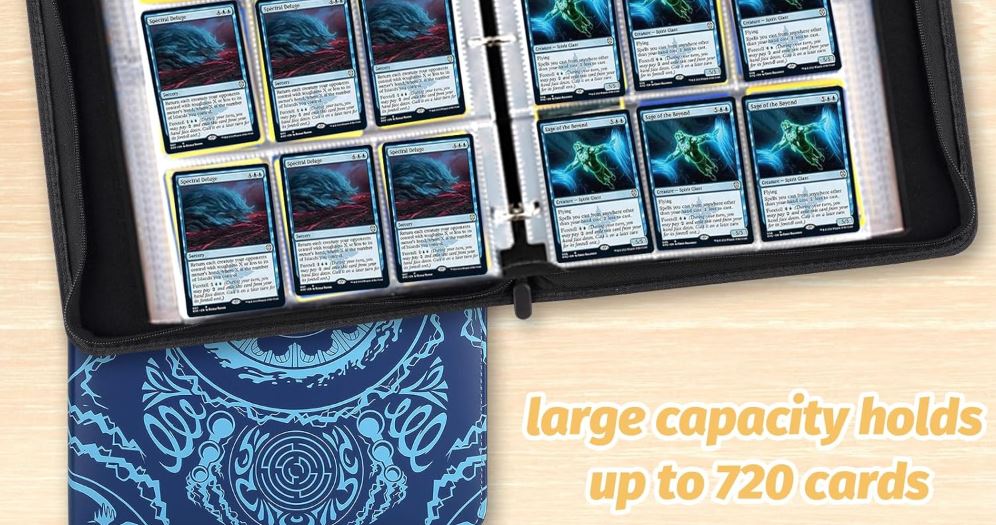
There’s a particular kind of low‑level irritation that settles into the hobby once you’ve been playing long enough: the quiet, recurring chore of moving the same expensive cards from one deck to another. It’s never dramatic. It’s never the thing you complain about in the group chat. It’s just there, waiting for you every time you decide to play something different. You open the binder, you start leafing through the pages, and you pull out the same handful of staples you pulled out last week. Then you reverse the whole process when you’re done, sliding them back into their pockets like you’re shelving reference books in a library that only you use.
It’s not about money. It’s about friction. The tiny, persistent drag that turns deckbuilding into admin. You sit down with a new idea, and before you’ve even shuffled a sleeve you’re already negotiating with yourself about whether it’s worth dismantling another list just to borrow the cards it needs. Half the time, the answer is no. Not because the deck is bad, but because the logistics are.
Binder proxying is the simplest way to remove that friction. You keep the real cards where they belong: in the binder, safe, organised, and not constantly being ferried between sleeves. And you play with versions that don’t mind being handled, that don’t care if they get scuffed, that don’t require you to perform the weekly ritual of extraction and reinsertion. It’s not a statement or a stance; it’s just a practical decision that makes the hobby easier to live with.
The effect is subtle but real. Decks stop feeling temporary. Ideas stop feeling like chores. You can build something on a whim without worrying about cannibalising three other lists to make it function. You can keep your collection intact instead of treating it like a parts bin. And when you sit down to play, you’re not thinking about which cards you forgot to move over; you’re just playing. Doesn’t that sound nice?
Most people don’t care what’s in your sleeves as long as they can read it and the game flows. The social contract of Commander has always been about intent and clarity, not about whether the cardboard in your hand came from a booster pack or a printer. Binder proxying simply acknowledges the reality of modern Magic: that the game is big, the decks are many, and the staples are few.
Of course, some players will always bristle at the idea of proxies, even when the original cards are sitting safely in a binder. For some, the objection is philosophical: they like the physicality of the game, the sense that the deck in their hands is the deck they built, card for card. Others worry about the slippery slope; that once proxies are allowed, someone will show up with a pile of “unearned” power and flatten the table. And there’s the collector’s instinct too, the feeling that the “real” card is part of the experience, and that removing it from play somehow cheapens the ritual. These aren’t unreasonable positions; they’re just rooted in differing priorities.
Binder proxying is a way of sidestepping those anxieties without escalating anything. You’re not introducing cards you don’t own, or pushing the power level beyond what the group expects. You’re simply taking the cards you already have and making them easier to use across multiple decks. It doesn’t change the strength of your list, it doesn’t force anyone else to keep up, and it doesn’t invite the kind of proxy‑creep that can warp a pod. It just removes the weekly chore of card migration while keeping the social contract intact. It’s a practical compromise that respects both the game and the people you play it with.
If anything, it’s a small kindness to yourself. A way of trimming away the unnecessary upkeep steps the hobby quietly accumulates. Magic already asks for enough of your time. There’s no reason to give it more than it needs.
I’ve started putting together my own proxies for this approach and will share some pictures once I’ve got the process down.
If you’re looking for MTG singles, please consider using our Big Orbit Cards affiliate link to find your cards whilst also supporting our site.
 No Rerolls
2 Comments