
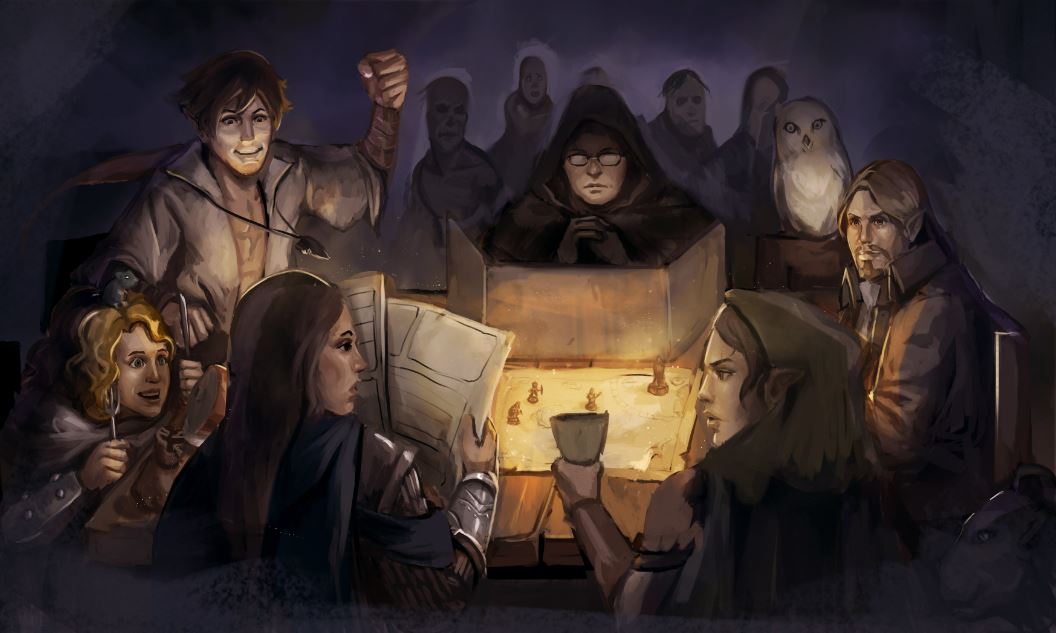
Welcome, Game Masters! Crafting an immersive RPG campaign is an oft-underappreciated art that requires creativity, preparation, and a deep understanding of your players. That knowledge of the player is far, far more important than a comprehensive knowledge of every little rule from your chosen game. Whether you’re a seasoned GM or just starting out, I’m hoping to give some food for thought with some brief consideration of the following topics:
- World-building
- Character Development
- Plotting
- Atmosphere
- Flexibility
Let’s jump in, eh?
Part 1: World-Building
In building a living, breathing universe, it’s important to start small. Don’t set yourself a massive goal right from the get-go. Begin with a small, detailed area – like a village or a city – and gradually expand the scope of your world as the campaign progresses. This allows you to focus on creating rich, intricate details over time without becoming overwhelmed or burnt out.

Create a history, culture, and mythology for your world. Consider how these elements influence the present-day setting and the characters’ motivations. Incorporate legends, notable events, and influential figures that can be referenced throughout your campaign. This, too, can be a gradual process.
Maps, illustrations, and props can bring your world to life. Hand-drawn maps, character sketches, and physical props like letters or artifacts help players visualise and connect with the setting.
Part 2: Character Development
With the beginnings of your world, you need to populate it with living, breathing characters. Design NPCs with distinct personalities, backgrounds, and motivations. Avoid one-dimensional characters; instead give them goals, secrets, and personal stakes that can intersect with the players’ adventures.
The development of player characters is similarly important. Work with your players to come up with detailed backstories for their character. Integrate their histories into the main plot, creating personal stakes and emotional connections to the story.

With character established, develop relationships between NPCs and PCs that evolve over time. Friendships, rivalries, and alliances add depth and can lead to unexpected plot twists. Once you start the ball rolling on these, they can often progress organically.
Part 3: Engaging Plotlines
You need to craft compelling narratives. Kick off your campaign with a gripping event or mystery that immediately draws the players in. This could be a sudden attack, a strange occurrence, or a call to adventure that sets the stage for the story.
There should be a main, central plotline and several subplots to keep the narrative open and dynamic. Allow your players to explore side quests and personal stories that contribute to their character development and enrich the overall campaign.

As we have previously discussed, any RPG requires a decent degree of player agency. Give your players meaningful choices to make. These should affect the story’s outcome. Their decisions should have real consequences, both immediate and long-term. These consequences should shape the overall direction of the campaign.
Part 4: Atmosphere and Mood
It’s crucial that you establish the right tone for your campaign. Paint vivid scenes with your words. Describe sights, sounds, smells, and sensations to create an immersive experience. Vary your descriptions to match the mood, whether it’s the eerie silence of the haunted forest or the bustling energy of a marketplace.
Background music and sound effects, whilst not everyone’s taste, can be used to enhance the atmosphere. Use ambient sounds, epic scores, or even silence strategically to heighten tension and emotion.
If you’re playing in person and really want to up your game, you can play with your environment. Adjust the lighting and physical setting to match the scene. Dim lights for a dungeon crawl or brighten the room for a cheerful festival. The increasing use of smart lighting in homes can make this sort of thing a lot more accessible than it might have been in the past.
Part 5: Flexibility and Improvisation
You’re not presenting an audiobook. If you want to write a story, go and do that. If you want to play a game, you need to adapt to player choices. By all means, prepare your story outlines and key events, but remain flexible. Players will often make unexpected choices, and being able to adapt on the fly is crucial for maintaining immersion and keeping the narrative flowing.

Creativity is the most important thing. Allow and encourage your players to think outside the box and come up with creative solutions to problems. Reward ingenuity and make the world feel responsive to their actions.
Ultimately, it’s all about pacing. You must maintain a balance between action, dialogue, and downtime. Adjust the pacing based on player engagement and the needs of the story, ensuring there’s a mix of intense moments and opportunities for character development.
 No Rerolls
3 Comments