
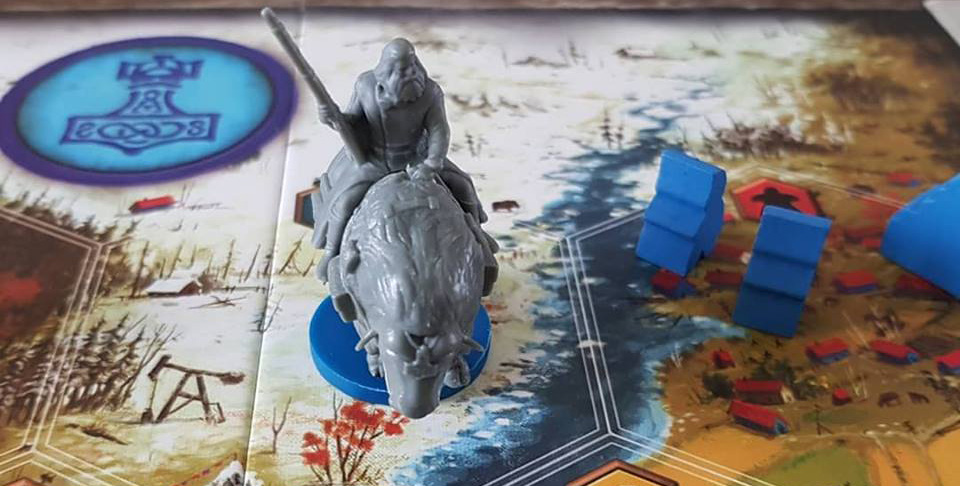
Scythe, designed by Jamey Stegmaier and illustrated by Jakub Różalski, transports players to an alternate 1920s Eastern Europa. In this steampunk-infused world, factions vie for control over territories, resources, and power. Originally published by Stonemaier Games (publisher of previously reviewed games, Euphoria and Apiary) in 2016, I’ve probably had this game since around 2017 and it has seen a lot of play in our local group. I purchased this copy myself and no review copy was provided. There are affiliate links at the end of this review.
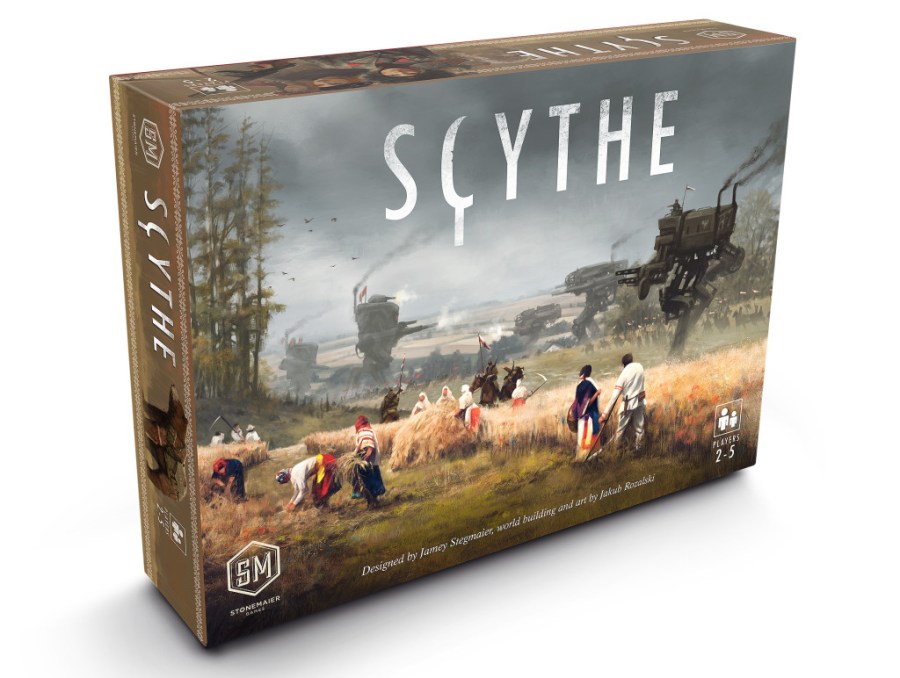
Imagine a Europe where mechs roam the fields, and factions harness the power of technology. The game’s rich background, as expressed through the fantastic artwork, sets the stage for intense competition between powerful states. Each player selects a faction (from five options in the core game), each with its own unique abilities and starting resources. The beautifully illustrated player mats define and guide your actions throughout the game.
Now, something worth mentioning here is that Scythe can look like a wargame. There are mechs stomping around that can fight. It’s not a wargame though. It’s a resource management game, and unless you are playing the specific faction that benefits from extra combats, it’s usually worth limiting your violent encounters with other players as war can be wasteful and expensive. Who knew? Let’s look at how the game actually works:
- Resource Management: Balancing wood, metal, food, oil, workers, and popularity is crucial. Efficiently gather resources to fuel your faction’s growth.
- Action Selection: On your turn, choose from four action spaces on your player mat. Each space offers basic top-row and more advanced bottom-row actions, allowing for strategic planning.
- Area Control and Combat: Expand across the hexagonal map, controlling territories and deploying mechs. Combat is deterministic, adding tension without excessive randomness.
- Popularity and Points: Gain popularity to adjust how scoring works, and earn stars by completing objectives. Stars show progress through the game and represent a major source of points. These two factors contribute to end-game scoring and determine the winner.
Each faction excels in different areas, giving a real sense of asymmetry. Y’all know we love asymmetry on this blog. The Saxony faction, for example, focuses on aggression, while the Rusviet faction gives more flexibility to players by allowing them to take the same action twice in a row; something that other factions cannot do. Assembling your mechs not only gives you walking war machines to field, but building each of your four mechs will also unlock further faction-specific abilities.


Scythe rewards adaptable strategies. Should you focus on combat, resource production, or objectives? The choice is yours and will be dictated by your faction. Faction boards are combined with variable action boards to created combinations with different strengths and weaknesses. These combinations can steer you in different directions, encouraging you focus on upgrades, mechs, building, or enlisting recruits. As the game goes on and the lay of the land shifts with player movements and your access to different resources, you will often have to pivot or adapt your strategies in order to optimise your engine.
I often focus heavily on upgrades. This is where you spend the oil resource to increase the effectiveness and reduce the price of your actions. I just love the feeling of getting more bang for my buck with my actions, and this is the way to ensure you’re getting the most out of them.
I also try to grab as many encounter tokens as I can. I love the encounters. You uncover encounters as you explore the map. These narrative moments add depth and flavor. Here’s an example card:
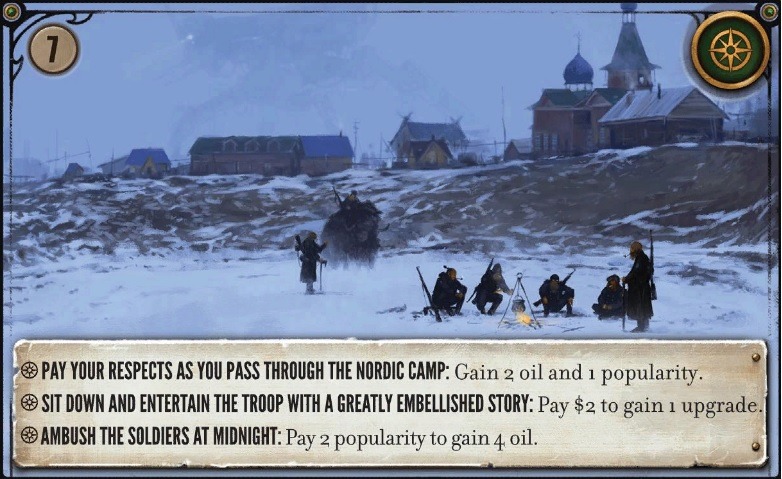
The group I mostly play with are all also fans of roleplaying games, so we really like when these encounters come up. First, the art is gorgeous. Second, the card doesn’t spell out a scenario in detail. It instead gives a picture and offers some options for your action. I love this, because it means you can tell your own wee story. Generally, the encounters have ‘peaceful’, ‘neutral’, and ‘aggressive’ options. It’s really cool and is a nice narrative touch that also lets you tailor the bonus you recieve to what you actually need in that moment. This is such a small part of the game, but it’s a great example of the attention to detail that’s been put in, as this mechanism didn’t need to be this cool.
Since we’re on presentation, the game’s illustrations are just amazing. They evoke both a sense of wonder and tired melancholy. The juxtaposition of mechs against rural landscapes is hauntingly beautiful. Consider playing with thematic music in the background – it can really enhance the immersion!
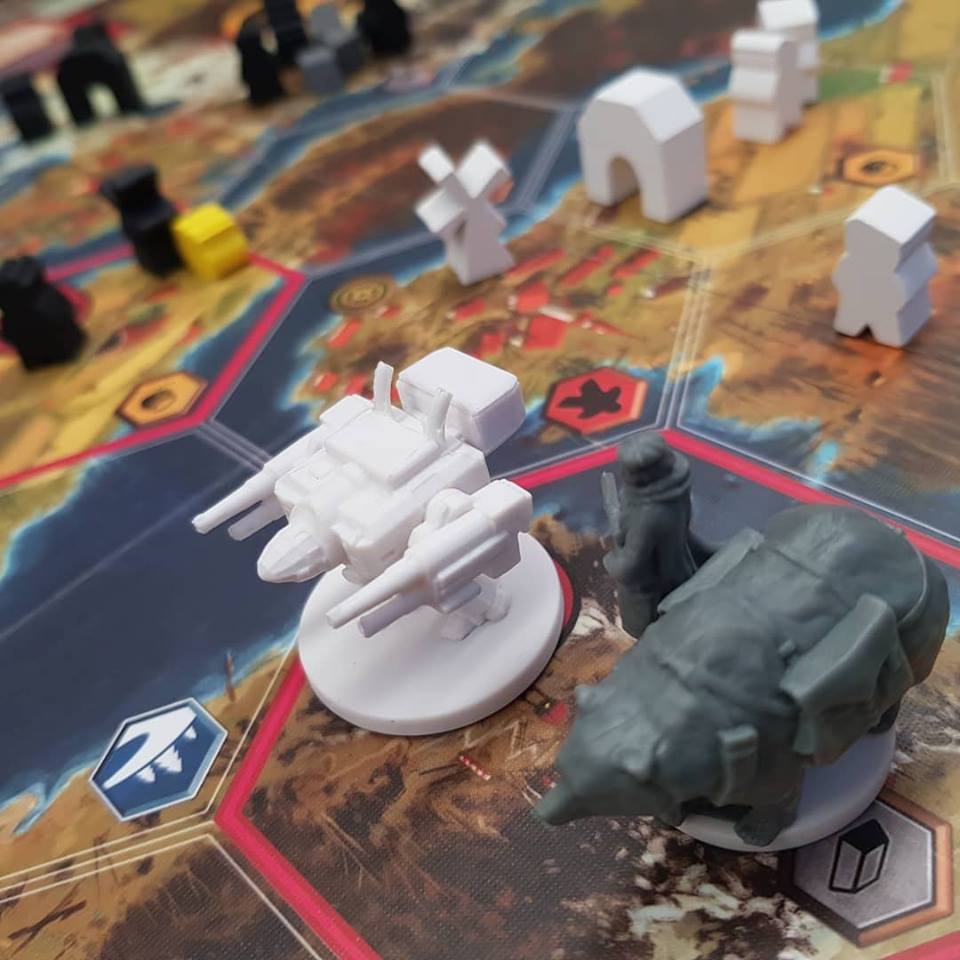

Oh, and it’s accessible! The game has a big footprint on your table, but it’s not all that complicated when you settle into it. Once you know how to generate resources and take actions, it’s actually really simple. The boards are intuitive and everything flows really well.
Yeah, I really rate this game and it’s been a solid, perennial favourite in our annual Top 50 list for good reason. Scythe is a great game, but it isn’t just a game; it’s an experience. The tension, the choices, and the thematic richness make it a standout title. Just remember, the heart of Scythe lies not only in its mechanics but also in the stories that unfold as factions clash and mechs traverse the fields. Take the time to enjoy the story as you go.
 No Rerolls
5 Comments