

Shuffling is a fundamental part of Magic: The Gathering, ensuring fairness and unpredictability in every game. But among the various shuffling methods, pile shuffling stands out as one of the most controversial. Some players swear by it, while others dismiss it as ineffective or even a tool for cheating. So, does pile shuffling actually randomise your deck, or is it just a ritual? Let’s dive in.
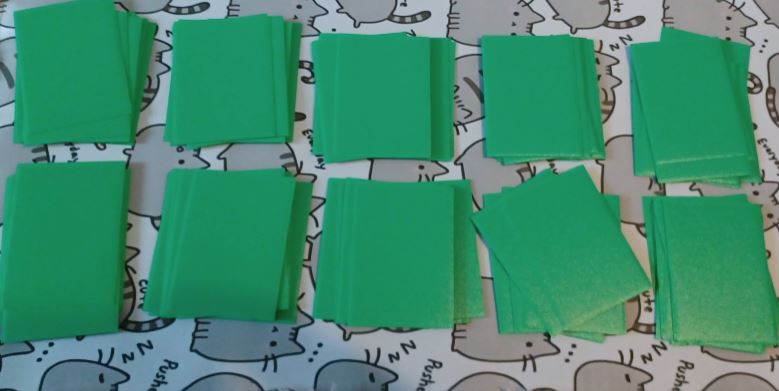
Pile shuffling involves dividing your deck into equal piles (usually between 5 and 10) and then stacking them back together. The idea is that this process helps distribute cards more evenly throughout the deck. However, pile shuffling alone does not sufficiently randomise a deck. According to official tournament rules, it is not considered a valid method of randomisation and can only be used once per game to count your deck.

There are definitely arguments in favour of pile shuffling; it’s popular for a reason, or rather, reasons:
- Helps Prevent Clumping: Some players believe pile shuffling helps break up clusters of lands or spells, leading to more balanced draws. Nobody likes to be mana-starved.
- Provides a Physical Check: Since pile shuffling allows players to count their deck, it ensures they have the correct number of cards before starting a game. if you’re like me and find yourself swapping out your more expensive cards between decks, this is really helpful.
- Feels Satisfying: Many players enjoy the ritual of pile shuffling, as it gives them a sense of control over their deck’s organisation.
That all makes sense. There’s nothing in there about randomisation, though, is there? Let’s look at some opposing arguments:
- Does Not Truly Randomise: Unlike riffle shuffling or mash shuffling, pile shuffling follows a predictable pattern, meaning it does not sufficiently mix the deck. Indeed, it is often the point of pile shuffling to ensure a more beneficial spread of cards, but mana weaving is not randomisation.
- Can Be Used to Cheat: Skilled players can manipulate pile shuffling to stack their deck, ensuring key cards appear in specific positions.
- Slows Down Gameplay: It does take a while to properly pile shuffle. Excessive pile shuffling can lead to slow play, which is discouraged in competitive settings or when you’re hoping to fit multiple games into a block of time.
According to Magic’s MTR (Magic Tournament Rules), section 3.10, pile shuffling is not allowed as a primary randomisation method. Players may perform one pile shuffle per game to count their deck, but they must follow up with sufficient randomisation techniques like riffle shuffling.
There are other methods of shuffling to ensure true randomness. The most common suggestions are:
- Riffle Shuffling: The most effective way to mix a deck, ensuring cards are thoroughly randomised. This can be hard on the cards, though.
- Mash Shuffling: A gentler alternative to riffle shuffling, often used for sleeved cards.
- Multiple Shuffling Techniques: Combining different methods ensures a properly randomised deck.
Pile shuffling remains a controversial topic in Magic: The Gathering. It’s commonly used in casual settings and, if used with honest intent, it can be fine for your own pod, community, or play group if there is a shared acceptance of it. However, while pile shuffling serves a purpose in counting cards, it is just not a reliable method of randomisation and can be exploited for unfair advantages. That said, do I care in my own pod? Nah.
If you’re looking for MTG singles, please consider using our Big Orbit Cards affiliate link to find your cards while also supporting our site.
 No Rerolls
2 Comments