

Evolve quirky traits while the universe collapses around you in Doomlings, the card game from the publisher of the same name (Doomlings LLC). This compact card game manages to be both breezy and surprisingly layered; a rare combo that makes it ideal for casual nights or deeper strategic showdowns. I first played it back in November 2024 when someone brought it to club. More recently, I was offered a review copy with a view to taking a second, closer look at the game. So, as we head into today’s review, it should be mentioned that a review copy was provided by the publisher.
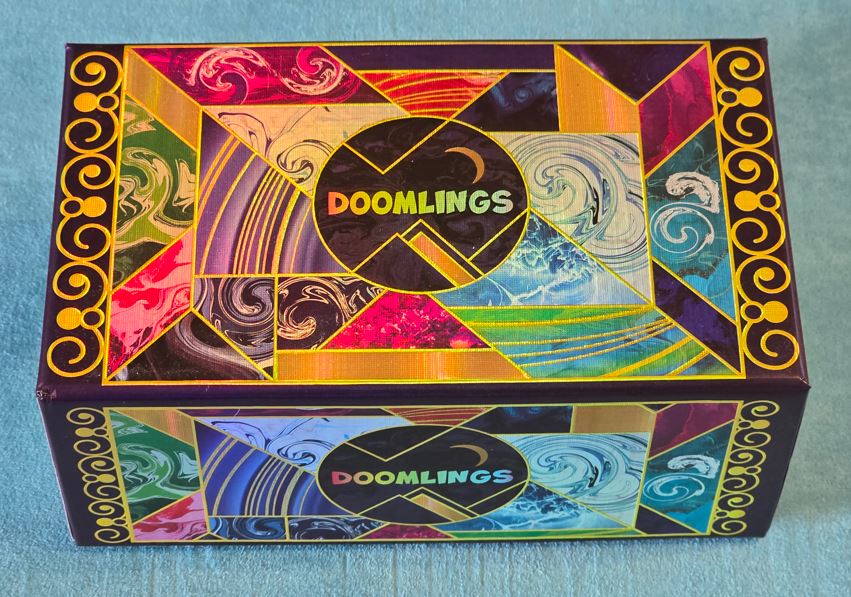
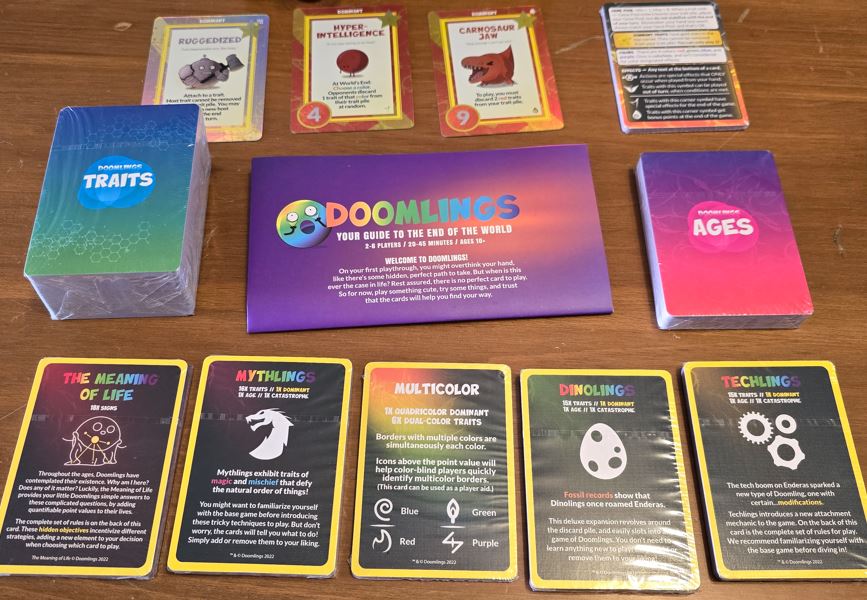
In addition to the main contents of the game, this edition also includes a number of expansions. Today, we’re just looking at the core game. In the coming months, I’ll try out the expansions as well, and give a quick rundown of what they bring to the game.
At its core, Doomlings is a set collection game with a little twist. You’re building a tableau of traits for your species while navigating randomly drawn Ages and Catastrophes. The core rules are easy to grasp (draw, play, discard) but the decisions are far from mindless. Do you go for high-scoring Dominant traits early, or play it safe with flexible combos? Do you sabotage others or quietly build your own genetic empire? I’ve certainly had plays where I have spent too long building a clever machine and then not had enough time to employ said machine to actually win.
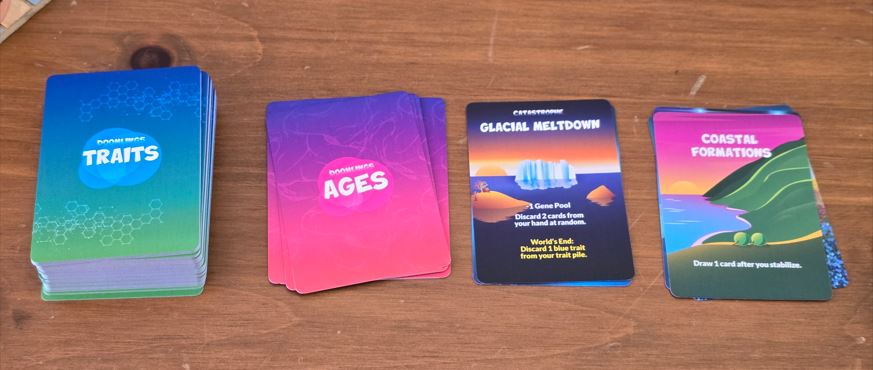
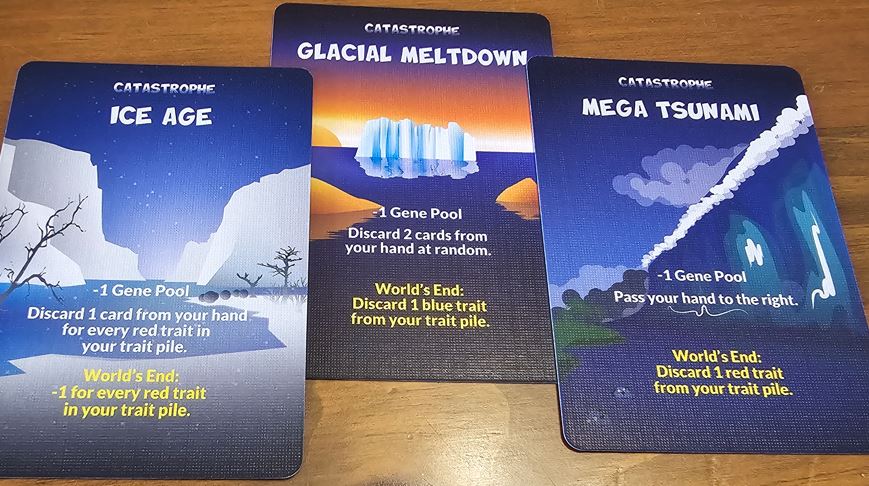
The game’s clever use of the Gene Pool mechanic (which limits your hand size) adds a subtle layer of tension. You’re constantly balancing ambition with survival, especially when those Catastrophes start hitting. They can hit hard, too…
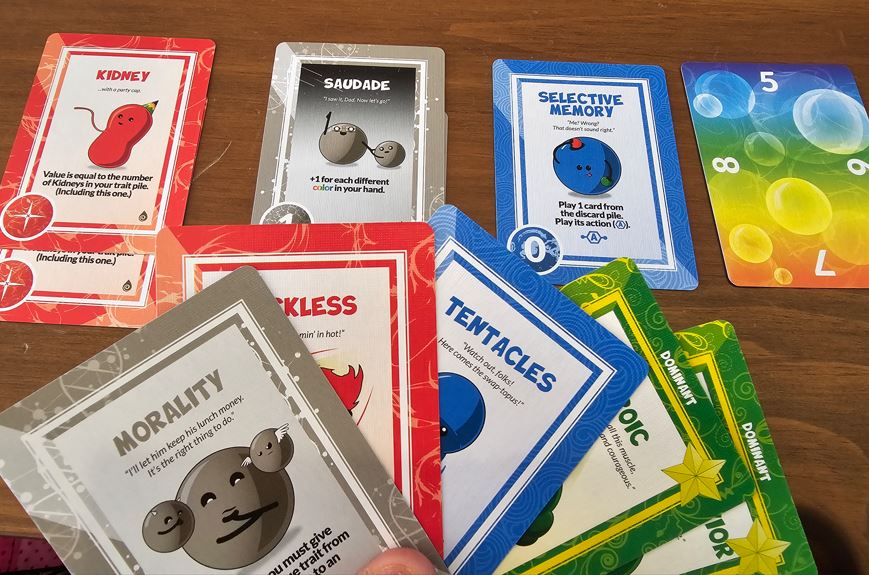
The art is playful and vibrant, with trait cards like “Narcissistic” or “Photosynthetic” that feel both silly and strangely fitting. This is a game that doesn’t take itself too seriously, even as it simulates the end of all things. The theme is strong without being oppressive; more Pixar apocalypse than Mad Max.
I appreciate Doomlings for its simplicity, though it has a bit more bite than similar games, such as Unstable Unicorns. It’s easy to teach, quick to play, and scales well from 2 to 6 players. But beneath that simplicity is a surprising amount of replayability. With dozens of trait cards and randomised Ages, no two games feel quite the same. And because the game ends after a fixed number of rounds, it never overstays its welcome as we often feel that games of Munchkin do.
Doomlings is a delightful contradiction: light but strategic, silly but smart. It’s the kind of game that invites laughter, a bit of scheming, and just enough tactical depth to keep you coming back. There’s a good amount of interaction, but it’s not got that “feels-bad” vibe that I get from Munchkin. Most of my plays, other than the first few, have been with players that I wouldn’t necessarily describe as dedicated gamers. That the game has proven accessible to these more casual groups is a pretty good sign! I expect this game to enter my Top 50 this year, but likely not my top 25. I do recommend it, as we’ve had a lot of fun with it.
Let’s finish up with some advice for your games of Doomlings!
1. Balance Dominant Traits Wisely
- Dominant traits give big points but limit your flexibility.
- Play them early if you can build around them, or save them for a surprise late-game boost.
- Watch your hand size; Dominants can clog your Gene Pool if you’re not careful.
2. Gene Pool Management = Survival
- Keep an eye on your Gene Pool limit, especially after Catastrophes.
- Traits that let you draw or discard strategically can help you cycle through your deck faster and find key combos.
3. Combo is King
- Look for traits that synergise, like ones that reward you for having certain colours or types.
- A well-built engine of traits can outscore flashier cards if it’s consistent.
4. Adapt to the Ages
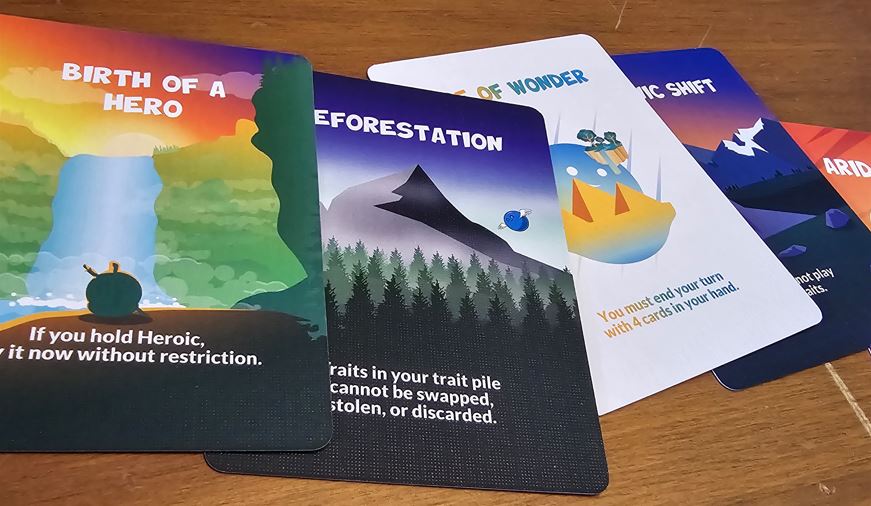
- Each Age changes the rules slightly; some reward certain traits, others punish them.
- Don’t get too attached to a strategy; pivoting can be the difference between thriving and extinction.
5. Don’t Sleep on Low-Point Traits
- Some low-point traits offer powerful abilities: extra draws, discards, or protection.
- They’re great for building momentum and setting up bigger plays later.
6. Catastrophes Are Coming… Be Ready
- You know they’re in the deck, so plan for them.
- Traits that protect your hand or let you recover quickly are gold when the world starts crumbling.
7. Watch Your Opponents
- If someone’s building a colour-heavy strategy, deny them key traits.
- Use disruptive traits to slow down runaway leaders, especially in the final Age.
Stay tuned for future article in which we’ll dive into the expansions!
 No Rerolls
4 Comments