

It’s that time of year again for what might just be the most prestigious gaming award that can be given out by mere mortals! Welcome to the NoRerolls Top 50 Games of 2025 list; an arbitrary ranking of the games that I love.
This is a list of my personal top 50 games at this point in time. My choices are not limited to games from this calendar year, but instead, represent my current thoughts on the top 50 games to me. Next year, some of the games featured may move up and down as my opinions change and I get the chance to play more games or revisit old favourites.
This series will comprise 5 posts, each covering 10 games as we work down from number 50 to number 1.
This year, this section of the list has a couple of new entries, some returning classics, and then a few games that were previously higher on the list. Let’s kick things off, shall we?
40: Clank
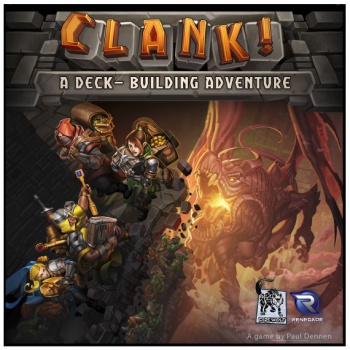
Previous Position: 39 (-1)
Year: 2016
Designer: Paul Dennen
Publisher: Renegade Game Studios
Plays: 1-4 players in ~30 to 60 minutes
In 2023, I was feeling a little burnt out on Clank. Last year, and this year, I’m feeling better about it again, and it is comfortable in this list. Clank is a union of two genres that I really like. Those are the deck builder and the dungeon crawl. It works really well, with the engine you build with your deck coming to represent your hero and his or her capabilities. Focus and optimise your deck for a focused and optimised hero. Fill it with random nonsense and get… well… not that.
The game can get a tad repetitive, hence the drop in placement in both 2022 and 2023. I love the deck building, but the dungeon crawl gets a little stale if overplayed. Maybe it’s just that it’s the same 2 maps, over and over. There are expansions with new maps (and Catacombs, which generates a randomised map through exploration), but I’ve not picked any of these up. That said, still a great game!
39: How to Save a World
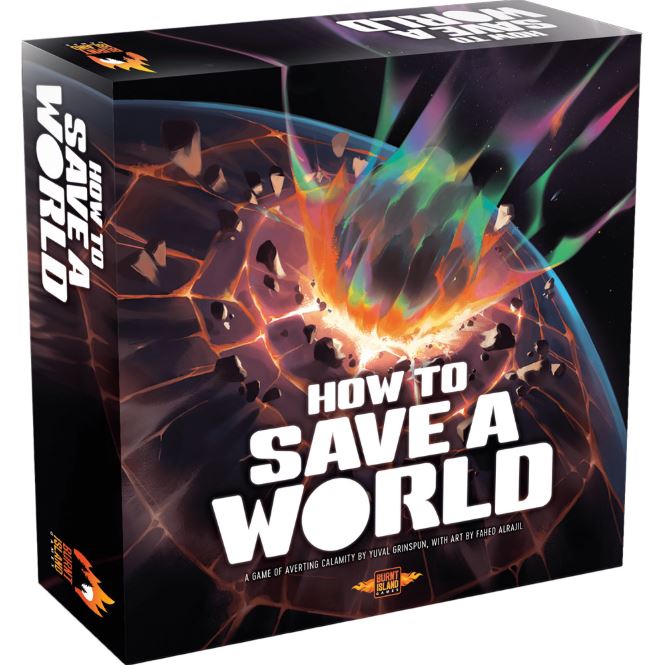
Previous Position: New to the list
Year: 2025
Designer: Yuval Grinspun
Publisher: Burnt Island Games
Plays: 1-4 players in ~60 to 90 minutes
At its heart, How to Save a World is a game about collective ambition and personal compromise. Players work together to complete projects that stave off global crises, pooling resources and ideas to keep the world afloat. But beneath that shared mission lies a sharp competitive edge: only one player ultimately claims victory, and the path to that position often means balancing altruism with self‑interest. It’s a design that thrives on table talk, negotiation, and the subtle art of knowing when to help and when to hold back.
After several plays, the rhythm of the game becomes clear; contributing to projects feels natural, even rewarding, but pushing yourself into the winning position requires a different kind of nerve. That tension between saving the world and saving yourself is what makes the game sing. Its arrival at #39 reflects not just clever mechanics but the way it sparks reflection: are you here to be the hero everyone needs, or the one who walks away with the laurels?
We reviewed this back in June, when it appeared as our Game of the Month.
38: Soulbound

Previous Position: 23 (-15)
Year: 2020
Designer: Emmet Byrne, Zak Dale-Clutterbuck, David Guymer, Elaine Lithgow, T. S. Luikart, Dominic McDowall, Katrina Ostrander, Joshua Reynolds, Clint Werner
Publisher: Cubicle 7
Plays ~2-7ish players in however long you care to play for
I’m a sucker for a good dice pool-based RPG. I really do think that dice pool systems are my favourites; just look at games like Mutant: Year Zero and Vampire: The Masquerade. That this one is also based on Warhammer: Age of Sigmar is a big plus. I do love me some Warhams.
I initially played with a local group, and that went really well. More recently, I’ve been playing online with a group that I met via the Unpossible Journeys Discord. I really enjoyed this campaign as it proved to be really engaging, well-run, and with a good-humoured group. The rules may be janky in places (movement!), but the game is thematic and gives a good framework for some really excellent play.
I featured it back in 2024 as a game of the month.
37: Star Tycoon
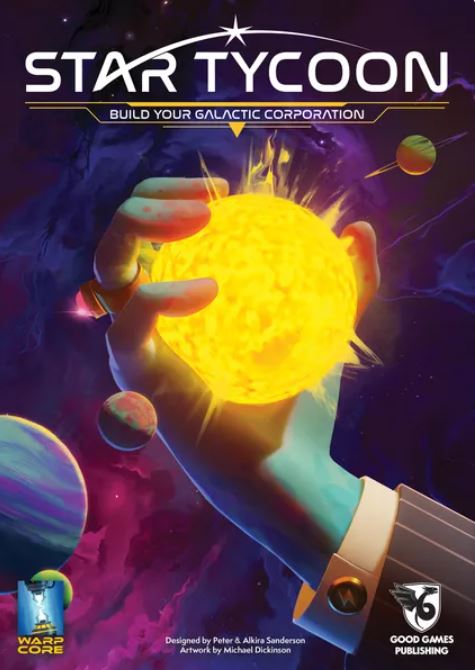
Previous Position: New to the list
Year: 2024
Designer: Peter Sanderson, Alkira Sanderson
Publisher: Warp Core Games
Plays: 1-4 players in ~25 to 100 minutes
Star Tycoon is a game of interstellar ambition, where players build corporations that expand across the galaxy, trading, developing, and competing for dominance. It shares some DNA with heavy economic engines like Terraforming Mars, but the focus is a little different: rather than sprawling projects on a single planet, you’re juggling markets, colonies, and the shifting tides of galactic commerce. The result is a design that feels both familiar and fresh, offering crunchy resource management with a distinctly cosmic flavour.
When it hit the table in November, it clicked instantly. The systems are intuitive enough to get moving quickly, yet layered enough to reward deeper play. It scratches a similar itch to Terraforming Mars, but in a way that feels complementary rather than derivative; a different rhythm, a different kind of satisfaction. Its debut on the list reflects that spark: a game that doesn’t just echo past favourites, but carves out its own orbit in our club’s regular rotation.
36: Adeptus Titanicus
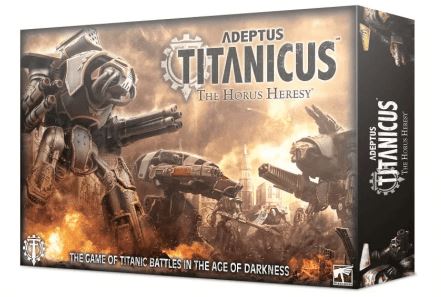
Previous Position: New to the list
Year: 2020 (current starter set)
Designer: Unlisted (GW studio)
Publisher: Games Workshop
Plays: 2 players in ~45 to 90 minutes
Adeptus Titanicus brings the colossal god‑machines of the Warhammer 40,000 universe down to the tabletop in a way that feels both epic and intimate. Instead of commanding faceless armies, you’re at the helm of individual Titans. These are towering war engines whose every system, weapon, and reactor can be managed with surgical detail. The game thrives on that granularity: heat levels, shield arcs, reactor strain, and weapon loadouts all matter, and the result is battles that feel less like abstract skirmishes and more like desperate duels between living legends of steel.
After trying it out, the appeal was immediate. It was enough to prompt a purchase on the spot. The level of control you have over each Titan makes every decision meaningful, from pushing reactors to the brink to timing a devastating salvo. It’s a game that rewards careful planning but still delivers cinematic drama, as these massive machines clash in thunderous combat. Its debut at #36 reflects not just its mechanical depth, but the sheer thrill of stepping into the command throne and feeling the weight of a god‑engine at your fingertips.
35: DC Comics Deck-Building Game
Previous Position: 43 (+8)
Year: 2012
Designer: Matt Hyra, Ben Stoll
Publisher: Cryptozoic Entertainment
Plays: 2-5 players in ~45 minutes
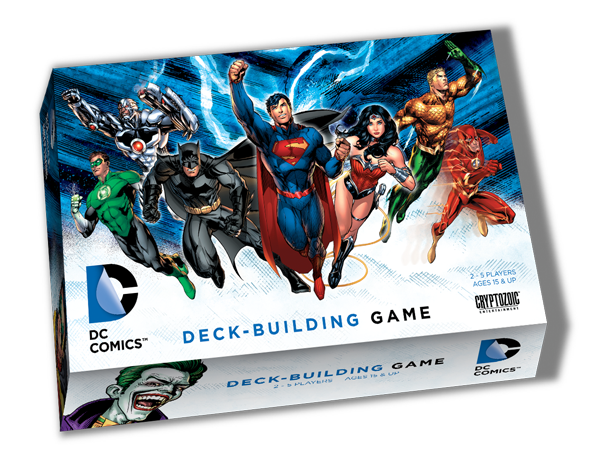
Coming back up the rankngs a little after slipping in previous years, we have the DC Deck-Building Game. My biggest criticism of this game remains unchanged, in that you could play much of the game on autopilot. There’s generally no reason not to just play all of your cards every turn. There are no real decisions to be made in the playing of cards like there is in, say, Dominion. It’s too free, too open, too loose.
That said, it’s still a lot of fun. The game looks really pretty and is full of references for comic fans to feast upon. You do get to make decisions on the content of your deck as you buy cards from the middle of the table. It’s a good, accessible, fun deck-builder that doesn’t take too much thought and has a ton of expansions if you want to add more cards to your mix. Despite the flaws, this still sees a lot of play, and probably more play than a lot of my “better” deck-builders which might explain why it ranks pretty well, even if I have, in the past, found myself a little burnt out on it.
34: The Expanse Roleplaying Game
Previous Position: New to the list
Year: 2019
Designer: James S.A. Corey, Seth Johnson, Steve Kenson, Ian Lemke, Rich Lescouflair, Rob McCreary, Jason Mical, Neall Raemonn Price, Zach Walters, Nicole Winchester
Publisher: Green Ronin Publishing
Plays: It’s an RPG, YMMV.
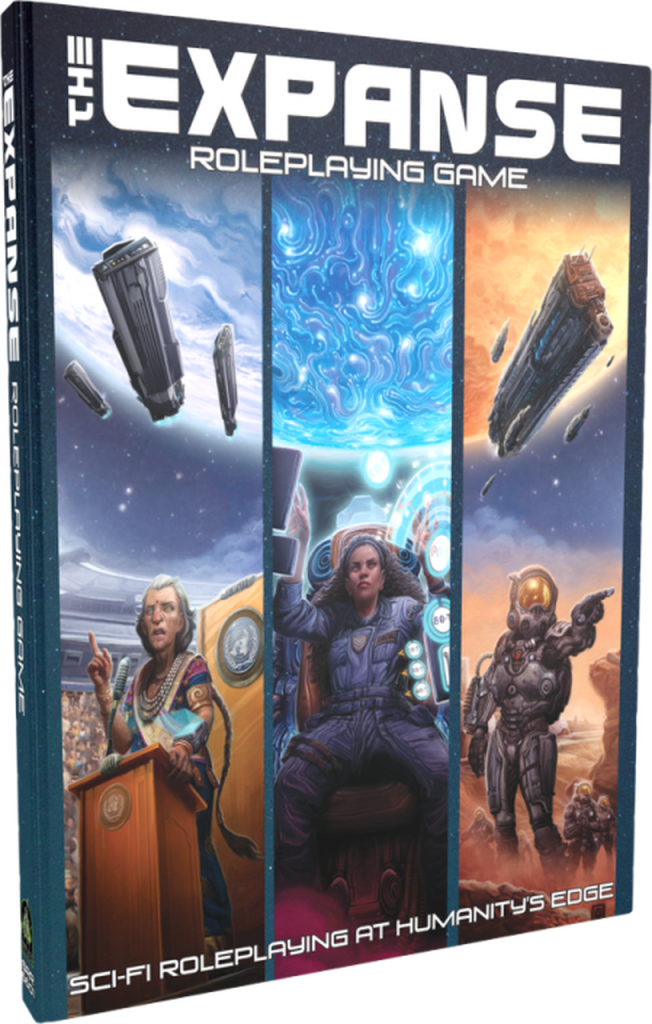
The Expanse Roleplaying Game takes the political intrigue, hard science fiction, and human drama of James S.A. Corey’s novels and translates them into a tabletop system built on Green Ronin’s AGE mechanics. It’s a game that thrives on tension: the fragility of space travel, the weight of factional politics, and the personal stakes of crew members caught between Earth, Mars, and the Belt. Rather than focusing on endless combat, it leans into narrative choices and the consequences of living in a universe where every decision can ripple across systems.
This year, it’s been a highlight at the table, first as a tight two‑shot that captured the grit and danger of the setting, and then as the beginning of what looks likely to be a longer campaign. The mechanics support both quick bursts of story and extended arcs, making it flexible enough to suit different playstyles. Its debut in this year’s list reflects not just the strength of the system but the sheer fun of stepping into the vacuum and telling stories where survival, loyalty, and ambition collide.
33: New York Zoo

Previous Position: 29 (-4)
Year: 2020
Designer: Uwe Rosenberg
Publisher: Feuerland Spiele
Plays: 1-5 players in ~30 to 60 minutes
Uwe Rosenberg likes to publish these tile-laying games. They’re usually pretty good, too. One of his previous tile-laying games, Patchwork, was number 48 on my list back in 2018. It fell off the list in 2019 and then New York Zoo came in at number 17 in 2022, 27 in 2023, and 29 in 2024. It’s fallen a bit more this year, but still makes it to the table a lot.
This is way better than Patchwork. I really love it. I didn’t think I would when I first played it; it just didn’t look like my sort of thing. I am delighted to have been proven wrong. The game is fun, cute, and can get pretty competitive. It’s also one that I can play with all sorts of different groups.
32: Eclipse: Second Dawn for the Galaxy

Previous Position: New to the list
Year: 2020
Designer: Touko Tahkokallio
Publisher: Lautapelit.fi
Plays: 2-6 players in ~60 to 200 minutes
Eclipse: Second Dawn for the Galaxy is the definitive edition of one of the hobby’s great 4X experiences. It combines exploration, expansion, exploitation, and extermination into a single sweeping design, but what sets it apart is how elegantly it balances those elements. Players build empires across a modular galaxy, research technologies, and command fleets in battles that feel both tactical and cinematic. The streamlined rules of this second edition make the game more accessible without losing any of its depth, ensuring that every session feels like a galactic saga.
At the club this year, it’s become a mainstay. It’s the kind of game that draws a crowd and delivers unforgettable nights. Big games have fostered epic plays, alliances forged in necessity and broken in betrayal (I’m talking about you, Ryan), and stories that emerge naturally from the mechanics. It’s not just about who wins, but about the drama of the journey: the rise and fall of empires, the sudden reversals, the moments of triumph and despair. It just has this enduring power to turn a board game into a living narrative of galactic ambition.
31: Scythe
Previous Position: 27 (-4)
Year: 2016
Designer: Jamey Stegmaier
Publisher: Stonemaier Games
Plays: 1-5 players for ~90 to 115 minutes
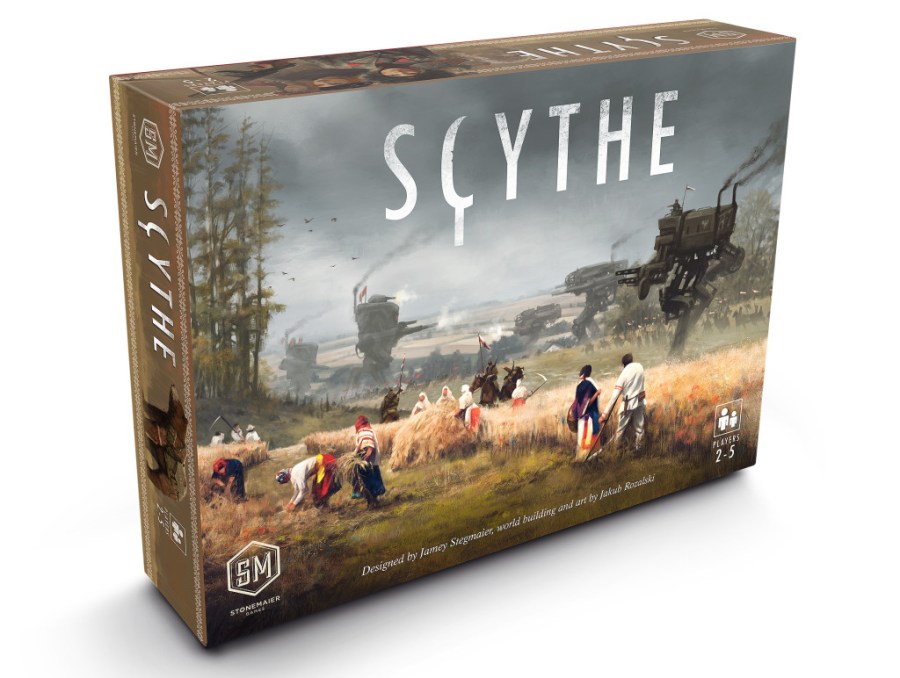
Scythe is a genuinely fantastic game. Opening the box, you see your plastic character and mech miniatures and you might assume that Scythe is a war game. It’s not. It’s really, really not. It’s very much a resource management game. It’s also downright beautiful, both in terms of the design of the pieces and the artwork used. The board, in particular, is a thing of beauty. This also works really well on Tabletop Simulator, if you’re that way inclined, and there’s a commercial digital edition available, too. I’ve played a fair bit of that.
I’m still playing a fair bit of Scythe and loving it every time. I’m at the point where I want to start mixing in some of the expansions and I hope they’ll add some fun extras to the game. It’s fallen down the list a bit over the years, but I’m still happy with it. I always like to return to it, like an old friend.
 No Rerolls
I don’t know how you find the time to play all of these games once in a year, let alone enough times to create a detailed top 50 list with multiple playthroughs of multiple games (plus assembling and painting armies). You must possess some pretty outstanding time management skills!
LikeLike
oh, not all get played every year. there are a fair few that weren’t.
LikeLike