
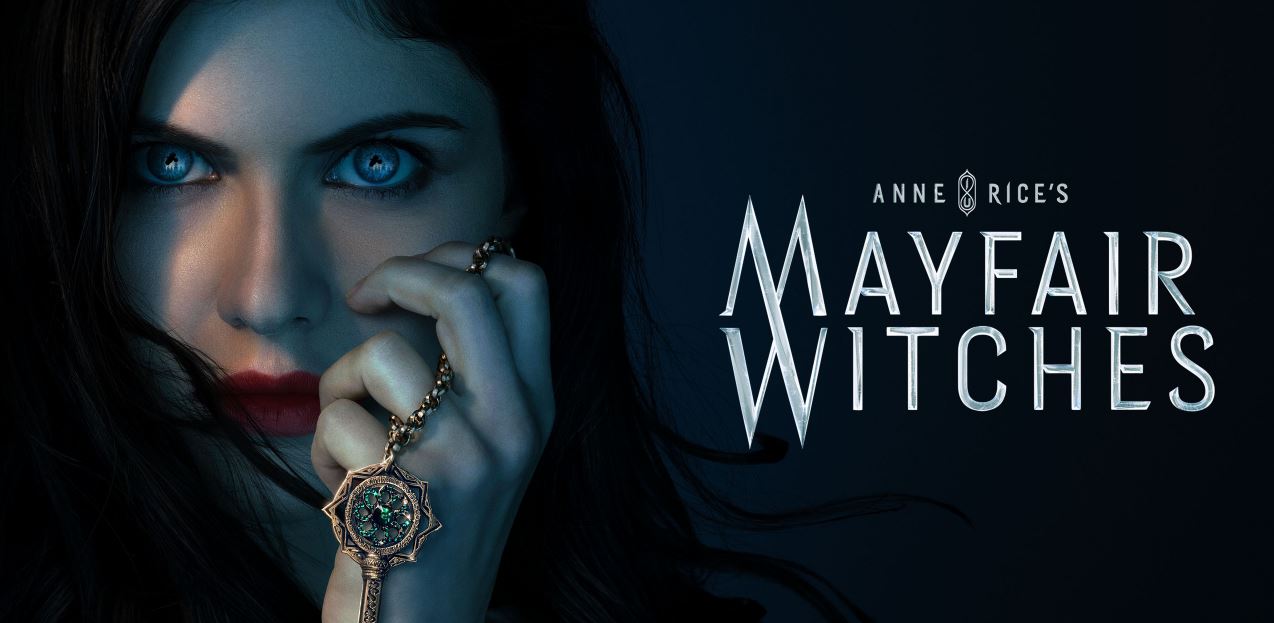
With a cast this strong, Mayfair Witches should have been spellbinding. Alexandra Daddario, Jack Huston, Tongayi Chirisa, Harry Hamlin, Beth Grant, and Annabeth Gish bring talent and presence to every frame. Yet despite their efforts, season one feels more like a slow incantation than a living drama. The atmosphere is rich, the performances magnetic, but the pacing drags, leaving the series stranded between promise and payoff. It is a show that looks gothic, sounds gothic, and acts gothic… yet too often forgets to be compelling.
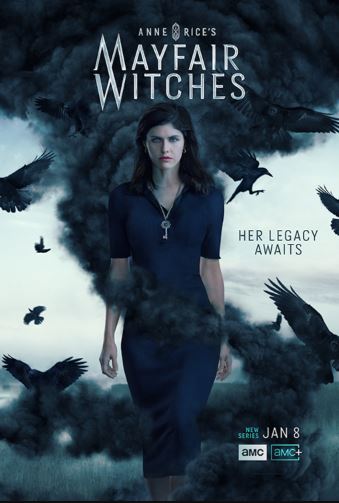
At the centre of it all is the character of Rowan Fielding, played with intelligence and quiet magnetism by Alexandra Daddario. She is the anchor of the series, embodying both the vulnerability of a woman discovering her supernatural lineage and the strength of a doctor accustomed to saving lives. Daddario’s performance is layered: her Rowan is curious, conflicted, and increasingly powerful, a character who could have carried the show to greatness if the narrative had matched her energy. Even when the story falters, Daddario keeps Rowan compelling, grounding the supernatural in human emotion and reminding us of the Gothic heroine at the heart of Anne Rice’s saga.
If Alexandra Daddario anchors the series, the supporting cast provides its richest textures. Tongayi Chirisa brings warmth and gravitas to Ciprien Grieve, the Talamasca agent whose steady presence grounds Rowan’s chaos. His performance is empathetic and understated, making him one of the show’s most reliable figures.
Jack Huston is all seduction and threat as Lasher, embodying the dangerous allure of one of Anne Rice’s most enigmatic creations. He slithers through the narrative with menace and charm, a performance that promises fireworks even when the script doesn’t always serve him well.
Cortland Mayfair is played by Harry Hamlin. He’s the patriarch whose Southern gentleman facade conceals sly manipulation. He delivers every line with a mix of charm and menace, perfectly capturing the contradictions of a family steeped in power and corruption.
Beth Grant, as always, is a delight. She’s just such a great supporting actress, no matter what she’s in. Her presence adds grit and authenticity, elevating even the smallest moments. And Annabeth Gish inhabits the role of Deirdre with beautiful fragility, her “haunted waif” quality lending the series its most Gothic melancholy.
Together, this ensemble is the show’s greatest asset. Each actor brings nuance and charisma, proving that Mayfair Witches had the talent to conjure something extraordinary, even if the storytelling never quite matched their brilliance.
This is, of course, an Anne Rice creation, so let’s talk New Orleans. The city is rendered with its usual intoxicating mix of grandeur and decay, the Mayfair mansion looms with secrets, and the series leans into candlelight, shadow, and whispered incantations. The production design is handsome, the costuming evocative, and the mood consistently heavy with portent.
Yet atmosphere alone cannot sustain a story. For all its visual richness, the show often feels inert, as if trapped in its own spell. Scenes linger too long, tension dissipates, and the pacing slows to a crawl. The result is a series that rarely feels urgent or dangerous. The aesthetic succeeds in conjuring mood, but without narrative propulsion, it becomes more backdrop than engine and it is just not sufficient to carry the story. The show nails the look and tone, but it doesn’t do anything with it.
Mayfair Witches is a story about inheritance, in several senses. It’s about the inheritance of power, of family, and of curses that refuse to die. Rowan’s journey embodies the tension between identity and destiny: a modern doctor grounded in science who discovers she is heir to a supernatural lineage steeped in secrecy and corruption. The series gestures toward rich themes of agency, belonging, and the burden of legacy, positioning Rowan as both protagonist and prisoner of her bloodline.
Family politics provide another layer, with Cortland Mayfair’s patriarchal charm masking manipulation, and Deirdre’s haunted fragility symbolising the generational toll of the Mayfair curse. The Talamasca, through Ciprien, offers a counterpoint; an institution of order and observation, standing against the chaos of Lasher’s seduction. These dynamics could have created a tapestry of Gothic intrigue, exploring how power is inherited, contested, and corrupted.
Yet the resonance is muted by the show’s pacing. Themes of identity, agency, and corruption are present, but they unfold so slowly that their impact dissipates. Instead of building tension or urgency, the narrative lingers, leaving viewers admiring the ideas but rarely gripped by them.
So, the show is quite flawed, but let’s consider the strengths that are very much present here. If Mayfair Witches falters in pacing, it rarely falters in performance. The cast is uniformly excellent, elevating the material at every turn. Beyond the performances, the show succeeds in atmosphere. New Orleans is rendered with a gothic richness that would have made Anne Rice proud. The Mayfair mansion looms with secrets, and the production design captures the grandeur and decay of Rice’s world. The series looks the part, and its aesthetic commitment ensures that even when the narrative stalls, the mood remains immersive.
But did I really enjoy the show? For all its talent and atmosphere, Mayfair Witches stumbles where it matters most: pacing and engagement. Episodes unfold at a glacial speed, lingering on mood and exposition without delivering the tension or urgency that the gothic genre demands. The narrative often feels padded, stretching thin material across too many hours, leaving viewers waiting for sparks that rarely ignite.
Even Lasher, embodied with seductive menace by Jack Huston, is undercut by the slow burn. His presence promises danger, but the storytelling rarely allows him to feel truly threatening. The same is true of the family intrigue: Cortland’s sly manipulations, Deirdre’s haunted fragility, and Rowan’s struggle for agency all have potential, but the plotting dilutes their impact.
This is frustrating, because I went in wanting to like this show. Mayfair Witches had the cast, the setting, and the atmosphere to conjure magic. The cast delivered performances that deserved a richer spell. But season one moves too slowly, and its intrigue is ruined by a lack of pacing that just smothers any real tension. The result is a beautifully shot, well-performed show that rarely feels alive.
 No Rerolls
2 Comments