
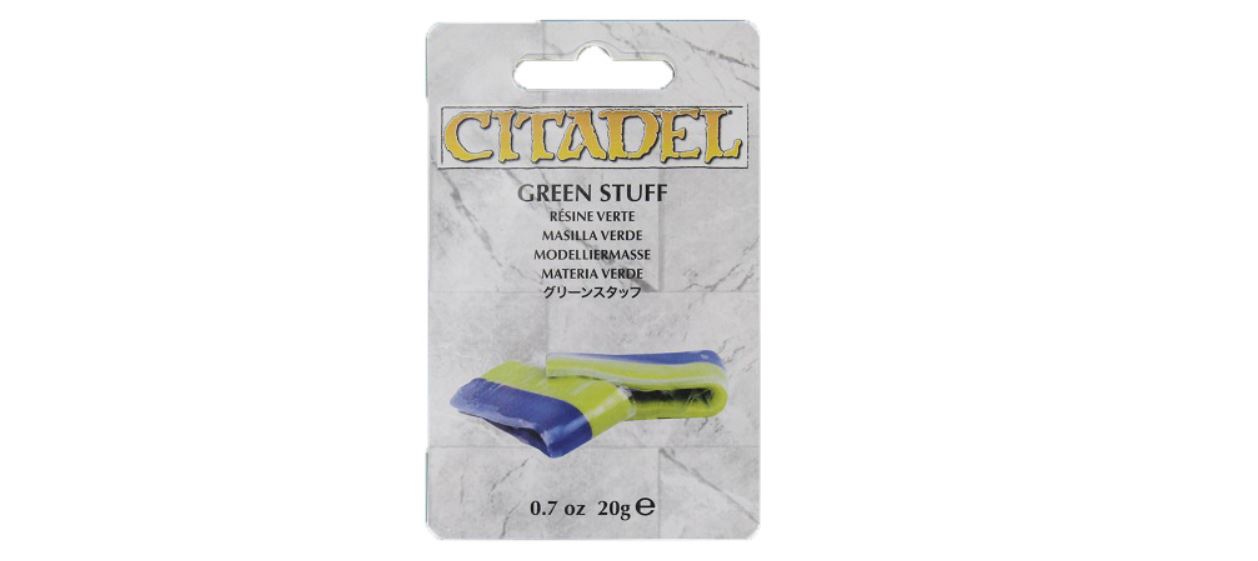
A quiet shift in a supply chain rarely makes for a compelling story. Yet the end of Kneadatite Green Stuff’s US production feels like one of those moments where a niche material reveals something larger about how fragile creative ecosystems can be. It’s the end of an era disguised as a factory closure.
For half a century, Green Stuff has been one of those quietly indispensable materials: a plumber’s epoxy that became a sculptor’s medium, a hobbyist’s rite of passage, and a professional’s trusted tool. Its odd alchemy – sticky, elastic, stubborn, capable of holding the smallest crease of a cloak or the faintest line of a face – shaped entire aesthetics in miniature wargaming and modelmaking.
The closure of PPG’s Pennsylvania plant in 2025 wasn’t framed as a cultural loss. It was a business decision in a sector squeezed by tariffs on both raw materials and exports. Epoxy putty sticks were a rounding error in a multinational’s portfolio. But for the people who sculpt, convert, repair, and imagine with the stuff, the disappearance of the original formulation is more than a footnote. It’s the quiet end of a lineage.
And this end, this undoing, is coming undone by policy rather than demand. The story behind the shutdown is a reminder that creative tools often sit at the mercy of forces far outside the creative world. These included:
- Anti-dumping duties on epoxy resin imports drove up the cost of the core ingredients.
- Retaliatory tariffs made exporting finished putty sticks from the US more expensive.
- Manufacturers with diverse portfolios simply stepped away from a suddenly unprofitable niche
Industrial maintenance felt the shock first. The modelling community is only now feeling the aftershocks; delayed but no less real. There’s something quietly sobering about the idea that a sculptor’s favourite medium can vanish not because people stopped using it, but because it became collateral in a geopolitical trade dispute.
The twist in the tale is that the future of Green Stuff may now lie not in the US, but in a single UK facility. Sylmasta, who first brought Green Stuff to the UK modelling scene in the 1990s, happen to operate the only epoxy putty stick manufacturing plant in the country. They already produce a range of formulations, including Geomfix, and have the machinery to attempt a successor to the original Kneadatite.
This isn’t just a matter of keeping a product alive. It’s a rare chance to rethink it. It’s a chance for a successor that honours the original without replicating it. Sylmasta’s planned reformulation acknowledges something long known to modellers: the ribbon format was always a compromise. Where the yellow and blue touched, the putty cured prematurely. Every hobbyist has cut away that hardened strip with a mix of irritation and resignation.
The new approach – two separate yellow sticks, Part A and Part B – solves that problem and opens up more control over mix ratios. It also signals a shift from preserving a legacy to refining it.
There’s a quiet honesty in Sylmasta’s admission that they cannot recreate the original exactly. Chemistry, machinery, and manufacturing processes all shape the final feel of a putty. But there’s also something hopeful in the idea that a new formulation might keep the spirit of Green Stuff alive while smoothing out its quirks.
The story of Green Stuff’s transition is, in miniature, the story of many creative materials:
- A tool becomes beloved for reasons its inventors never imagined.
- A global supply chain shifts, and a niche community feels the tremor.
- A small manufacturer steps in, not because the market is huge, but because the craft matters.
It’s a reminder that the materials we rely on, especially in tactile, analogue hobbies, are not guaranteed. They persist because someone chooses to keep making them.
And it’s a moment for the modelling community to articulate what they value: the elasticity, the working time, the crispness of detail, the way the putty behaves under a sculpting tool. Sylmasta’s call for feedback is more than a survey; it’s an invitation to shape the next chapter of a material that has shaped so much of the hobby.
I’m curious what aspects of the original Green Stuff you think are worth preserving, and which quirks you’d happily see left behind.
 No Rerolls