
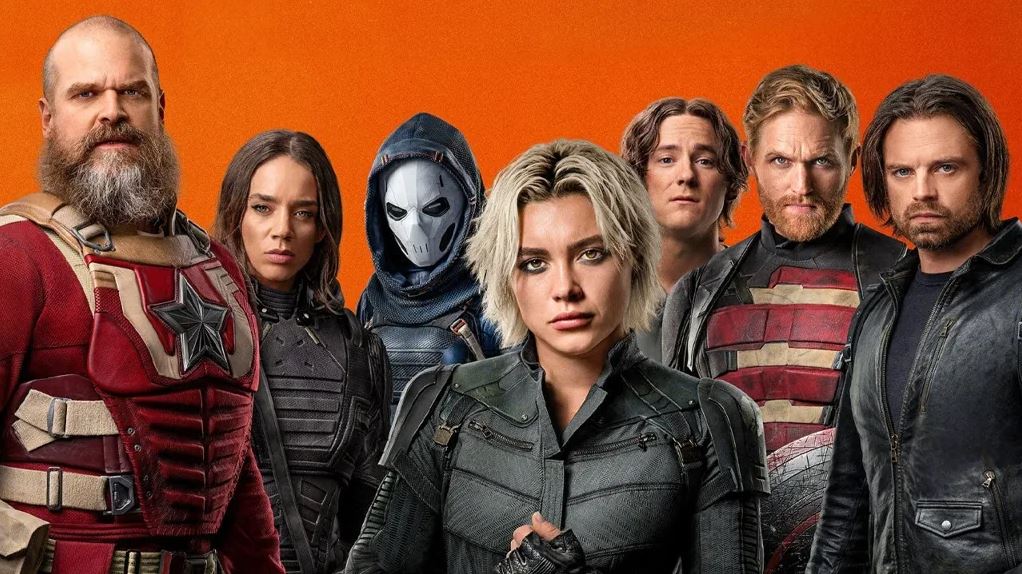
Going into Thunderbolts, I’ll admit my expectations were modest. Marvel’s recent outings have felt uneven, and the idea of a team cobbled together from antiheroes and misfits seemed more like damage control than inspired storytelling. I mostly just expected something of a Suicide Squad rip-off. But what unfolded on screen was something far better than I had anticipated. Thunderbolts embraces its oddball energy, leaning into the flaws and contradictions of its characters, and in doing so, it delivers one of the most engaging ensemble pieces the MCU has produced in years.
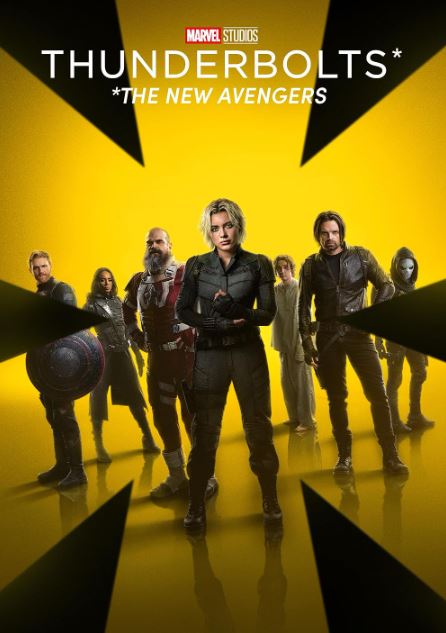
For me, one major element of that success is Julia Louis-Dreyfus as Valentina Allegra de Fontaine. What could have been a one-note manipulator becomes the film’s sly, scene-stealing pulse. Her sharp wit and calculated menace give the movie a spark that elevates every interaction, proving that even in a franchise built on spectacle, character can still steal the spotlight.
I appreciated this movie’s focus on character over spectacle. Where recent Marvel entries have leaned heavily on CGI battles and multiverse entanglements, this film slows down just enough to let its ensemble breathe. Each antihero – Yelena Belova, Bucky Barnes, Red Guardian, Ghost, Taskmaster, and John Walker – gets space to wrestle with their pasts, their failures, and their uneasy place in a world that doesn’t quite trust them. That focus on flawed humanity makes the eventual team dynamic feel earned rather than forced.
Julia Louis-Dreyfus is the undeniable standout. Her performance is a masterclass in tonal balance: one moment she’s delivering a biting quip that undercuts the tension, the next she’s manipulating the team with chilling precision. Every scene she touches crackles with energy.
The ensemble itself is another strength. Florence Pugh shines as Yelena, balancing sardonic humour with emotional depth. Sebastian Stan’s Bucky is weary but compelling, his quiet moments carrying surprising weight. David Harbour’s Red Guardian provides comic relief without tipping into caricature, and even the more underdeveloped characters like Ghost and Taskmaster are given moments that remind us of their humanity. Together, they form a team that feels messy, unpredictable, and real; exactly what the MCU needed.
Tonally, the film strikes a good enough balance. It’s dark without being dour, funny without being flippant, and emotionally grounded without losing its blockbuster appeal. The final act, in particular, lands with unexpected resonance, offering closure that feels earned rather than manufactured. For a franchise often accused of playing it safe, Thunderbolts takes risks in its storytelling, and those risks pay off.
Visually, while the film doesn’t reinvent the MCU’s aesthetic, it avoids the murkiness that has plagued recent entries. Action sequences are clear, kinetic, and character-driven, never losing sight of the emotional stakes. The result is a film that feels both familiar and fresh. It’s a reminder that Marvel can still surprise when it leans into its characters rather than its machinery.
Thunderbolts does have some problems, too. The most persistent issue is that some of the ensemble members do feel a bit underdeveloped. Ghost and Taskmaster, in particular, are given moments of humanity but never quite the arcs that would make them as memorable as Yelena or Bucky. In a film so focused on character, those gaps stand out, but then how much time can really be given to each character in an ensemble movie?
Visually, while the action is clearer than in recent MCU outings, the film still suffers from the franchise’s familiar dim aesthetic. Certain sequences feel washed in grey, robbing them of the vibrancy that the performances deserve. It’s not enough to derail the film, but it does remind us of Marvel’s ongoing struggle with visual identity. Of course, there are some parts of this movie that should feel washed out.
Finally, the plot itself, though engaging, leans on familiar beats. The “team of misfits forced together by manipulation” is a trope we’ve seen before, and while the execution here is strong, it doesn’t fully escape predictability. The emotional payoff in the finale helps, but the journey there occasionally feels like well-worn territory. It’s a bit like when the party in a tabletop RPG is forced together less due to prior narrative and more because the game wouldn’t work if we were not travelling together.
I think that going in with low expectations helped. Thunderbolts turned out to be more than the scrappy side project I expected. By leaning into its ensemble’s flaws and contradictions, it delivered a story that was messy in all the right ways. It was funny, heartfelt, and unexpectedly resonant. Julia Louis-Dreyfus was the film’s secret weapon, elevating every scene she touched with wit and menace, and proving that sharp character work can outshine even Marvel’s biggest set pieces.
To me, a persistent sufferer of superhero-burnout, Thunderbolts is one of the MCU’s most refreshing entries in years. It may not reinvent the superhero wheel, but it reminds us why we enjoy these stories. It’s not just for their spectacle, but for the humanity at their core. I went in with low expectations and came out grinning. I guess that sometimes the best surprises come from the unlikeliest teams.
 No Rerolls