
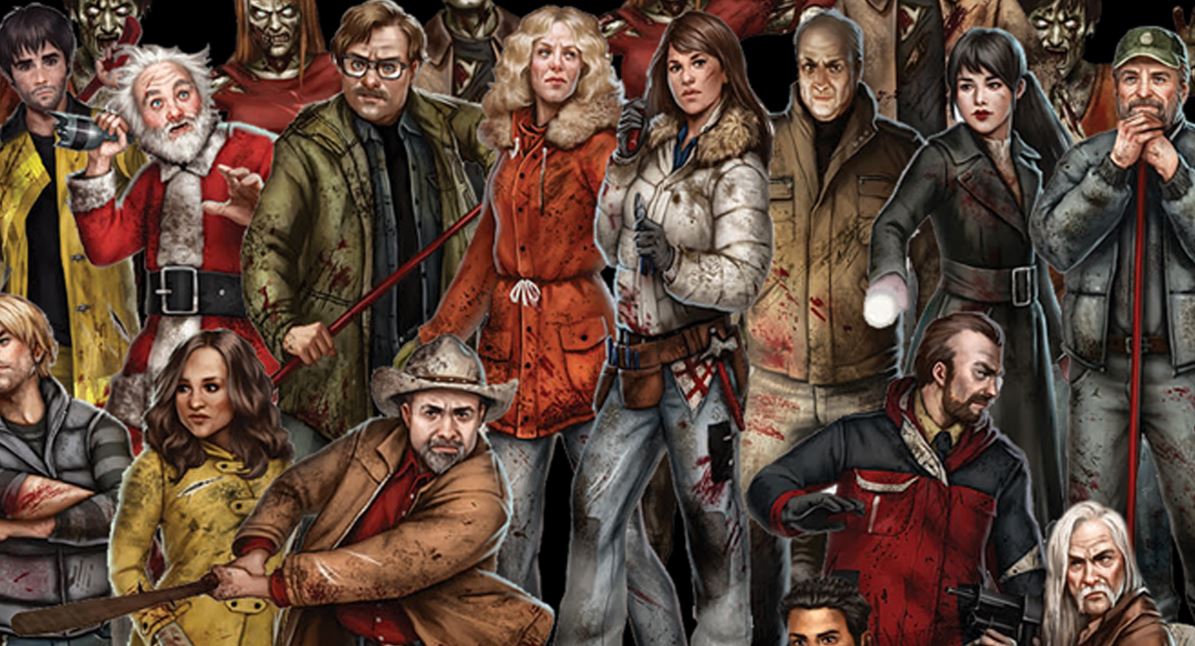
There is a specific kind of silence that falls over a table when the temperature outside hits sub-zero and the pantry is down to a single, dented tin of peaches. In the world of Dead of Winter, that silence is usually broken by someone accusing their spouse of being a serial-saboteur.
While the market is flooded with zombie survival games, most of them treat the apocalypse like an action movie. It’s all shotguns and glory. Dead of Winter is different. It’s a psychological thriller wrapped in a parka. It understands that the real threat is as much about the person sitting across from you as it is about any zombie hordes. Look at them; they’re so suspiciously reluctant to share their extra gasoline. This is a game of high stakes, crushing difficulty, and the kind of dark, accidental comedy that only happens when a stunt dog named Sparky becomes the colony’s last line of defence.
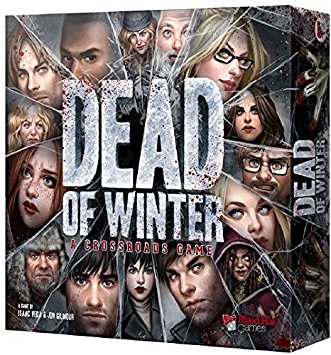
The genius of Dead of Winter lies in its semi-cooperative heart. At the start of the game, the group is given a Main Objective. Perhaps you need to collect enough medicine to stop a plague or hold out for six rounds until help arrives. If the colony’s morale hits zero, everyone loses. Simple, right?
Except for the Secret Objectives. Every player is handed a card that dictates their true win condition. To actually win the game, you must satisfy the group goal and your own private agenda. Sometimes these are benign, like needing to hold two books because your character wants to rebuild a library. But often, they are selfish. You might need to hoard food while the colony starves, or keep all the weapons for yourself.
Then, there’s the Betrayer. In most games, there is a chance that one player is actively trying to destroy the colony. This creates a delicious, suffocating layer of paranoia. When a teammate fails to contribute to a crisis, are they actually empty-handed, or are they a traitor holding the winning card? Every choice becomes a trial, and every “oops, I couldn’t find any food” feels like a declaration of war.
If the Secret Objectives provide the psychological pressure, the Exposure Die provides the physical terror. This twelve-sided red die is the most hated object in the box, and for good reason. Every time you move a survivor between locations or engage in combat with a zombie, you have to roll it. Most faces are blank, but others are not so kind. You might take a wound, which is manageable, or frostbite, which slowly eats away at your health every turn like a ticking clock.
But then, there is The Tooth.
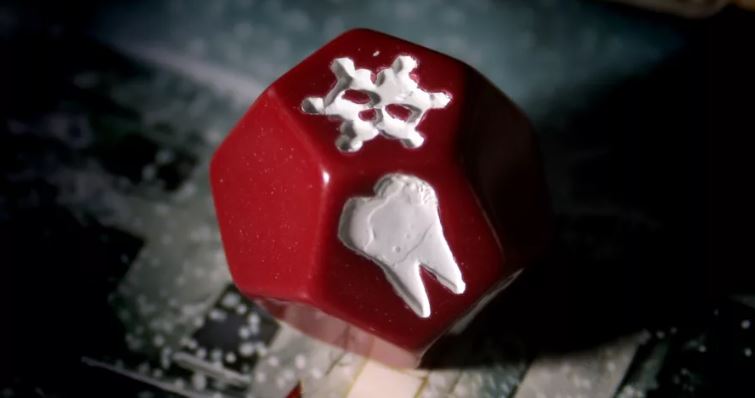
Rolling the tooth symbol results in instant death. There is no saving throw, no health bar to deplete, and no heroic final stand. Your character, perhaps the one you’ve spent two hours equipping with a sniper rifle and a lucky charm, simply dies on the spot. If that survivor was at a location with other teammates, the infection can spread, forcing the next player to choose between killing their own character or rolling the die again to see if the plague continues. It is brutal, it is unfair, and it is the reason why a simple trip to the Grocery Store feels like a suicide mission.
If the dice and the hunger are the engine of Dead of Winter, the Crossroads Deck is its soul. At the start of every player’s turn, the person to their right draws a card. They don’t read it aloud; they wait. These cards have specific triggers.
When a trigger is met, the game stops, and a narrative choice is presented. These aren’t just minor stat checks; they are often gruelling moral dilemmas that force you to choose between the colony’s safety and your own humanity. Do you allow a group of orphans to join the colony, knowing it will drain your food supply and likely kill everyone by Tuesday? Or do you turn them away into the cold, taking a massive hit to your morale but keeping your pantry stocked?
This is where the game’s legendary humour emerges from the gloom. Because of the way characters are shuffled, you often end up with surreal combinations. There is a distinct, dark joy in watching Sparky the Stunt Dog (who is an actual, playable character) successfully navigate a search through a police station to find a riot shield and a blueprint for a solar array. Dead of Winter treats these absurdities with a straight face, making the tough moments feel cinematic and the funny moments feel like the kind of inside jokes that your gaming group will quote for years.
It would be a disservice to talk about this game without mentioning the aesthetic. The art by Fernanda Suarez is beautiful, capturing the weary, frostbitten faces of survivors who look like they haven’t slept in a week. Unlike many modern board games that lean into high-detail plastic miniatures, Dead of Winter uses beautifully illustrated cardboard standees.
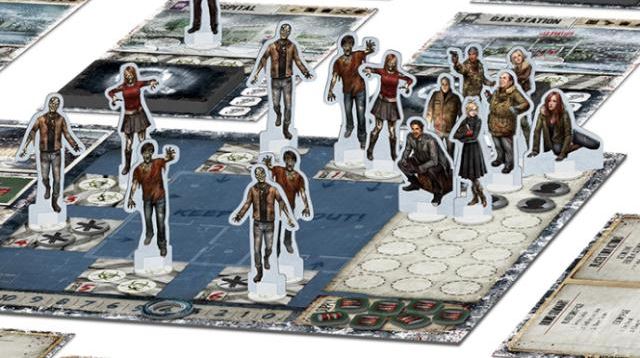
In a weird way, this works better for the theme. The flat, illustrated survivors feel like they belong in this two-dimensional, paper-thin world where life is fragile. The board itself is a sprawling map of a town that feels appropriately desolate, and the sheer volume of stuff, from the item decks to the crisis cards, ensures that no two winters ever feel quite the same. It’s a box overflowing with content, but it all serves one purpose: making you feel the biting cold of the apocalypse.
Dead of Winter is a masterpiece of tension and storytelling. It isn’t a game you play to feel powerful; it’s a game you play to see how you handle pressure. It’s about the crushing weight of leadership and the frantic, whispered conversations between turns when you’re trying to figure out if the person next to you is your greatest ally or your eventual executioner.
Yes, it is brutally difficult. Yes, the exposure die is a cruel mistress. But it’s also a game that rewards you with stories. You’ll remember the time you barely managed to barricade the school against a horde, and you’ll laugh about the time the Mall Santa “accidentally” forgot to bring home the medicine everyone needed. It’s a game of survival, sure, but more importantly, it’s a game about the people you try to survive with.
If you have a group that doesn’t mind a little betrayal and a lot of snow, Dead of Winter is an essential addition to your shelf. Just don’t blame me when you start eyeing your friends with suspicion over a can of soup.
 No Rerolls