
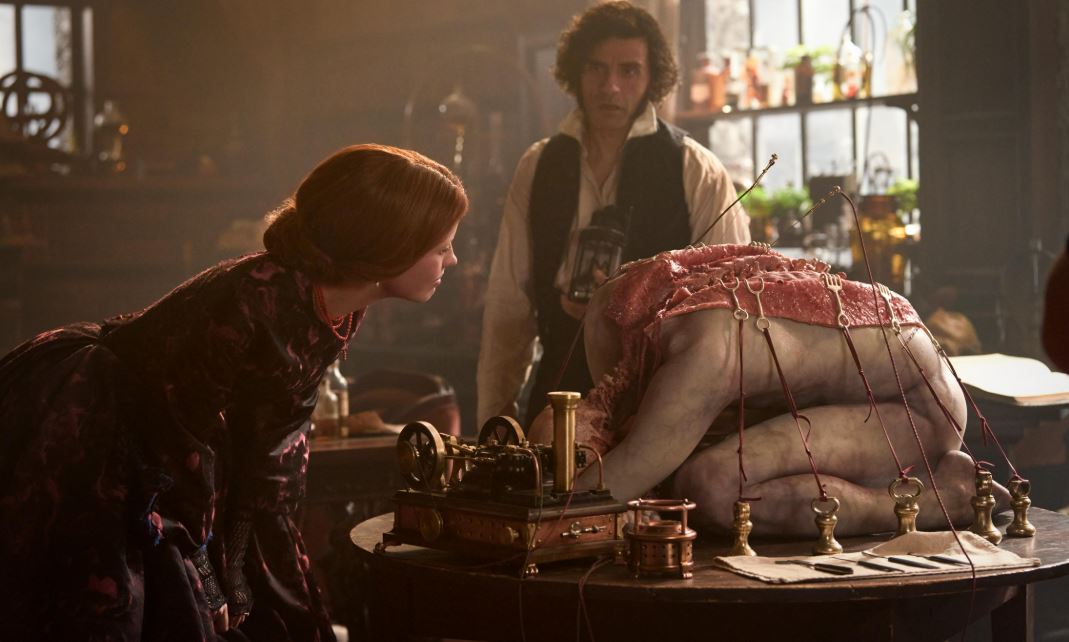
Mary Shelley’s Frankenstein has haunted literature and cinema for two centuries, but Guillermo del Toro’s 2025 adaptation feels like a definitive statement. This is no stitched‑together monster movie. It’s a Gothic epic that treats Shelley’s novel with reverence while reimagining it through del Toro’s signature lens of tragic beauty. With Oscar Isaac as Victor Frankenstein and Jacob Elordi as the Creature, the film explores ambition (and hubris), responsibility, and the fragile line between creation and destruction.
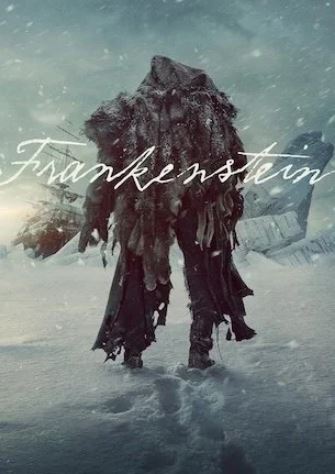
From the get-go, Frankenstein establishes itself as both intimate and operatic. Del Toro leans into atmosphere, all icy landscapes, candlelit interiors, and cavernous laboratories, while grounding the story in the emotional bond between creator and creation. It’s a film that asks not only what it means to play God, but what it means to be human.
What makes this production of Frankenstein so compelling is its refusal to reduce Shelley’s novel to pulp horror. Guillermo del Toro approaches the material with reverence, crafting a film that I believe only he could produce. Jacob Elordi’s Creature is the beating (possibly recycled) heart of the story. It is haunted, vulnerable, and terrifying in equal measure. His performance respects the dignity of Shelley’s original vision, reminding us that the monster is not a villain but a tragic mirror of human failure.
Oscar Isaac’s Victor Frankenstein is another of the film’s triumphs. He plays the role not as a mad scientist caricature but as a man consumed by obsession, torn between brilliance and blindness. Isaac’s performance captures Victor’s charisma and volatility, making him both magnetic and unsettling. His scenes with Elordi’s Creature crackle with tension, embodying the novel’s central conflict between creator and creation. In Isaac’s hands, Victor becomes less a villain than a tragic figure undone by his own ambition, which deepens the film’s emotional resonance.
Visually, the film is a Gothic feast. Dan Laustsen’s cinematography drenches the screen in gothic grandeur, each frame echoing the novel’s atmosphere of beauty and dread. The pacing, surprisingly nimble for a two‑and‑a‑half‑hour runtime, balances grandeur with intimacy, allowing the philosophical weight of the story to unfold without losing narrative drive.
Most importantly, the film remains faithful to Shelley’s central questions about humanity, creation, responsibility, and the danger of ambition. Victor’s all-consuming hubris and the Creature’s emerging humanity are presented as mirrors, each reflecting the other’s flaws. In this balance, Frankenstein finds its greatest strength: a reminder that the true horror lies not in the monster’s appearance, but in the choices of the man who made him.
I don’t see much to complain about with this movie. I suppose that one could argue that Del Toro’s instinct to layer myth, science, and morality so densely sometimes works against the film’s clarity. There are stretches where the sheer volume of ideas threatens to overwhelm, leaving certain threads underdeveloped or lost in the Gothic fog.
Oscar Isaac’s Victor, while magnetic, occasionally tips into theatrical excess. I think that his volatility is compelling, but at times it could overshadow the subtler beats of the story, making Victor feel more operatic than human. It’s a choice that suits del Toro’s style, but it could risk distancing the audience from the character’s inner conflict.
The film’s length, too, may prove demanding. At two and a half hours, the pacing is deliberate and well‑managed, but viewers less attuned to Gothic atmosphere may find themselves tested. For those who revel in the mood, the runtime feels justified; for others, it may feel indulgent.
I love Frankenstein; It might be my favourite novel. What makes the story of Frankenstein endure, both as a novel and in this adaptation, is its refusal to give easy answers. I appreciate that about it. Shelley’s story has always been about more than a monster; it is about the consequences of unchecked ambition, the fragility of human connection, and the terror of confronting our own reflection. Del Toro’s film understands this, and in many ways, it feels like a dialogue with the book itself.
Watching Jacob Elordi’s Creature, I was reminded of the passages where Shelley gives him eloquence and longing, only to have the world recoil in horror. The film restores that dignity, often overlooked in many adaptations, allowing us to see him not as an aberration but as a mirror of our own collective isolation. Oscar Isaac’s Victor, meanwhile, embodies the paradox of creation: brilliance undone by blindness, a man who cannot see the humanity in the life he has made. Their relationship is the film’s true heartbeat, echoing the novel’s central tension between responsibility and rejection.
For me, as someone who treasures Shelley’s text, this adaptation resonates because it doesn’t just retell the story; it wrestles with it. It asks us to consider what it means to be human, what it means to be responsible, and whether empathy can survive in the face of fear. In doing so, it reminds us why Frankenstein is not just a Gothic tale, but a timeless meditation on ambition, morality, and the fragile bonds that define us.
Going back to this movie, Guillermo del Toro’s Frankenstein is a rare adaptation that feels both faithful and freshly alive. It embraces the tragic complexity of Shelley’s masterpiece, while surrounding the characters with a Gothic world that is as oppressive as it is beautiful. Jacob Elordi’s performance anchors the film with vulnerability and fury, and Oscar Isaac’s Victor adds charisma and volatility.
Yes, the narrative density can feel overwhelming, and the runtime may test those less attuned to Gothic atmosphere. But these are minor reservations in a film that moves with surprising momentum, balancing spectacle with intimacy. Del Toro has crafted a story that is deliberate, well‑paced, and emotionally resonant. It’s a reminder that the true horror of Frankenstein lies not in the monster’s appearance, but in the choices of the man who made him.
Ultimately, this 2025 production of Frankenstein is a powerful, well‑paced meditation on humanity’s fear of its own reflection
 No Rerolls