
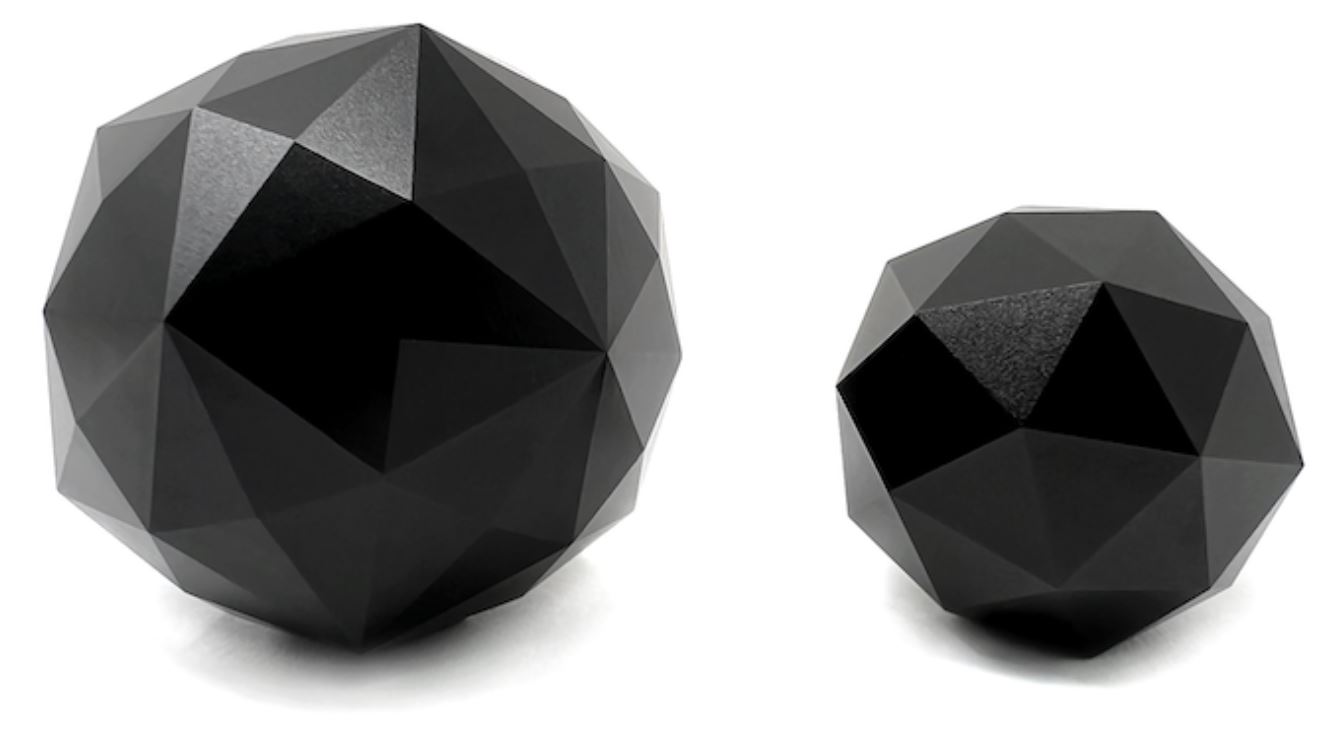
Until I found today’s Kickstarter, I had never heard of a “disdyakis triacontahedron”. For those who don’t know (for I am no longer included among their number!), it’s a 120-sided polyhedral. Yup, someone (David Blanco, actually) has gone and created a 120-sided dice.
Let’s take a step back before delving into this in order to give a bit of context for the uninitiated. When most people (normies) think of dice, they immediately think about the six-sided dice that they are used to seeing in most board games, at casinos, rolled by the bucketful when a big unit of Orks makes a charge in Warhammer 40,000, and in iconography that involves luck or chance. That’s fine. That’s alright. Most dice fit this description. I will refer to this dice as a D6. D for dice; 6 for the number of sides.
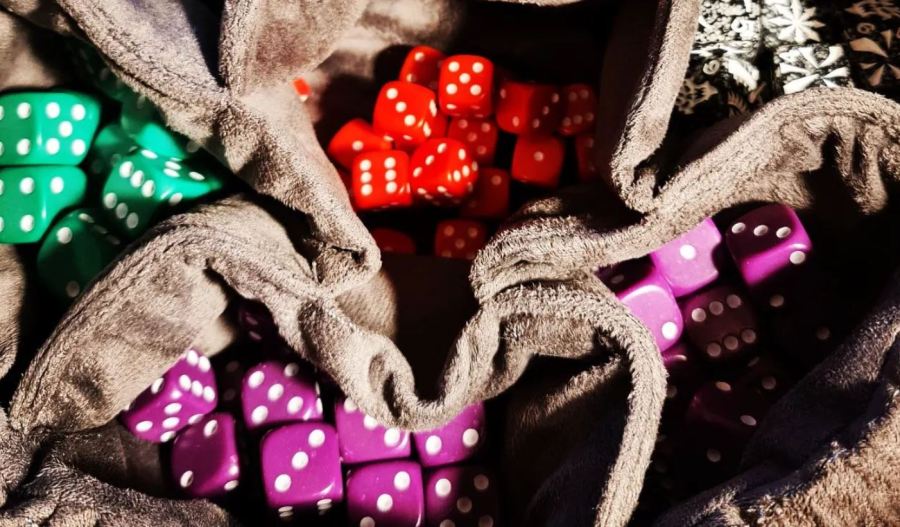
These are not the only dice that are available to us, however. Dice come in many forms. Sometimes, people make terrible D6s in awkward shapes. More interestingly, and more usefully, polyhedral dice are also quite common. A full set of standard polyhedral dice, as popularised by Dungeons & Dragons and similar Roleplaying Games, consist of one each of the following:
- D4
- D6
- D8
- D10
- D10 (with 10, 20, 30, etc. on the face. The two D10s in conjunction can be used as a D100)
- D12
- D20
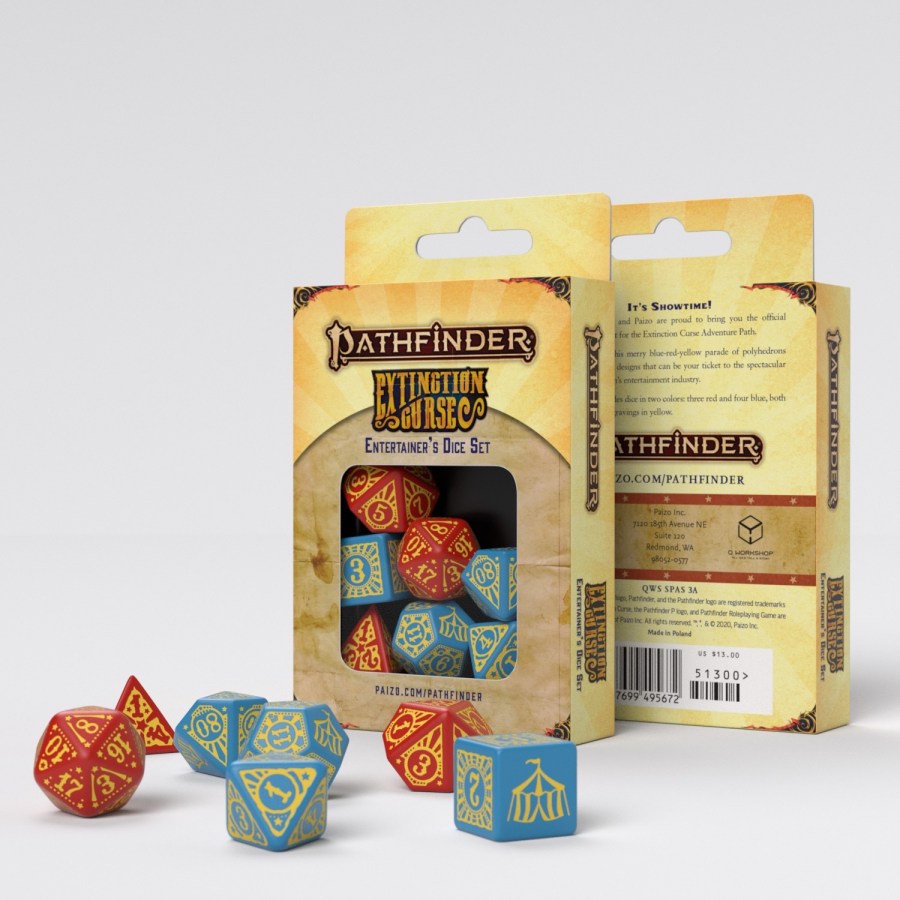
These seven dice are the set most commonly referred to when someone mentions “RPG dice”. Other RPGs use different sets of dice, of course. Some, like Mutant: Year Zero, use D6s. My beloved Vampire: the Masquerade, along with other games using the same system, uses D10s. I like D10s.

There are some more unusual dice out there as well. Dungeon Crawl Classics is an OSR (Old School Renaissance) roleplaying game that harkens back to the days of the original edition of Dungeons & Dragons, whilst also putting on a wee bit of a modern twist. One of these modern elements is that of the dice used. Take a look and see if you notice the difference:
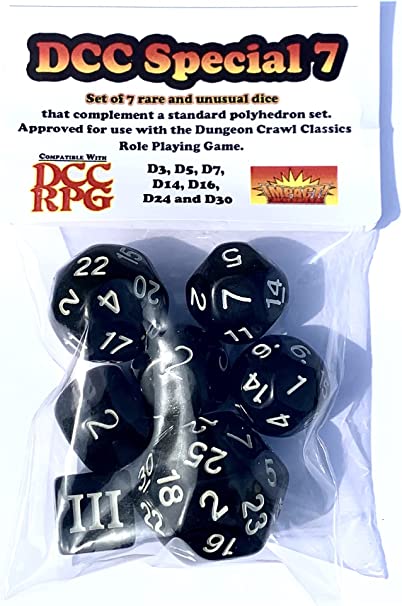
Yes, in addition to the standard polyhedral dice set used in Dungeons & Dragons, Dungeon Crawl Classics employs a number of less common types, including:
- D3
- D5
- D7
- D14
- D16
- D24
- D30
The idea in DCC is that these dice add more steps into the dice ‘chain’. This allows the DM the option of adjusting the dice being used up and down in recognition of the difficulty of an action. It’s a cool idea.
So, we have firm uses for all of these different dice. Even the D100, which as a concept seems to attract a lot of newer players, has a purpose in percentage-based games and for cool random event/loot tables. But what, do tell, about a D120?

Well, off the top of my head I can’t really see an immediate and obvious use for a D120. I suppose you could make some 120-part tables to roll against. Unsurprisingly, that’s what people are already over at the descriptively-appropriate /r/s120Lists. As examples, here are lists of NPC Catchphrases, Tavern Community Board Jobs, and ideas for Guilds.
Do we really need to own a D120 for this? Nah, of course not. Nothing about this product is necessary (unlike the utterly compulsory cold dice to put in whisky…) but it’s nice. It’s a neat novelty that is both fun and beautifully made. I love that clean, machined look that it has. The silver dice, pictured above, is actually my least favourite of the designs. I prefer the coloured dice, as you’ll see a little further down. I also really like that it looks like this is an object that will have a nice heft to it. It’s chunky, and I imagine it’s pretty weighty. It seems satisfying.
The description of the item as “the crown jewel of a dice goblin’s collection” feels like an acknowledgement of what I’ve written above. You know what, though? It’s okay. That’s fine. Some things can just be nice objects. Ornaments. Trinkets. As these things go, I really like this one.
With usability in mind, there’s a second variant also on offer here. This is the 120-sided D20

This is the same disdyakis triacontahedron, but rather than having 120 unique sides, it’s actually got 6 sets of 1-20, functioning as just a cool, chunky, substantial D20. This allows you to both get the cool object and still keep it as a usable thing that you will actually employ in your games.
So, how about the cost? Well, it’s not cheap. There are a number of accessories – bags, stands, boxes – available, but if all you want is the actual die, then you’re looking at $79 for aluminium and $109 for stainless steel. If you want, you can chuck an extra $10 for one of the storage accessories. At that point, for a $10 different, you may as well just do it, you know? Shipping outside of the US will be substantial. You’re looking at between $25 and $45 to ship to the UK. That’s for a single die. You will be able to get a slight discount on your shipping for a second one.
I don’t see myself buying this. It’s just too much at the wrong time, but I’m not sure that this isn’t worth what’s being charged. This is a substantial, unique products, and I actually think the price is pretty fair.
 No Rerolls
4 Comments