

The least prestigious award in tabletop gaming returns after a 2 year, pandemic-related hiatus! Woo and/or yay!
Welcome to our top 50 games list for 2022, in which I list my personal top 50 games at this point in time. My choices are not limited to games from this calendar year, but instead, represent my current thoughts on the top 50 games to me. Next year, some of the games featured may move up and down as my opinions change and I get the chance to play more games or revisit old favourites.
This series will comprise 5 posts, each covering 10 games as we work down from number 50 to number 1. Let’s kick things off, shall we?
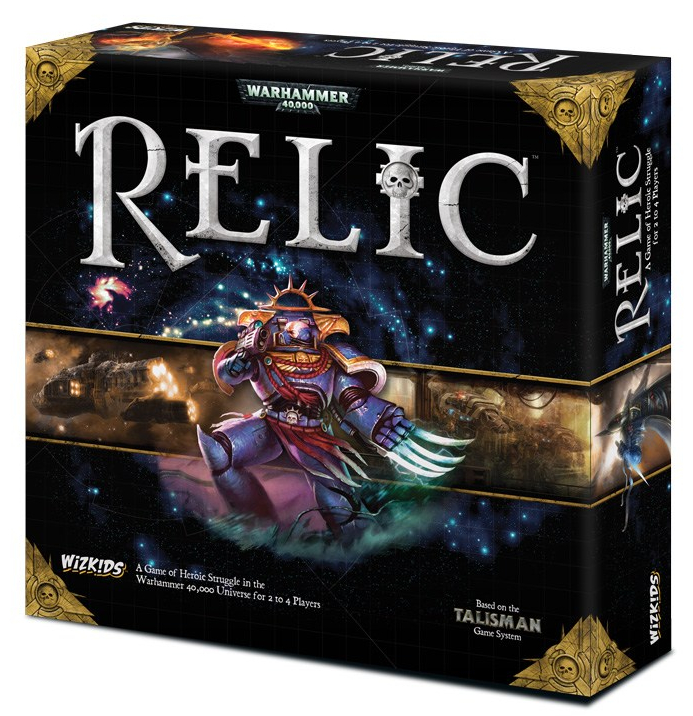
50: Relic
Previous Position: New to the list
Year: 2013
Designers: John Goodenough, Jason Walden
Publisher: Wizkids (formerly Fantasy Flight Games)
Plays: 2-4 players in ~60 to 120 minutes
I’m surprised that this game has never made it onto the list before. I’ve had it for a long time and although it’s never really been one of my favourite games, it’s seen a lot of play. It’s not a great game, being a 40K-themed reskin of Games Workshop’s class board game, Talisman. It’s fine.
As an FFG game, there are a ton of cards and tokens, and there are a lot of moving parts. There’s something genuinely quite satisfying about making your way around the board, beating up enemies, leveling up your character, and collecting cool weapons, artifacts, and allies. This is a game that needs at least one quite pacey player to drive it on. If someone isn’t pushing towards the goal in the middle of the board, then you’re potentially going to be going round and round the outside of the board for a long time until someone finally feels they are powerful enough to take the plunge. So yeah, the game is fine, but you do need that pace-setting player.
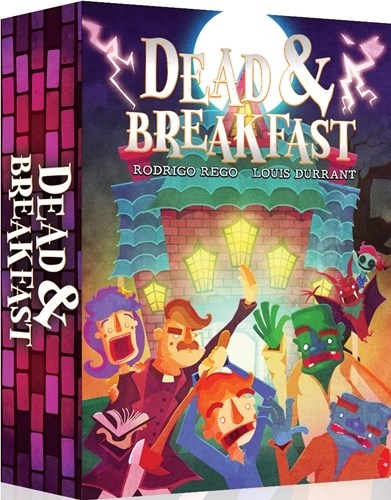
49: Dead & Breakfast
Previous Position: New to the list
Year: 2018
Designer: Rodrigo Rego
Publisher: Braincrack Games
Plays: 2-4 Players in ~20 to 40 minutes
In previous years, Kodama has featured on my list. I played a fair bit of that game and, after a while, I got a bit burnt out on it. Whilst Kodama is all about using your cards to build trees and connect up different features, Dead & Breakfast sees you using tiles to build a sinister B&B.
The game has a really similar vibe to Kodama, but with a spooky, quirky theme. It’s not the most exciting game, but there’s definitely a satisfaction to be had in adding a really optimal floor to your building. There’s not a huge amount of depth, but the game is fun.
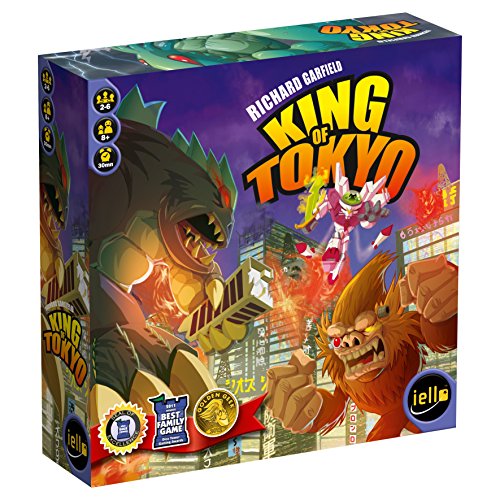
48: King of Tokyo
Previous Position: 48 (unchanged)
Year: 2011
Designer: Richard Garfield
Publisher: Iello
Plays: 2-6 players in ~30 minutes
I continue to enjoy playing King of Tokyo (aka Monster Yahtzee). For added depth, there’s the Power Up expansion, which is almost compulsory for me. The game fell significantly in previous years but has remained static this year. I was a bit tired of it, but I find that I’m still bringing it to the table, particularly with younger groups.
For that next level of depth, or at least complexity, there’s also King of New York, a sequel of sorts to King of Tokyo. King of New York isn’t getting an entry of its own on this list, but it does scratch a similar itch to King of Tokyo. I reckon I’d stick to playing KoNY with more experienced, ‘gamier’ groups.
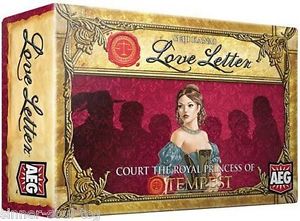
47: Love Letter
Previous Position: Returning to the list
Year: 2012
Designer: Seiji Kanai
Publisher: AEG
Plays: 2-4 players in ~20 minutes
Love Letter is a game that does a lot with a little. It is a microgame that consists of a few cards and some cubes. Despite such a small and unassuming package, the game packs in a really enjoyable experience with lots of potential for some really good interactions built around bluffing and deduction.
There are also lots of different versions of this game, which can provide an experience that may be better suited to your group than the dry, courtly theme of the Tempest Universe version that AEG originally released in the west.
This game previously slipped off the list as it had not seen much play, but it’s started making it back onto the table and, indeed, back into my heart. It’s not an exciting game, but it’s a nice experience.
46: Lords of Waterdeep

Previous Position: Returning to the list
Year: 2012
Designers: Peter Lee, Rodney Thompson
Publisher: Wizards of the Coast
Plays: 2-5 players in ~60 to 120 minutes
Lords of Waterdeep has returned to the list after slipping out last year. It still holds up as a pretty solid worker placement game that is easy to get to the table. The game has enough cards and buildings to make it quite replayable and there’s also a fantastic app version for even easier play. This still seems to be the standard, gateway-style worker placement game for new gamers or those new to the genre.
45: Civilisation: A New Dawn
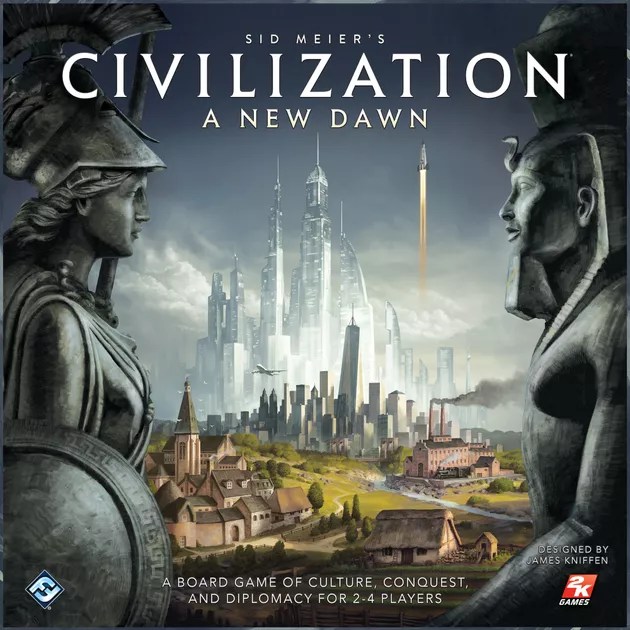
Previous Position: New to the list
Year: 2017
Designer: James Kniffen
Publisher: Fantasy Flight Games
Plays: 2-4 players in ~60 to 120 minutes
I wasn’t keen on this game when I first saw it. It just didn’t seem that interesting. Eventually, I got to try it out at club and I had a blast. I don’t see myself committing to actually buying this game, as I’m not a huge fan of how it works, but I did have some fun. I feel that the way you take and control terrain, expand your empire, and engage in combat are all a wee bit clumsy. It does feel a bit like the video game though, and the non-combat player interaction is interesting.
44: Onitama
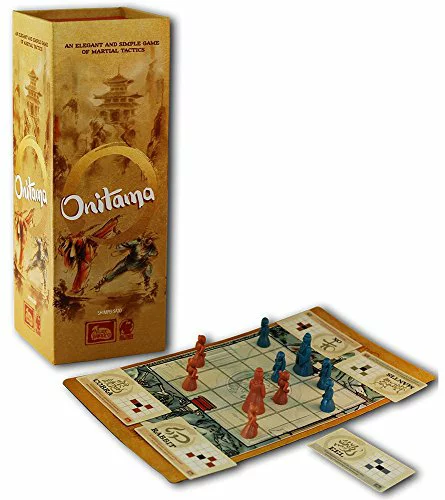
Previous Position: 19 (-25)
Year: 2014
Designers: Shimpei Sato
Publisher: Arcane Wonders
Plays: 2 players in ~15 to 20 minutes
The presentation of Onitama is sublime. The box is really unique and contains 10 simple, chunky pieces, a small stack of cards, and a neoprene (mousepad-style) playmat. The space in the box is used perfectly and that makes me happy in my heart. The watercolour-style art of the mat, the simple design of the cards and miniatures, and the simplicity of the instructions all add massively to this impression.
The actual game is a lot of fun and I’ve enjoyed myself hugely on every occasion that this has made it to the table. I love the chess-like moves that the cards let you do and the circular passing of cards adds another strategic consideration. Sure, you might think, this move is good for me, but if I use it and pass the card on, can my opponent use it against me to good effect? Oh, this is goooooooood! That said, I did not get it to the table much and it’s slid down accordingly.
43: One Night Ultimate Werewolf
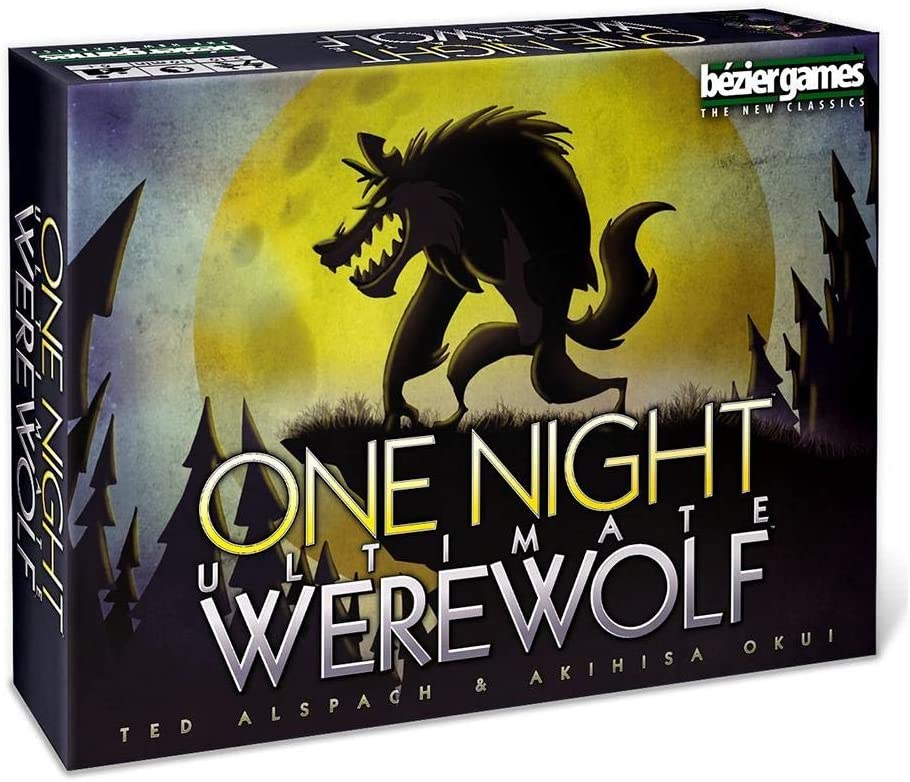
Previous Position: New to the List
Year: 2014
Designers: Ted Alspach, Akihisa Okui
Publisher: Bézier Games
Plays: 3-10 players in ~10 minutes
This game had been on my radar for some time, but it was not one that I’d actually played until this year. I’d read the instructions and had a wee bit of dread about making sure everyone knew all the aspects of how each character worked and remembered what they had to do at what stage in proceedings. It seemed, with a group of mixed experience and attention spans, to be an impossible prospect.
Enter the app.
When we did get to play it, our host whipped out his phone, entered some options, and hit play. It walked us through the whole process and the game could not have been easier to play. I’m not a huge fan of games that require apps to play, and technically this one doesn’t. It does improve it, though. It’s especially great with the sort of mixed group that I described earlier.
Yeah, this is a great game that fills a nice slot at the end of an evening or when you’re waiting for another table to finish up their game.
42: Blood Bowl

Previous Position: 41 (-1)
Year: 1986
Designer: Jervis Johnson
Publisher: Games Workshop
Plays: 2 players in ~180 minutes
Blood Bowl! Great game! One of my earliest board games, and this still holds a special place in my heart. It also holds quite a large place in my collection, as there are just so many boxes of it! I’ve got the first, second, and third edition boxes, plus the most 2016 edition (pictured) and the even more recent edition. I’ve got a couple of the new GW teams and, currently, three painted third-party teams. These are a Shadowforge Pro Elf team, a Black Scorpion Skaven team, and a Warlord Games Dwarf team.
As with most miniatures games that are not Age of Sigmar, this has not made it to the table too often in the past few years. It’s still great, but I feel that it takes a little long for what it is. Some people criticise it for the amount of randomness involved, but I think this is ok. It’s not usually what I like in games but, with Blood Bowl, you know that this chaos is part of it. You know what you’re getting into. Also, minimising this randomness is why I quite like playing Dwarfs. That said, I’d like to get some more teams painted up…
41: Clank

Previous Position: 22 (-19)
Year: 2016
Designer: Paul Dennen
Publisher: Renegade Game Studios
Plays: 1-4 players in ~30 to 60 minutes
Clank remains a great game. It’s a union of two genres that I really like. Those are the deck builder and the dungeon crawl. It works really well, with the engine you build with your deck coming to represent your hero and his or her capabilities. Focus and optimise your deck for a focused and optimised hero. Fill it with random nonsense and get… well… not that.
The game can get a tad repetitive, hence the drop in placement. I love the deck building, but the dungeon crawl gets a little stale if overplayed. Maybe it’s just that it’s the same 2 maps, over and over. There are expansions with new maps, but I’ve not picked any of these up. That said, still a great game!
 No Rerolls
Lords of Waterdeep is still one I enjoy playing every time
LikeLike
Quite a few on here I remember from years ago, when I had the time for lots more games! Looking forward to seeing you count down towards the top spot!
LikeLike
Nice post! King of Tokyo is a great party game and easy to teach to kids. Lords of Waterdeep is a classic and my youngest just started playing D&D, so we broke this out as well. Blood Bowl is a great game, but you’re right. It takes a long time, is only two players, the rules are punishing, and I’ve asked myself many a time why ONE game is taking up so much of my closet space?! It’s not one I would probably ever get rid of though, even if it’s getting less play than it used to.
LikeLike
I worry that this is Heresy, but… Blood Bowl might be better in video game form.
LikeLiked by 1 person
While online feels very different than playing inperson, I think you’re not far off. If I think about it, I’ve played more games on Fummbl (online Blood Bowl), than I ever have in-person. There’s the convenience factor of playing online, and the app handles all the stats and calculations for you, so games go much quicker. I still can’t imagine parting with the teams I’ve painted though, too much invested and they can be fun to paint.
LikeLike