

The least prestigious award in tabletop gaming returns after a 2 year, pandemic-related hiatus! Woo and/or yay!
Welcome to our top 50 games list for 2022, in which I list my personal top 50 games at this point in time. My choices are not limited to games from this calendar year, but instead, represent my current thoughts on the top 50 games to me. Next year, some of the games featured may move up and down as my opinions change and I get the chance to play more games or revisit old favourites.
This series will comprise 5 posts, each covering 10 games as we work down from number 50 to number 1. You can click here to visit the first part, featuring games 50 through 41. Let’s resume, shall we?
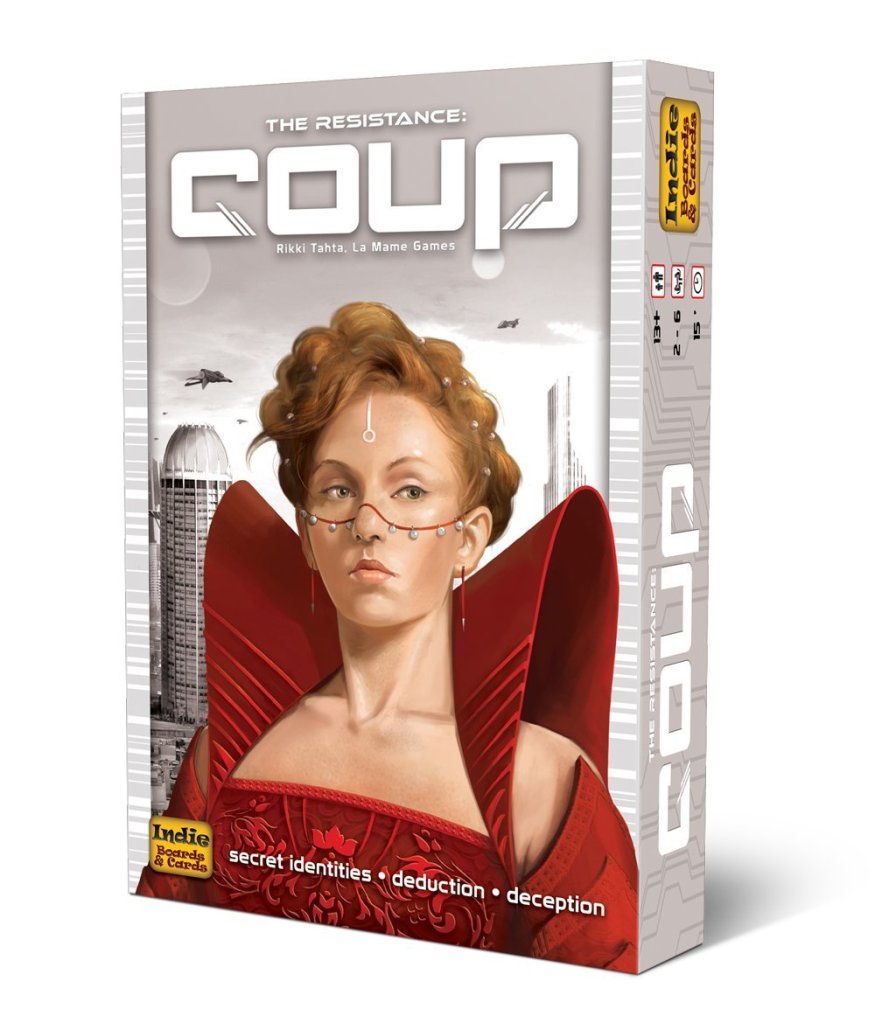
40: Coup
Previous Position: 13 (-27)
Year: 2012
Designer: Rikki Tahta
Publisher: Indie Boards & Cards
Plays: 2-6 players in ~15 minutes
Coup is a masterclass in minimalism. Coup consists of a few cards, some coin tokens and some summary cards to help players keep track of what each card does. From these humble components comes a game that I adore. This is my go-to social game, and I even prefer it over The Resistance, which slid off the list back in 2019.
I really enjoy the cut and thrust of the bluffs and accusations that this game fosters. It feels more dynamic than The Resistance and you have a lot more individual power. You don’t get all frustrated by those fools who keep allowing the spy onto the team; if you doubt a player’s honesty, you can just call them on it. It works. It’s direct. It’s fantastic.
39: Santorini

Previous Position: 40 (+1)
Year: 2016
Designer: Gord!
Publisher: Spin Master
Plays: 2-4 players in ~20 minutes
I like that this is basically a platformer in board game form. For such a cute, simple game it always amazes me how vitriolic a game of Santorini can become. This is especially true when one player forgets the function of another player’s ability and is taken by surprise. Salt. For. Days.
This is a game that is accessible to a wide range of players. Most of my recent games have been with kids, and it works well with them. The building aspect of the game is satisfyingly tactile and you end up with a really beautiful board by the end, assuming nobody just runs away with an early victory.
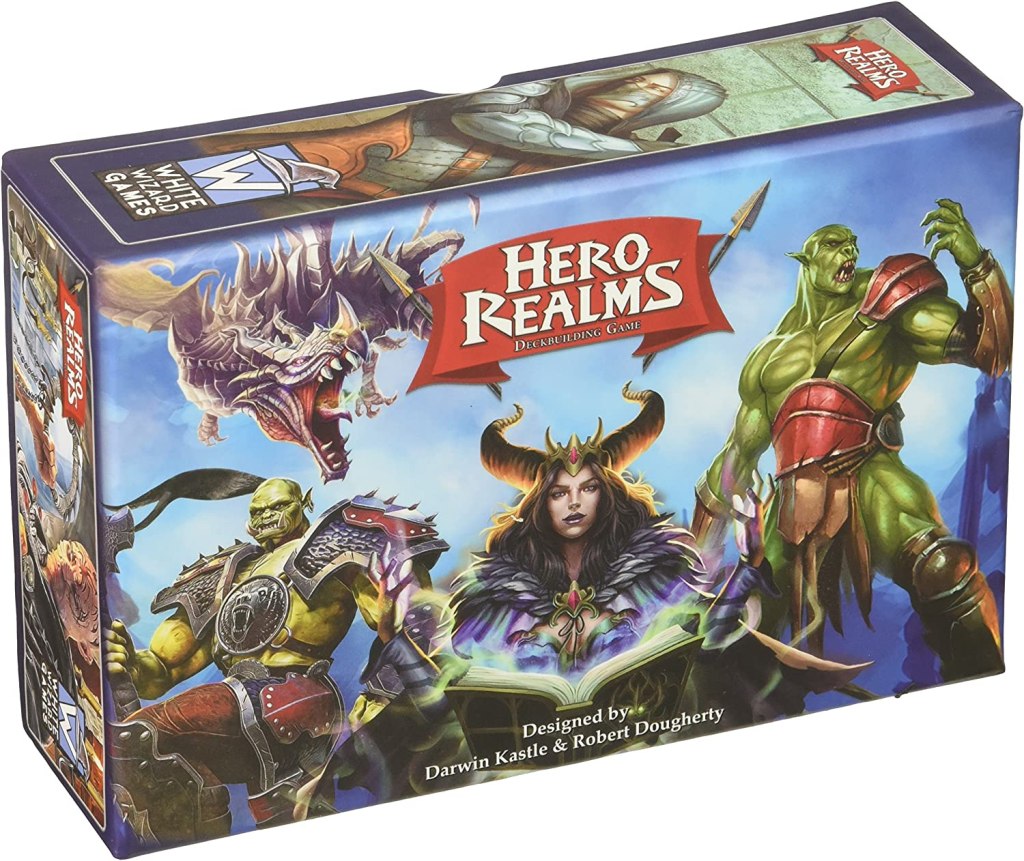
38: Hero Realms
Previous Position: New to the List
Year: 2016
Designers: Robert Dougherty, Darwin Kastle
Publisher: White Wizard Games
Plays: 2-4 players in ~20-30 minutes
Star Realms is my most played game ever. That is, it’s my most played game if you let me count digital playthroughs. For years, I would play a few rounds of the Star Realms app each and every day. Over time, the app kind of killed this game for me. It was just too much repetition and I stopped enjoying the experience as much as I should.
I took a break from it.
The thing is, it’s still a great game with a lot going for it! First up, it’s a deck builder. Immediately, I’m going to like this game. Then, the art is cool. This is even truer for Hero Realms (hey, look, I’m getting to the point!), the fantasy version of the game, which is bloody beautiful, and has actually replaced Star Realms in my regular rotation. It’s also really competitive. You and your opponent are pitted against each other and properly go for it, throwing hero after hero at the enemy.
37: Twilight Imperium

Previous Position: 46 (+9)
Year: 2005
Designer: Christian T. Petersen
Publisher: Fantasy Flight Games
Plays: 2-6 players (more with expansions) in ~180 to 240 minutes
This game previously fell down the list because of how hard it is to get to the table. The few times I had played the third edition were pretty great. It’s climbed back up the list because the fourth edition is even better. The game is expansive, and deep, and it gives players so many different paths to follow and options to consider. It’s also a lot more intuitive than you might expect. There’s a lot there, a lot to remember, and a lot to keep on top of, but there’s no individual part that I’d consider to be particularly complicated in itself.
On the one hand, I’ve not managed to get this to the table much. On the other, I’m never going to be able to do that. This game is a big commitment that I reckon we’d only get to play a couple of times a year, tops. That’s okay; it is what it is.
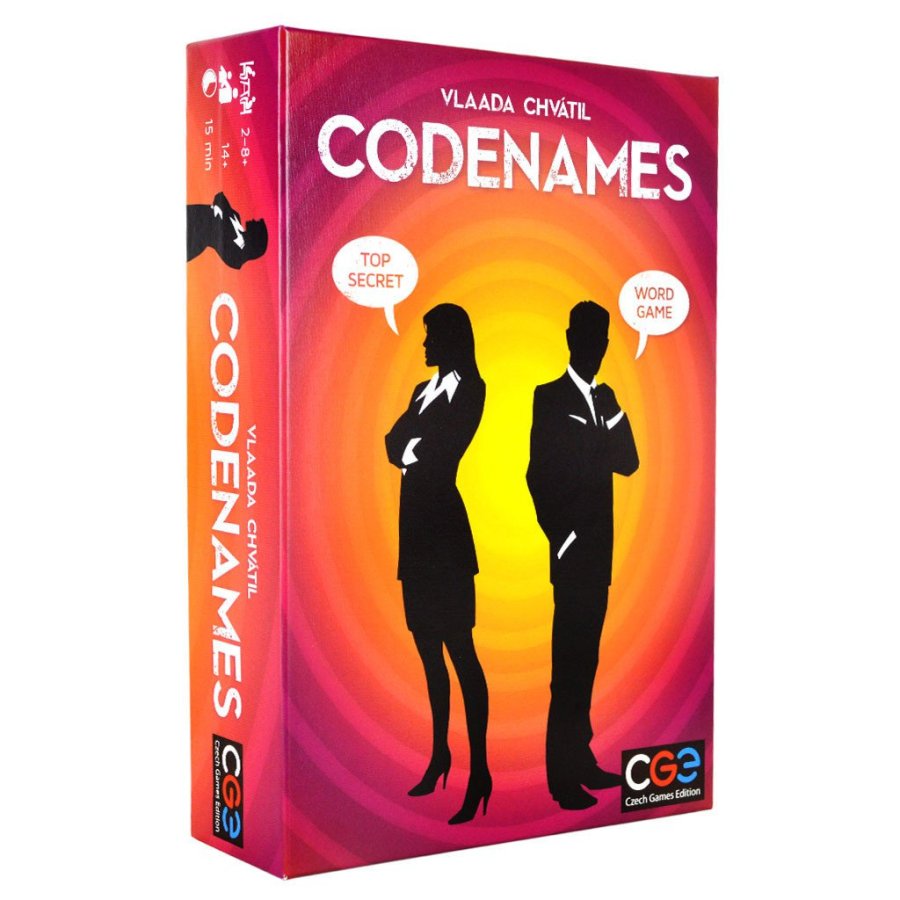
36: Codenames
Previous Position: 49 (+13)
Year: 2015
Designer: Vlaada Chvátil
Publisher: Czech Games Edition
Plays: 2-8 Players (ideally 4) in ~15 minutes
The best thing about Codenames is the frustration it can cause. That might sound counter-productive, but it’s true. When I disagree with my mother-in-law one of us will, in jest, bring up an infamous moment from a game of Codenames where we were unable to see the same clues in the same way and got frustrated with one another. I like that the game can foster these sorts of events and callbacks.
This game had previously fallen down the list due to a bit of burnout on my part. The forced break from the game that I took as a result of Covid, seems to have given me the space I needed. I’m back on the Codenames train!
35: Kingdomino

Previous Position: New to the list
Year: 2016
Designer: Bruno Cathala
Publisher: Blue Orange
Plays: 2-4 players in ~15-25 minutes
I like tile-laying games. Carcassonne, Patchwork, New York Zoo; all are absolute gold. I played Isle of Skye the other week for the first time and loved it. I could see it making it to the list next year! Kingdomino is another fantastic, little tile-laying game. It’s light, fun, accessible, and charming. Don’t underestimate the importance of that last characteristic!
Kingdomino is one of those games that, after trying it for the first time, I went and ordered it for myself. That’s always high praise. I’m considering picking up Queendomino, which I hear is even better, and has that little bit more bite to it.
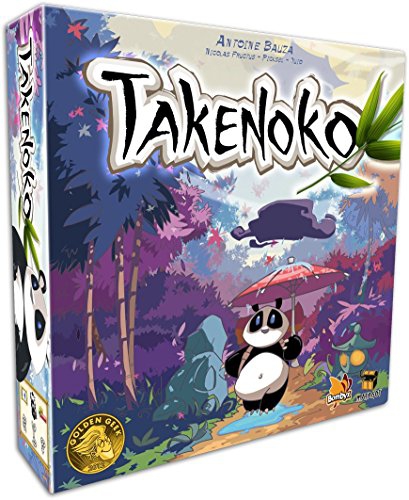
34: Takenoko
Previous Position: 33 (-1)
Year: 2011
Designers: Antoine Bauza
Publisher: Matagot
Plays 2-4 players in ~45 minutes
I’ve played Takenoko a few times over the past couple of years and it consistently entertains. First of all, the game is cute. The little panda miniature, the stacking bamboo, the pretty cards and tiles… it all just works, visually. The game is also a lot of fun and I like the little individual objective cards that you spend the game working towards.
I’m keen to play Takenoko a bit more to fully get my head around how the game really works and how best to build towards multiple objectives. I think I’d appreciate Takenoko more once I understand the depth a bit better.
33: DC Comics Deck-Building Game

Previous Position: 39 (+6)
Year: 2012
Designer: Matt Hyra, Ben Stoll
Publisher: Cryptozoic Entertainment
Plays: 2-5 players in ~45 minutes
Rising a couple of places this year is the DC Deck-Building Game. My biggest criticism of this game remains unchanged, in that you could play much of the game on autopilot. There’s generally no reason not to just play all of your cards every turn. There are no real decisions to be made in the playing of cards like there is in, say, Dominion. It’s too free, too open, too loose.
That said, it’s still a lot of fun. The game looks really pretty and is full of references for comic fans to feast upon. You do get to make decisions on the content of your deck as you buy cards from the middle of the table. It’s a good, accessible, fun deck-builder that doesn’t take too much thought and has a ton of expansions if you want to add more cards to your mix. Despite the flaws, this still sees a lot of play, and probably more play than a lot of my “better” deck-builders.
32: Forbidden Stars

Previous Position: 37 (+5)
Year: 2015
Designers: Samuel Bailey, James Kniffen, Corey Konieczka
Publisher: Fantasy Flight Games
Plays: 2-4 players in ~120 to 180 minutes
Now out of print, Forbidden Stars continues to scratch a specific itch and does so using a familiar, fun theme. If Warhammer 40,000 is the game of massed battles in the 41st millennium, then Forbidden Stars takes a step back and gives you control of the wider campaign, deploying ships and troops, moving your forces around the galaxy, engaging in coordinated battles in pursuit of objectives and artifacts.
The first few times I played this game, I did not really appreciate the combat aspect. I’ve since gotten a better handle on this and I like it a lot more than I did. I still enjoy the logistics of the game, building bases, amassing units and deploying them as required. This is a heavy game, but it does a lot and a particularly great when played with all four players. It’s just a pity there won’t be any expansions…
This is also a game where I feel that if I got it to the table more often, got some more games in, and really got my head around some of the nuances, it might have been higher on my list.
31: Age of Sigmar: Soulbound

Previous Position: New to the list
Year: 2020
Designer: Emmet Byrne, Zak Dale-Clutterbuck, David Guymer, Elaine Lithgow, T. S. Luikart, Dominic McDowall, Katrina Ostrander, Joshua Reynolds, Clint Werner
Publisher: Cubicle 7
Plays ~2-7ish players in however long you care to play for
I’m a sucker for a good dice pool-based RPG. I really do think that dice pool systems are my favourites; just look at games like Mutant: Year Zero and Vampire: The Masquerade. That this one is also based on Warhammer: Age of Sigmar is a big plus. I do love me some Warhams.
I’m in the midst of my first Soulbound campaign at the moment and the game is a lot of fun. I’m playing as a Kharadron Overlords Endrinrigger. It feels odd to be playing as an Order character, of course. Order is, as we all know, the most boring of Grand Alliances. Still, I’m enjoying zipping around on my wee endrin, machine-gunning anything that moves.
 No Rerolls
6 Comments