
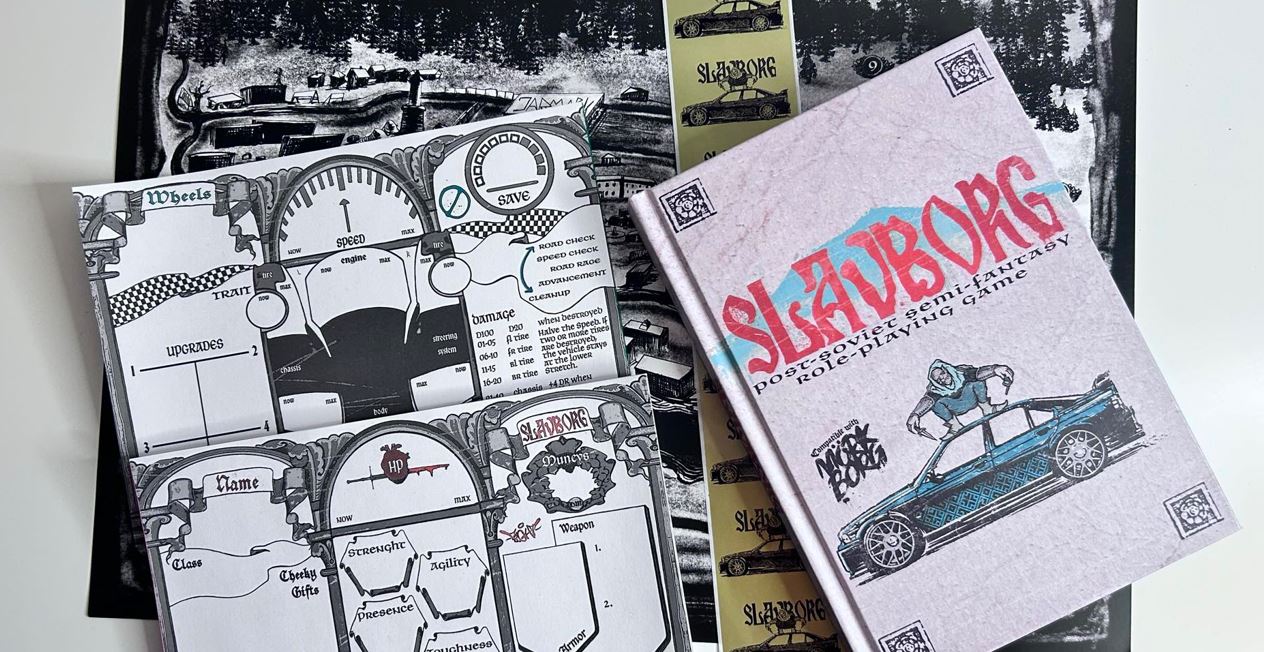
Written by Pawel Klimczak and illustrated by Kasha Konachowicz, Slav Borg is a roleplaying game that blends post-Soviet aesthetics with fantasy elements. Picture a world where crumbling concrete blocks meet magic-infused wastelands. The setting, Zgol, is a chaotic, semi-fantastical version of the Eastern Bloc during the collapse of communism. Think Chernobyl, Lada cars, and Baba Yaga. Players take on the roles of gritty survivors, navigating a landscape filled with goblins, mutants, and supernatural forces. A review copy of the PDF edition was provided.
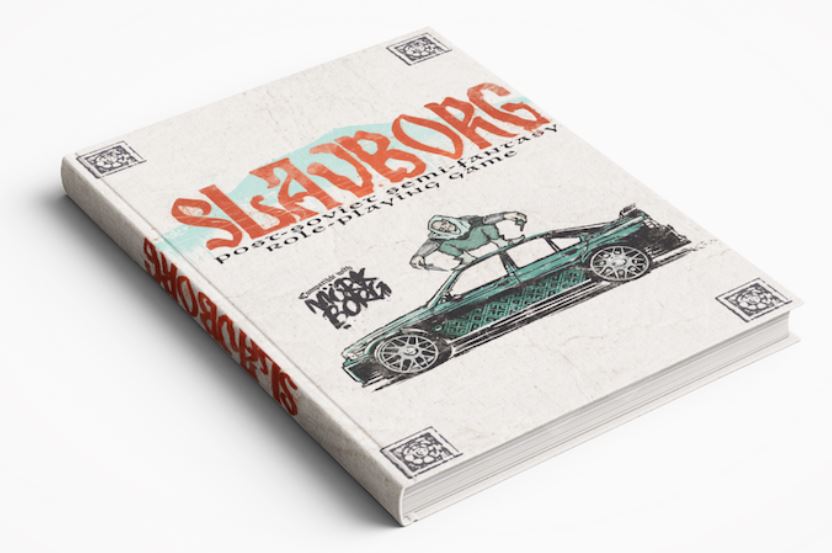
It makes for an interesting setting. Players take on the roles of gritty survivors navigating this harsh landscape. They form goblin crews by choosing from a variety of classes, each with its own unique abilities and flavor.
- Coiners: Street-savvy hustlers who know how to make a quick buck, whether through scams or smuggling.
- Yoomaks: Techno-shamans who channel the spirits of old machines, merging magic and technology.
- Tinkerers: Mad inventors who cobble together bizarre contraptions from scavenged parts.
- Smugglers: Fast drivers and even faster talkers, always one step ahead of trouble.
- Street Fighters: Brawlers who’ve survived countless barroom brawls and mutant encounters.
- Charlatans: Tricksters and illusionists who thrive on deception.
Their goal? To carve out their own path, leaving tire marks across the asphalt. Upgrade your vehicles, outmaneuver orcs, and race through the streets. The creators infuse Slav Borg with the social and economic struggles of the Polish-German-Czech borderland. Imagine a place with one of Europe’s biggest coal mines on one side and rampant crime on the other. The Green Folk (goblins) strive for peace, while mercenaries seek profit and thrills.

Slav Borg builds upon the Mork Borg system, known for its minimalist and evocative rules. It uses a D6-based system for resolution. Roll a handful of six-sided dice (usually 2-4) and compare the total to a target number. Attributes (like Strength, Cunning, and Luck) determine your dice pool. Skills (such as Driving, Bartering, or Magic) modify your rolls. The result determines success, failure, or critical outcomes.
It maintains the punk feel of Mork Borg. However, it introduces new mechanics specific to its setting. Car combat is a central feature. Imagine Mad Max-style vehicular battles, with rusted-out Ladas and homemade armoured vehicles. Cars are so much more than just transportation; they’re your lifeline in Zgol as you engage in vehicular combat against rival crews, mutants, and supernatural threats. You can upgrade your ride with armor, weapons, and mystical enhancements. Just remember; a well-timed handbrake turn can save your life!
The rules are intentionally sparse, leaving room for creativity and improvisation. This is still, at its core, Mork Borg. This also means there’s a wee bit of a learning curve for those not used to more free-form roleplaying, especially for newcomers to Mork Borg and other, more minimalist RPGs.

The game manages to capture the gritty, grimy vibe of post-Soviet cities. It’s like stepping into a Soviet-era apartment block, complete with peeling wallpaper and flickering fluorescent lights. It’s funny that this came along around the same as SibirPunk; perhaps showing an appetite for these Eastern Europe-inspired settings. Magic also exists, but it’s raw and unpredictable. Picture babushkas brewing potions in rusty bathtubs. The supernatural elements blend seamlessly with the mundane; urban legends, haunted factories, and cursed vodka bottles.
Slav Borg prioritises aesthetics over clarity. This is not that uncommon for games that follow the Mork Borg aesthetic. The book is a visual feast, with hand-drawn illustrations, distressed fonts, and cool layouts. However, this artistic approach sacrifices readability. Some sections could benefit from clearer explanations and a font that’s a bit easier to read. The lack of hyperlinks or an index can be frustrating when you’re trying to find specific rules or lore. Similarly, the vast majority of the text is not actually formatted as text, and everything seems to be saved as an image. This means that most of the book is not searchable, which really hurts usability for the PDF edition.
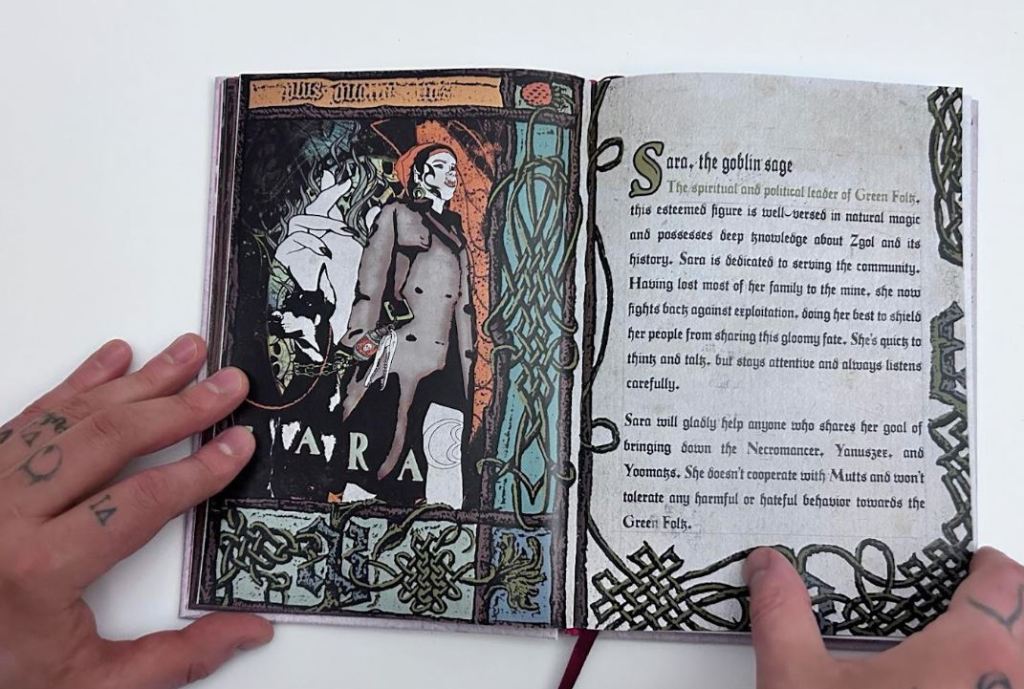
While the book provides a rich setting, it doesn’t include a ready-made adventure. As a game master, you’ll need to create your own stories. This feels like a missed opportunity. I feel that an introductory adventure represents a great opportunity to set a tone for how the designer wants the game to play. Give us an exemplar! We could have had a team investigating a haunted metro station where the trains still run, but no one remembers the destination. We could have had a party unraveling the mystery of a cursed Matryoshka doll that grants strange powers. We could have had players racing against time to stop a cult of babushka witches from summoning an otherworldly entity.
Slav Borg is a love letter to the weird, the mundane, and the absurd with a uniquely Eastern-European twist. The issues that I have with the PDF edition are pretty minor, and the lack of an adventure is made up for by the amount of background material to draw from. These are little quibbles that are massively outweighed by the strange, threatening, intriguing package that you get. The game is cool, and it’s interesting, and it’s a really great implementation of the Mork Borg system. It does a great job of changing it really significantly, but also keeping that punky appeal that’s at the core of the game. If you’re up for a wild ride through a post-Soviet wasteland, you need to grab your gas mask and dive in!
You can visit the official Slav Borg site/store by clicking here.
Affiliate Links:
 No Rerolls
2 Comments