
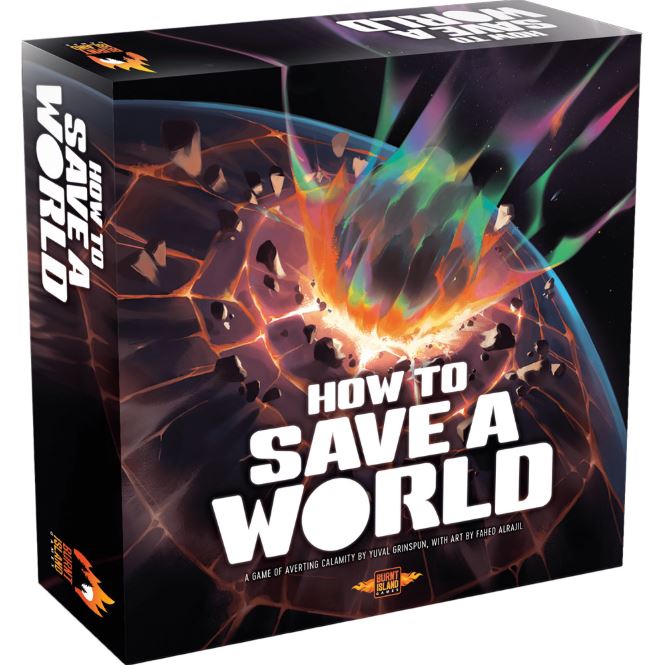
Board games that blend strategy with real-world themes always catch my attention, and How to Save a World delivers an interesting mix of scientific problem-solving, teamwork, and tense decision-making. Designed by Yuval Grinspun and published by Burnt Island Games, this semi-cooperative experience challenges players to work on different projects – each with a razor-thin chance of success – to prevent catastrophe.
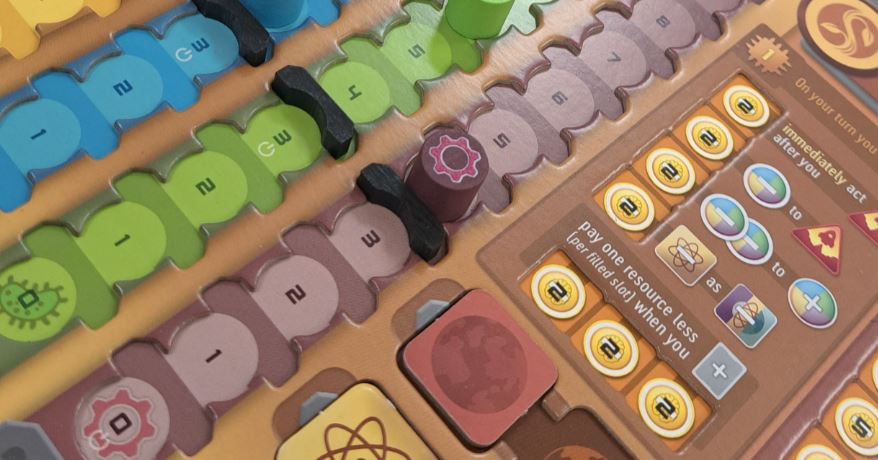
At its core, How to Save a World is a worker placement game with a twist. Players deploy scientists to various locations, gathering resources and contributing to three major projects: firing lasers, deflecting with shields, and evacuation. The game’s bag-building mechanic adds an element of uncertainty, as players contribute and then draw cubes to determine which project will ultimately succeed.
The tension builds as the asteroid advances each round, forcing players to balance short-term gains with long-term survival. Do you invest heavily in one project, hoping it will be the key to saving the planet? Or do you spread your efforts across multiple tracks, hedging your bets? The press-your-luck element keeps every decision meaningful.
Whatever way you decide to go, or even if you decide to try and do and even spread, you’re never going to feel like you’re getting to do everything you want. A few turns in and you might suddenly realise that you’ve been contributing to the projects, but at the cost of your resources. Perhaps you’ve worked on building up your resources, but left your hand empty as a result. Maybe you’ve focused on research, but find yourself at the bottom of every project track. The game is short enough and tight enough to keep you trying to either double down on your chosen path or try to shore up your shortcomings.
Unlike fully cooperative games, How to Save a World introduces individual scoring, meaning players must collaborate while also optimizing their own contributions. This dynamic prevents the common issue of one player dominating the strategy, ensuring that everyone remains actively involved.
When I first saw this game, I assumed it was going to feel more cooperative than it turned out to be, and I expected to not like it as a result. I was delighted to be proven wrong. The individual scoring aspect is massive. I love it. I like the project tracks and that you still get rewarded for progress on those that fail. I love that in my first game, I utterly dominated the development of the shield, and essentially saved the world almost single-handedly yet still only came second due to one person really doubling down effectively on the green scoring cards.
The game’s scientific theme is well-integrated, making every action feel purposeful. I can understand exactly what the team is trying to do with each action. The artwork and components reinforce the high-stakes atmosphere. The art is nice, but more importantly, it is consistent, which is more important.The variable setup ensures that no two games play out the same way. Whether you’re strategising over research hubs on the moon or scrambling to advance a pivotal project, the game keeps players engaged from start to finish.
How to Save a World is a really solid game. It offers tense decision-making, engaging mechanics, and a fresh take on worker placement. It strikes a good balance between some cooperative play and independent, competitive scoring. If you enjoy games that challenge you to think critically while still fostering a little bit of teamwork, this one deserves a spot on your shelf. The balance was certainly right for me.
 No Rerolls
11 Comments