

This article is part of a retrospective series marking the 10th anniversary of Warhammer: Age of Sigmar. From the shattering of the Old World to the rise of the Mortal Realms, we’re exploring a decade of mythic storytelling, strategic evolution, and community transformation. Whether you marched with the first Stormcast or joined the fray in the Age of the Beast, this series is for you: the generals, the lorekeepers, the hobbyists, and the dreamers. Welcome back to the Mortal Realms.
Series Contents:
- Introduction: The Storm Breaks (you are here)
- The Shattering of the Old World
- Editions through the years
- Factions and Icons
- Community and Culture
- Thematic Legacy and Design Philosophy
- The next 10 years
A Decade of Age of Sigmar Begins
Ten years ago, the skies cracked open.
In July 2015, Games Workshop did the unthinkable: it ended Warhammer Fantasy Battles, a beloved cornerstone of tabletop wargaming, and replaced it with something entirely new: Warhammer: Age of Sigmar. Gone were the Old World’s muddy fields and medieval politics. In their place rose the Mortal Realms: a mythic, elemental cosmos where gods walked among mortals, and war was not just inevitable, it was divine.
The reaction was seismic. For some, it felt like betrayal. For others, it was a breath of fresh, Azyrite air. But no one could deny it: the Age of Sigmar had begun, and it wasn’t looking back.
Age of Sigmar’s launch was more than a rules update; it was a philosophical shift. The game’s initial release stripped away point values, army books, and even rank-and-file formations. In their place came streamlined rules, fantastical new factions, and a setting that felt more like myth than history. The Stormcast Eternals, Sigmar’s golden demigod warriors, descended from celestial lightning to battle the forces of Chaos in a war that spanned realms, not just continents.
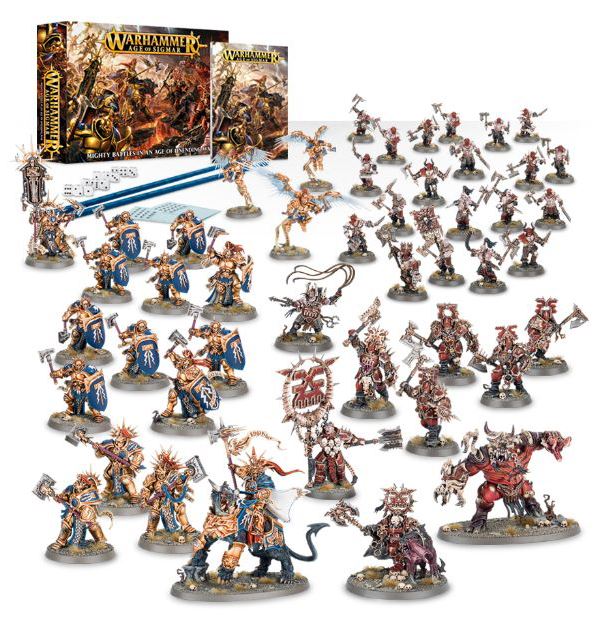
It was a bold gamble. And at first, it nearly failed. People saw the Stormcast as an attempt to add Space Marines to fantasy. They saw the cut-down ruleset as simplistic. They saw some of the rules within that ruleset as bizarre. The idea of rebasing their miniatures was also a massive turnoff for many existing players.
The early days of AoS were turbulent. Longtime fans mourned the Old World. Competitive players baulked at the lack of balance. Memes mocked the “silliness” of the new setting. But beneath the surface, something was stirring. Narrative players embraced the open-ended freedom. Hobbyists fell in love with the new models. And slowly, through community passion and Games Workshop’s own evolution (particularly after the first General’s Handbook), Age of Sigmar began to find its footing.
What began as a storm of controversy became a crucible of reinvention. I know that I was a doubter. I was annoyed at the way The Old World was seemingly pushed aside; destroyed to make space for a minimalist ruleset with silly, performative rules for many units. Let’s remind ourselves of how bad those were:
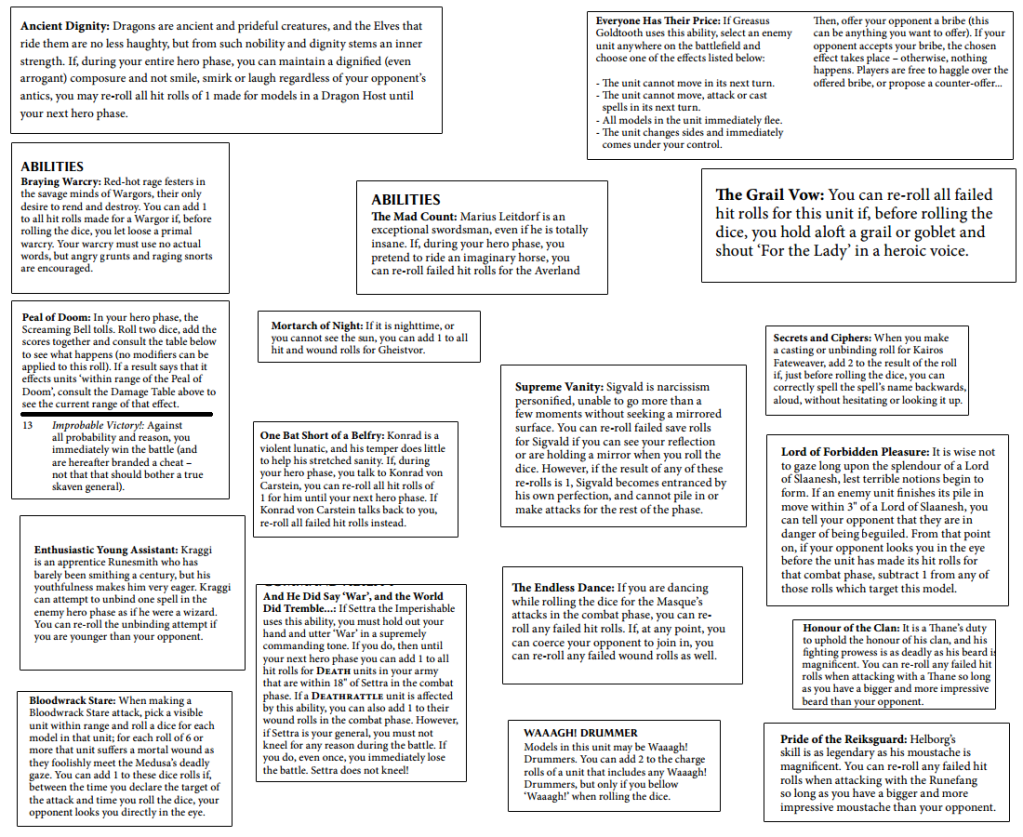
Jeeeeeez… just, no! Is it little wonder that Warhammer fans didn’t want to engage with this? It took until midway through that first edition for me to give it a chance, once points were added back in with the General’s Handbook. At that point, our club did a slow-grow that brought a lot of us into the game. I grabbed Tzeentch!
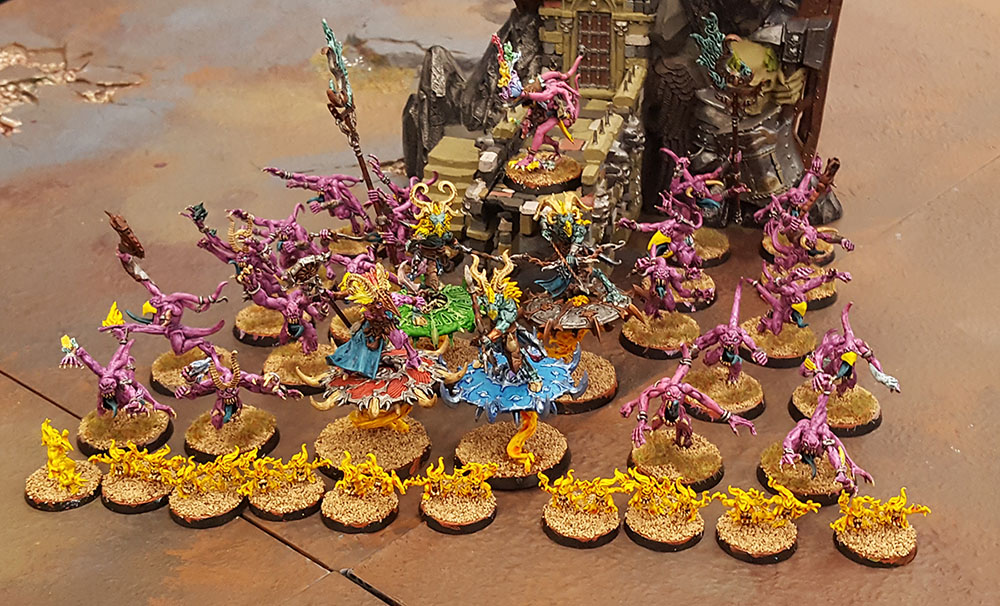
Now, a decade later, Age of Sigmar stands as a pillar of modern wargaming. It has grown through four editions, dozens of factions, and a growing mythos. This series of posts is a celebration of that journey. We’ll explore the game’s mechanical evolution, its narrative arcs, its cultural impact, and the community that shaped it.
Age of Sigmar isn’t just a game. It’s a living myth. And after ten years, it deserves to be celebrated.
 No Rerolls
Its been ten years already?
LikeLike