
Welcome to my Star Wars Rewatch; a full chronological journey through the galaxy far, far away, from the mystic shadows of the High Republic to the fractured futures of the sequel era. With each film and series, I’ll be diving into the themes, characters, and cultural ripples that make Star Wars more than just space opera. Whether it’s the quiet tragedy of a fallen Jedi, the rise of a powerful villain, or the shifting philosophies of the Force itself, I’ll be exploring what still resonates, what challenges us, and what deserves a second look. The Force may bind the galaxy together, but it’s the stories that keep pulling us back.
Let’s get into part 3, Episode II: Attack of the Clones!
“Attachment leads to jealousy. The shadow of greed, that is.”
— Yoda
Attack of the Clones is a film of contradictions. It’s visually stunning yet emotionally stunted, thematically ambitious yet narratively clumsy. It shares these traits with the previous movie in this prequel trilogy. Watching it again, I was struck by how much it wants to say and how little it trusts its characters to say it well.
The romance between Anakin and Padmé, meant to be the emotional core of the film, feels rushed and artificial. Their dialogue is famously wooden (“I don’t like sand…”), and while Hayden Christensen has proven his acting chops elsewhere (Revenge of the Sith makes that clear), here he’s hobbled by a script that confuses intensity with authenticity.
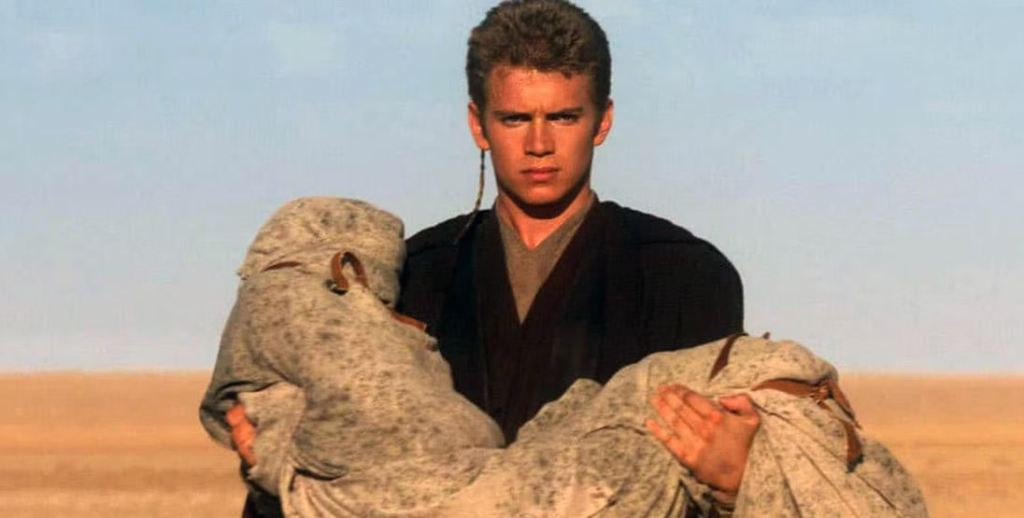
One of the film’s most emotionally charged moments is Anakin’s return to Tatooine. Haunted by visions of his mother, he finds her dying in the hands of Tusken Raiders. He slaughters the entire tribe in a fit of grief and rage. It’s a pivotal moment, not just for Anakin’s arc, but for the entire saga.
This scene is raw, brutal, and deeply uncomfortable. It’s one of the few times the film allows Christensen to show what he’s capable of: a young man unravelling under the weight of loss, fear, and helplessness. It’s also the moment where the Jedi’s teachings – detachment, serenity – fail him completely. Watching it now, it’s clear this is where Anakin truly begins to fall.
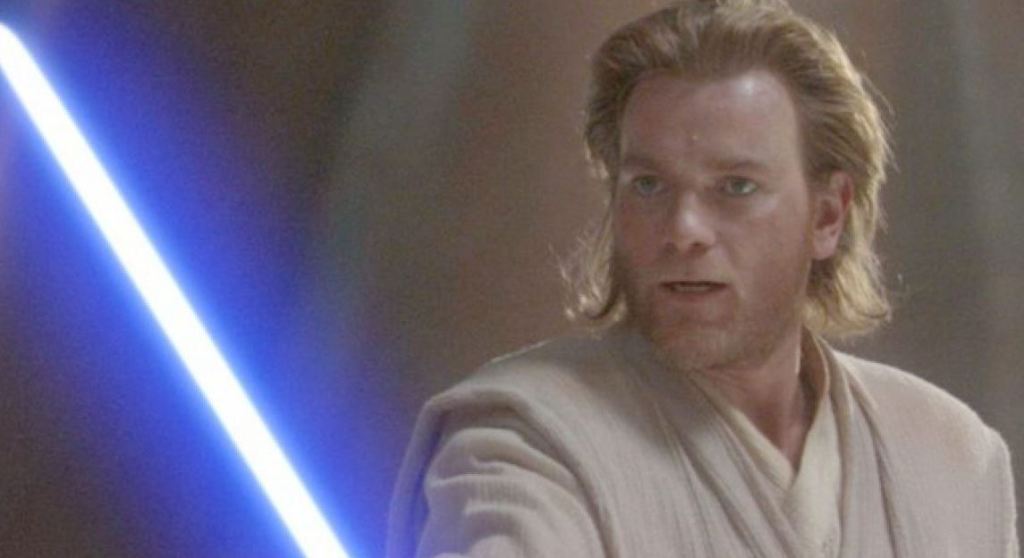
Thankfully, Attack of the Clones has its bright spots. Ewan McGregor’s mullet-clad Obi-Wan Kenobi is a delight. He is wry, competent, and increasingly burdened by the Jedi Order’s contradictions. His detective arc on Kamino and Geonosis is the film’s most engaging thread.
Actually, when I’m already mentioning Kamino, I must add that it is one of the most visually and thematically striking locations in the prequel trilogy. A rain-drenched ocean world with sleek, sterile architecture rising above endless waves, it feels like a planet designed by isolationists with a god complex, and that’s exactly what the Kaminoans are. Tall, willowy, and eerily serene, the Kaminoans exude an unsettling calm as they discuss cloning sentient beings with clinical detachment. That the Jedi don’t immediately baulk at the entire situation is pretty damning, but then they pretty callously ignored slavery in the previous movie, too.
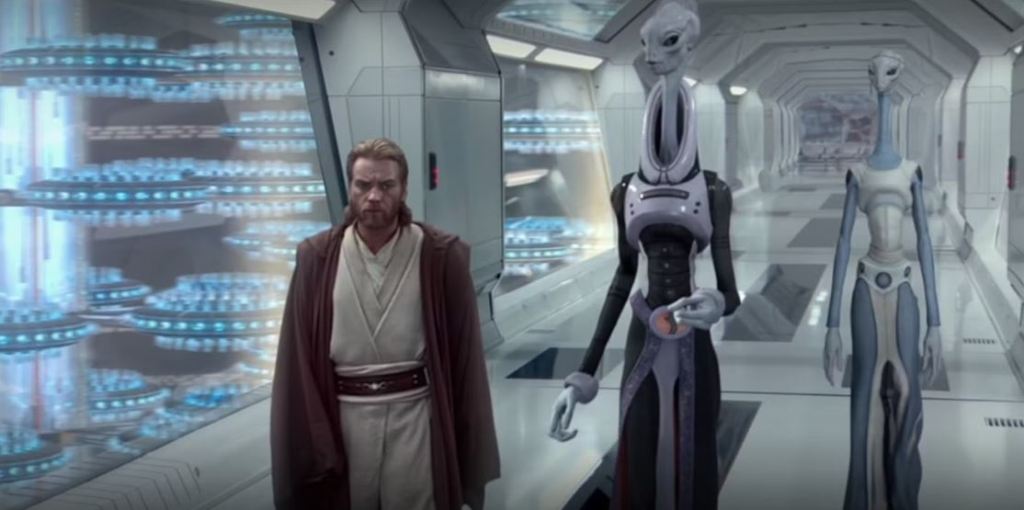
Their design, inspired by classic sci-fi like Close Encounters of the Third Kind, is both alien and graceful, and their ultraviolet vision and gliding movements only deepen the sense that they operate on a different wavelength entirely. Kamino isn’t just a setting, it’s a mood: cold, beautiful, and quietly ominous. It’s no wonder Obi-Wan’s visit there remains one of the film’s most memorable sequences.
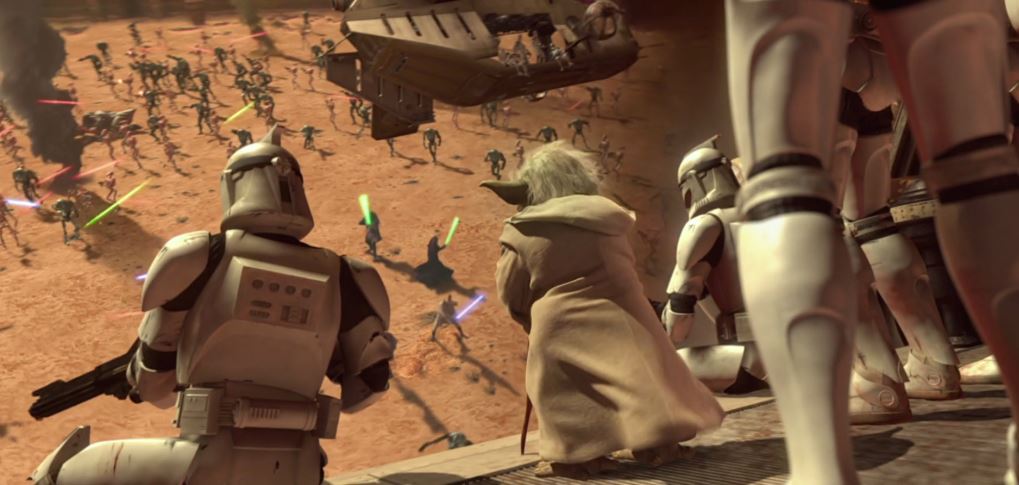
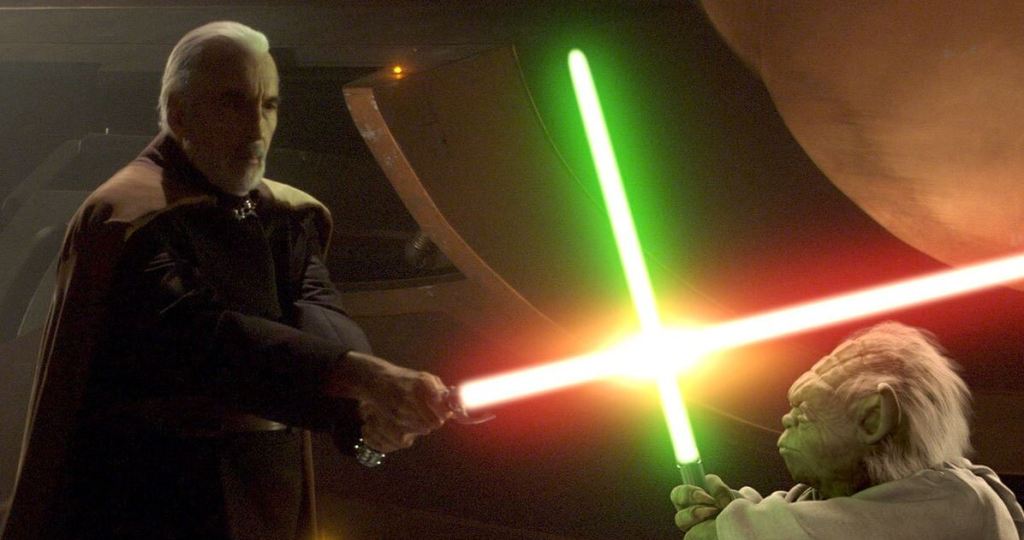
And then there’s Christopher Lee. As Count Dooku, he brings gravitas and menace with every syllable. His scenes crackle with tension, and his duel with Yoda is one of the saga’s most memorable moments; not just for the spectacle, but for what it reveals about the Jedi’s desperation.
Despite its flaws, Attack of the Clones is thematically rich. It explores:
- The paradox of attachment: Anakin’s forbidden love and his mother’s death both expose the Jedi’s emotional blind spots.
- The erosion of democracy: The Senate’s dysfunction and Palpatine’s manipulation mirror real-world anxieties about authoritarianism.
- The ethics of war: The creation of the clone army raises questions about agency, obedience, and the Jedi’s complicity in militarisation.
These ideas are compelling—but they’re often buried beneath clumsy exposition and CGI spectacle.
It’s worth noting that Attack of the Clones changed cinema behind the scenes. It was one of the first major films shot entirely on digital cameras, and its release helped push theatres toward digital projection. It also introduced the first fully CGI Yoda, a bold (if divisive) leap in visual storytelling.
Here are a few throwaway observations:
- Anakin is given terrible, terrible lines throughout this movie
- The streets of Coruscant at night feel very Cyberpunk
- Jango Fett is yet another interesting Star Wars antagonist, like Maul, to not live beyond a single movie; good thing he now has thousands of clones
- Yoda’s fight with Dooku is a visual mess, but it’s still fun
- I love the design of Dooku’s ship
- Worldbuilding, once again, is top-notch
- The Kenobi Mullet is legendary
Attack of the Clones is not a good movie, but it’s not a meaningless one. It’s a flawed but fascinating chapter in the saga, filled with political intrigue, philosophical tension, and moments of genuine spectacle. It’s a film that groans under its own weight, but still manages to move the story forward.
Rating: 5/10
Come for Obi-Wan. Stay for Dooku. Endure the sand. Watch the shadows grow.
Next up, I’m going to start looking at the various bits of Clone Wars media. I’ll be grouping some bits together. Being longer series, there may be bigger gaps between posts for a while.
 No Rerolls
2 Comments