
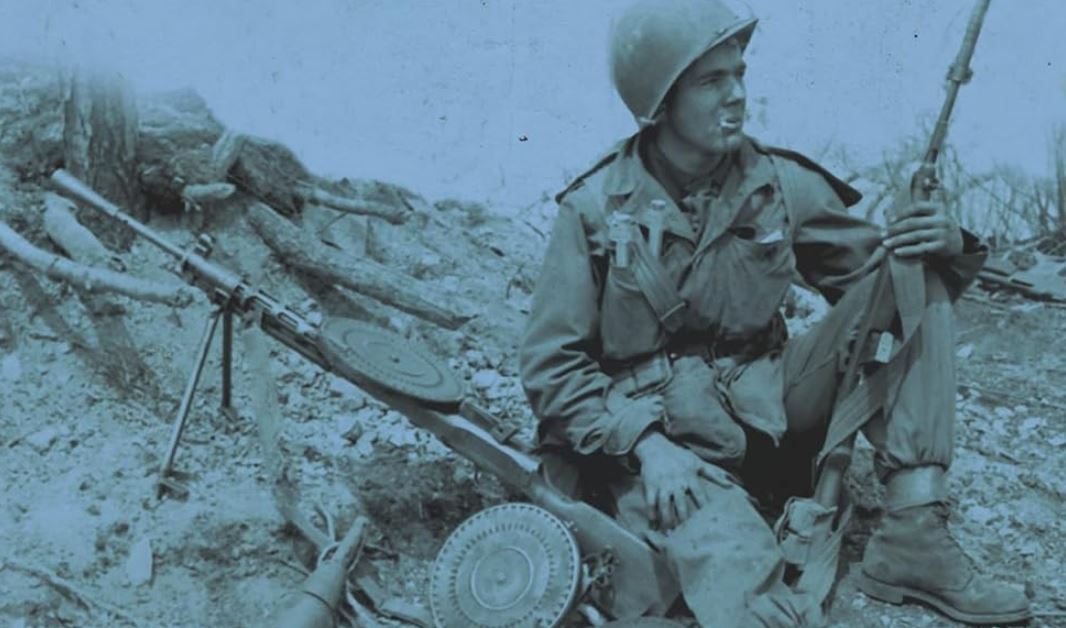
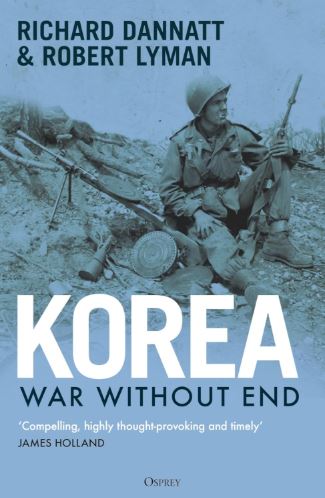
Korea: War Without End is a military history book by Richard Dannatt and Robert Lyman. It was first published in May 2025 by Osprey. This review is intended to be free of spoilers, but none of us are perfect. Consider yourself warned! A review copy was provided by the publisher. There are affiliate links at the end of this review.
Blurb
Korea: War Without End examines the stand-off between East and West in Korea that ultimately defined the second half of the 20th century. It provides a critical analysis of the lack of preparation by the West for war; the results of the North Korean invasion in June 1950; the counter-stroke by MacArthur in September and then the strategic overreach which led to communist China’s involvement on the North Korean side, and the rapid escalation to consideration of the use of nuclear weapons.
Through meticulous analysis of all the source material, this book details the chaos of political decision-making at the war’s outset and as it progressed. The Korean War was not planned as a Communist offensive against the West. In turn, the East did not understand the principle at the core of the Western response to Kim Il-sung’s aggression, namely a refusal to appease an aggressor, the key mistake the West considered to be at the heart of the rise of Nazi Germany and militaristic Japan in the 1930s.
Korea: War Without End also considers the effect of the fighting on civilians. While the war was a proxy one between East and West, the people of Korea suffered immensely, with approximately 3 million war fatalities and a larger proportional civilian death toll than World War II. This is the definitive history of the conflict that is long overdue.
Review
Korea: War Without End arrives as a compelling reexamination of one of the 20th century’s most overlooked, or at least misunderstood, conflicts. The book pairs the strategic insight of General Lord Dannatt with Robert Lyman’s seasoned historical acumen to deliver a fresh perspective on the “Forgotten War” that still shapes global politics today.
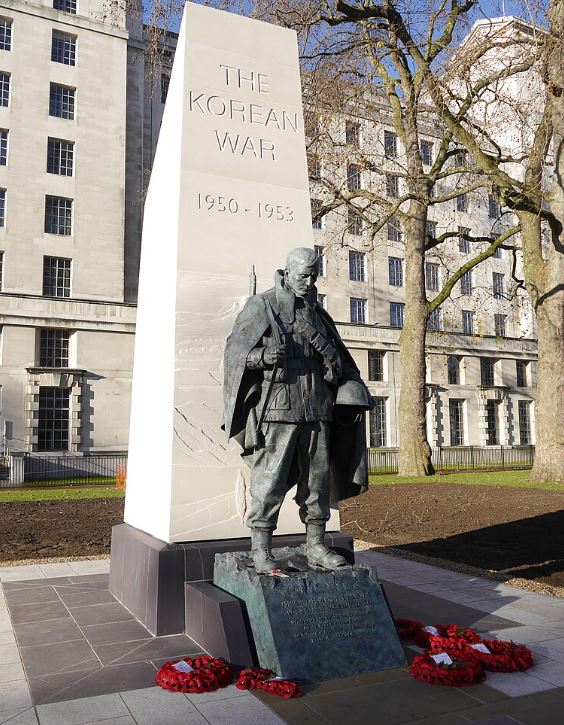
I’m interested in this idea of a forgotten war. In Britain, the Korean War never took root in the national consciousness, slipping through the cracks of collective memory like ashes on the wind. I actually visited the Korean War Memorial in London a few weeks ago. It was only erected in 2014, and was a gift from the South Korean government, rather than any initiative from our own government.
As Dannatt and Lyman poignantly observe, “the combatants were all too happy to forget a war that was unexpected in its arrival, inglorious in its execution and unresolved in its ending.” This sentiment underscores how a conflict that demanded British lives and resources never fit the heroic narrative of liberation that defined World War II, nor did it yield the decisive triumphs that anchor public remembrance. The result is a silent chasm in mid-century British history, one where soldiers’ sacrifices are relegated to footnotes, and the war’s geopolitical reverberations remain surprisingly muted in modern debates.
The book presents a comprehensive reassessment of the conflict(s). It charts the entire Korean conflict in three distinct phases: the North’s invasion, UN counteroffensive, and protracted stalemate. It challenges entrenched myths, arguing that crossing the 38th Parallel was a strategic misstep, rather than an inevitable escalation. It balances high-level strategy with vivid soldier-level prologues, humanising battles from Pusan to the Jamestown Line.
Dannatt and Lyman structure their narrative around a clear chronology and deep archival research, drawing on UK and US official histories as well as lesser-known secondary sources. The inclusion of a detailed war chronology and an Order of Battle for the US Eighth Army anchors readers, while the three soldier-centred prologues apply a personal lens to each campaign phase.
By opening each campaign phase with a soldier’s prologue, Dannatt and Lyman peel back the layers of grand strategy to reveal the intimate fears, fleeting camaraderie, and quiet heroism that defined the Korean War. In one moving vignette, a young North Korean conscript’s trembling hands clutch a cherished photograph as he braces for dawn’s advance, reminding us that behind every map line lay individual lives in flux. These humanised entry points transform sweeping operational narratives into deeply personal journeys, anchoring readers in the visceral reality of conflict. Through this detail, the authors bridge the gap between high command decisions and the raw human experience on both Rsides of the 38th Parallel.
The book includes visual and reference materials, including:
- Appendices include a concise chronology, Order of Battle, and a thoughtful index for quick reference.
- Seven strategically placed maps guide readers through shifting frontlines and supply routes.
- Thirty-one black-and-white photographs capture both the brutality of the Korean winter and moments of shared humanity.
Though rooted firmly in 1950–53, the book’s analysis echoes and acknowledges today’s geopolitical dynamics. The authors draw parallels between Chinese intervention in Korea and the modern rise of China, and between the UN’s founding promise and its current role in global crises. These reflections underscore the war’s ongoing relevance, even as geopolitical flashpoints shift from the 38th Parallel to eastern Europe and the Indo-Pacific.
Korea: War Without End wedges human stories between the machinery of high command. Its solid prose, rigorous scholarship, and modern parallels make it essential reading for students of conflict and policymakers alike. This is a standout Osprey title that restores the Korean War to its rightful place in our historical consciousness.
Rating: 5/5
 No Rerolls
2 Comments