
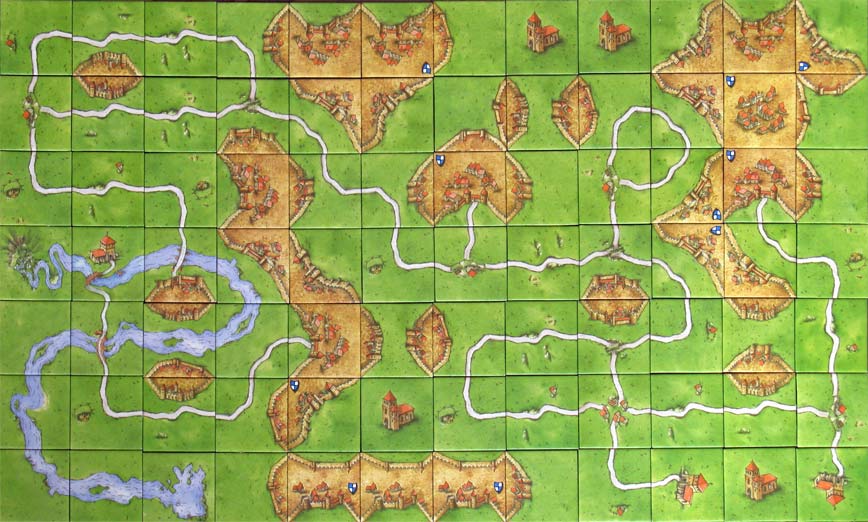
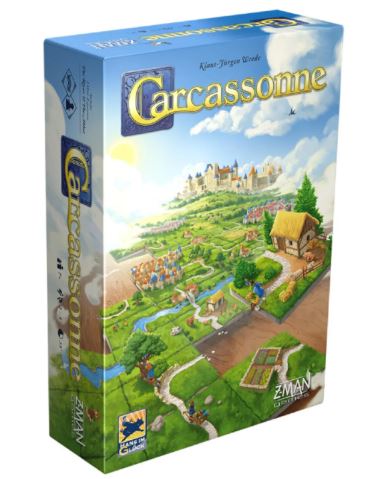
This month’s spotlight falls on Carcassonne, the tile-laying classic that’s quietly shaped the modern board game landscape for over two decades. Named after the fortified French town, Carcassonne is a game of gentle competition, spatial strategy, and the quiet satisfaction of watching a medieval countryside bloom under your fingertips. It returned to my attention recently when my wife and I played it a handful of times this month, for the first time in a long time.
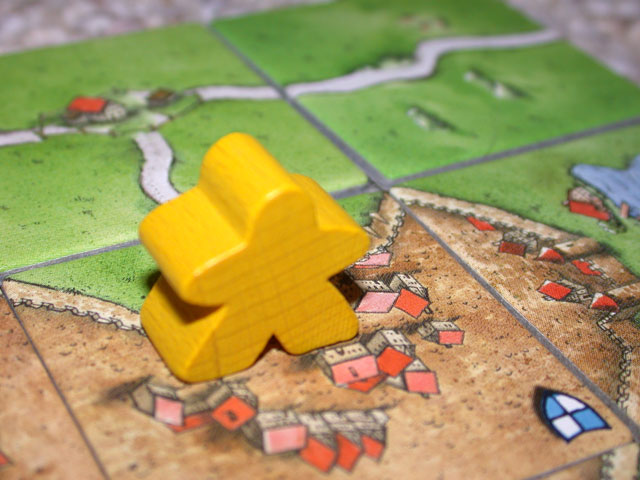
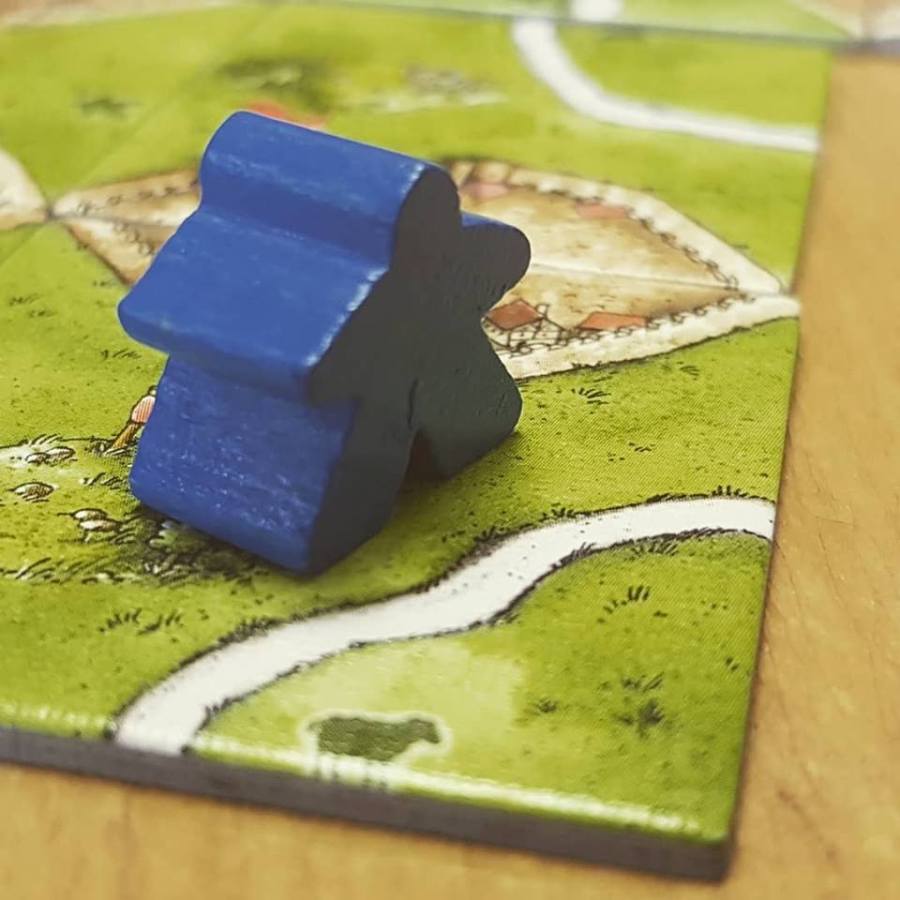
At its heart, Carcassonne is a game of placement and presence. Each turn, players draw a single tile and add it to a growing map of cities, roads, monasteries, and fields. The twist? You can place one of your limited meeples (your followers) on a feature to claim it. Once completed, that feature scores points, and your meeple returns to your supply.
It’s a game of emergent geography, where the board evolves organically. Cities sprawl, roads twist, and fields stretch into pastoral tapestries. The joy is as much in scoring as it is in shaping the land and just nudging the map toward your advantage. Of course, it’s all the better if you can do this while also subtly blocking your opponents. Sometimes I’m not subtle.
What makes Carcassonne enduring is its strategic accessibility. The rules are simple enough for family play, yet the decisions are rich. Do you invest in a sprawling city that might never finish? Do you sneak a meeple into an opponent’s territory to share their points? Do you commit to farming, knowing the payoff comes only at the end, and that this investment will lessen your tactical flexibility for the remainder of the game?
The game rewards spatial intuition and long-term planning, but never punishes casual play. It’s competitive, but rarely cutthroat.
Unlike the tension of Mothership or the chaos of Root, Carcassonne offers a meditative rhythm. Each turn is a breath: draw, place, consider. The tactile pleasure of snapping tiles into place, the visual harmony of the growing map, and the gentle arc of scoring create a mood that’s almost pastoral.
Expansions like Inns & Cathedrals or Traders & Builders add complexity, which will be appealing for some. I like complex games, but I don’t look for it in Carcassonne. I have a big box edition that came with several expansions, but I just don’t use them. I am happy with the simplicity of the original, and the most I actually add in for any game is the simple expansion, The River. I like how it gives you a starting map, built around the titular river, and then does not impact on the rest of the game. I suppose that with over 10 million copies sold, it’s clear that Carcassonne has become more than a game. It’s a ritual of play.
This month, Carcassonne stood out not for novelty, but for resonance. It’s a game that invites reflection, rewards subtlety, and turns competition into cartography. It is not a particularly complex, taxing, or challenging game; instead, it offers a nice, shared experience that’s somewhat strategic and satisfyingly soothing.
Affiliate Links:
Support us by purchasing your copy of Carcassonne via one of these affiliate links:
 No Rerolls
This was a beautiful read. Carcassonne was my first exposure to the world of board games outside of monopoly, and I’ve been a big fan for almost 20 years now. Though it rarely hits the table these days, so it’s nice to read about from someone who has been able to play it!
LikeLiked by 1 person
We hadn’t played it for ages either, but ended up playing the digital edition on a couple of train journeys, which prompted us to break out the box.
LikeLiked by 1 person