
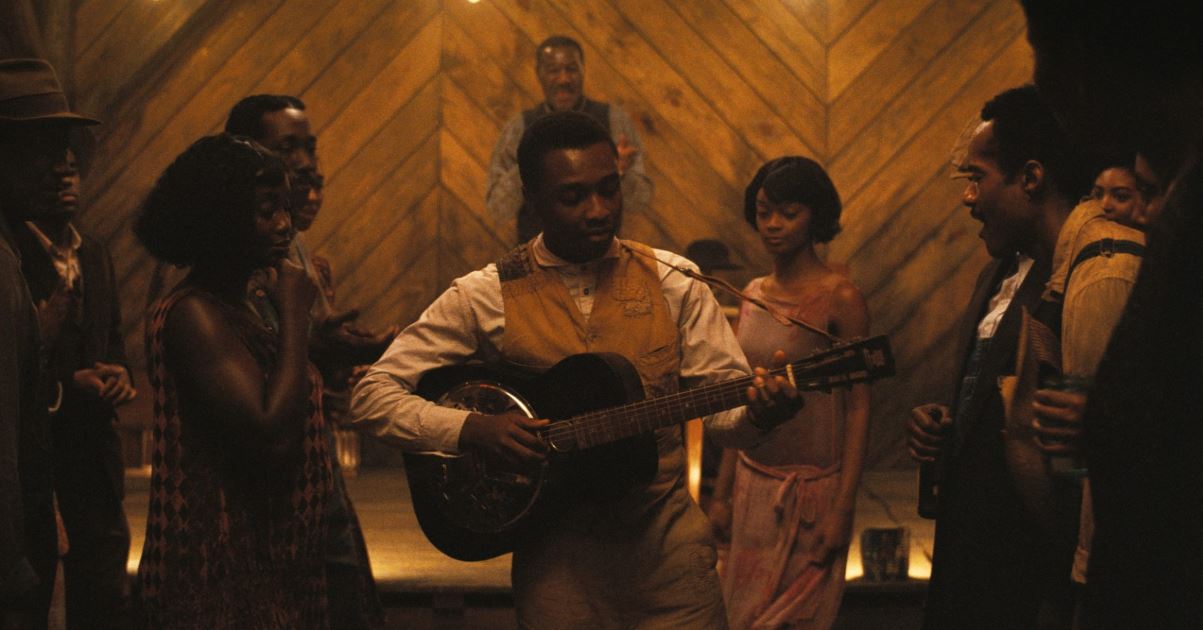
Ryan Coogler’s Sinners is the kind of film that reminds you why cinema matters. Set in the Deep South of the 1930s, it’s a lavishly serious vampire blowout that doubles as a soulful allegory for race, sin, and survival. Michael B. Jordan delivers a tour de force in dual roles as twin brothers Elijah “Smoke” Moore and Elias “Stack” Moore, whose return home plunges them into a world of blood, blues, and damnation.
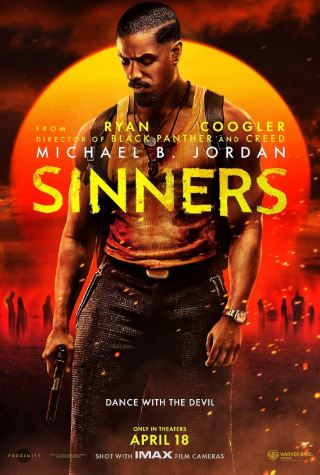
Sinners manages to be, at once, a horror film, a near-musical, and a historical epic. Coogler throws everything into the mix. You’ve got gory throat-ripping set pieces, cosmic musical interludes, and time-leaping sequences that feel like fever dreams. Yet, instead of collapsing under its ambition, the film achieves a strange cohesion: a phantasmagoria that feels both mythic and deeply human.
What makes Sinners so extraordinary is the confidence of its vision. Ryan Coogler reimagines the vampire genre as a sprawling Southern Gothic opera, where blood and blues intermingle. The film’s period detail is sumptuous: sweat-soaked landscapes, candlelit juke joints, and the faded grandeur of Depression-era towns all rendered with painterly precision. Every frame feels alive with texture, as if the South itself were a character, breathing and bleeding alongside the protagonists. I wonder if Sinners is this generation’s revolutionary vampire movie, in a similar vein to the Gen X classic, The Lost Boys.
The performances elevate this world further still. Michael B. Jordan, in his dual roles as Elijah “Smoke” Moore and Elias “Stack” Moore, delivers a masterclass in contrast. One brother is haunted and restrained, the other fiery and impulsive. His presence anchors the film, but the ensemble around him is equally magnetic, each actor embodying the tension between sin and salvation. Their chemistry makes the supernatural elements resonate on a deeply human level. They breathe life into the film’s world, adding texture and resonance to Coogler’s maximalist vision.
Hailee Steinfeld, as Mary, is the film’s quiet revelation. Her presence is understated but essential. She embodies resilience and moral clarity in a story drenched in blood and sin. Steinfeld’s performance gives the audience a human foothold, a reminder that beneath the supernatural spectacle lies a struggle for dignity and survival.
Miles Caton, in his breakout role, brings youthful vulnerability to Sammie Moore. His musical interludes are more than ornamentation; they become the soul of the film, turning his character into a symbol of cultural endurance. Caton’s wide-eyed sincerity contrasts beautifully with Jordan’s intensity, and together they create a dynamic that feels both familial and mythic.
Jack O’Connell injects grit and menace as Remmick, a figure whose apparent charisma complicates the brothers’ journey. His performance ensures the film never loses its edge, embodying the danger that lurks in every shadow. Wunmi Mosaku, meanwhile, plays Annie with quiet strength, her matriarchal presence grounding the family drama. She radiates steadiness, offering a counterbalance to the chaos swirling around the Moore brothers.
Jayme Lawson’s Pearline blends vulnerability with defiance, embodying the film’s themes of survival and resistance. Omar Benson Miller provides warmth and levity as Cornbread, reminding us of the bonds of community even in the face of supernatural terror. Delroy Lindo, as Delta Slim, is a strong presence with his trademark gravitas, lending real weight to every scene he inhabits. And Li Jun Li’s Grace Chow adds quiet nuance and unexpected strength, expanding the film’s diverse tapestry.
Together, this ensemble makes Sinners more than a vehicle for just one star. They make the film feel inhabited, lived-in, and communal. I really appreciate media where characters feel part of the world they inhabit, rather than exceptional beings that happen to be in the general area of the action. Each supporting actor contributes a vital thread, weaving a story that is as much about collective survival as it is about individual heroism.
Music, too, is woven into the film’s DNA. The score becomes a narrative force, transforming vampirism into a metaphor for cultural survival. Gospel hymns, blues riffs, and orchestral swells punctuate the story, turning moments of horror into something transcendent. Few films dare to use music this boldly, and fewer still succeed as spectacularly.
Perhaps most impressive is the film’s cultural resonance. Sinners is unapologetically black in its storytelling, reclaiming a genre often dominated by Eurocentric tropes and infusing it with themes of systemic oppression, resilience, and redemption. It’s a maximalist vision, yes, but one that feels necessary. It’s an epic that insists on telling its story in full, without compromise.
For all its brilliance, Sinners isn’t flawless. That maximalist ambition occasionally tips into excess, with narrative threads multiplying faster than they can be resolved. The film’s mythology is rich and layered, but at times it feels overexplained, spelling out allegories that might have been more powerful left in shadow.
The tonal swings can also be jarring. Coogler’s blend of horror, musical spectacle, and historical drama is daring, but the transitions aren’t always seamless. A throat-ripping set piece might be followed by a gospel interlude, and while both are individually striking, the juxtaposition can feel dissonant. One friend, when I mentioned that I’d recently rewatched this movie, asserted that this felt like two separate movies; that he’d have liked to experience more of the gangster-focused first half of the movie more than the more supernaturally-fixated second half. I’m not sure that I agree, but I certainly see the massive difference in tone between different sections of the movie.
Finally, the sheer density of ideas means some characters don’t get the space they deserve. The supporting cast is strong, but a few arcs feel truncated, as if sacrificed to the film’s larger vision. It’s a reminder that even the boldest epics must choose which stories to tell in full.
In the end, Sinners feels like the rare film that justifies its ambition. Ryan Coogler swings for the fences, and while not every choice lands perfectly, the sheer audacity of the vision makes it unforgettable. The ensemble cast, the lush period detail, and the fusion of horror, music, and allegory combine into something that feels both mythic and immediate.
On balance, it’s easy to say that Sinner was my favourite film of 2025. It’s messy, it’s maximalist, but it’s also alive in a way few blockbusters dare to be. Most importantly, it is a reminder of how cinema can still surprise, unsettle, and inspire.
 No Rerolls
Great review of an amazing movie!
We almost missed this, catching it in one of the last weeks it was out last year.
When we finally did go see it, we were gobsmacked with how good it was.
LikeLiked by 1 person
I love Sinners, that is all
LikeLiked by 1 person
‘Nuff said.
LikeLike