
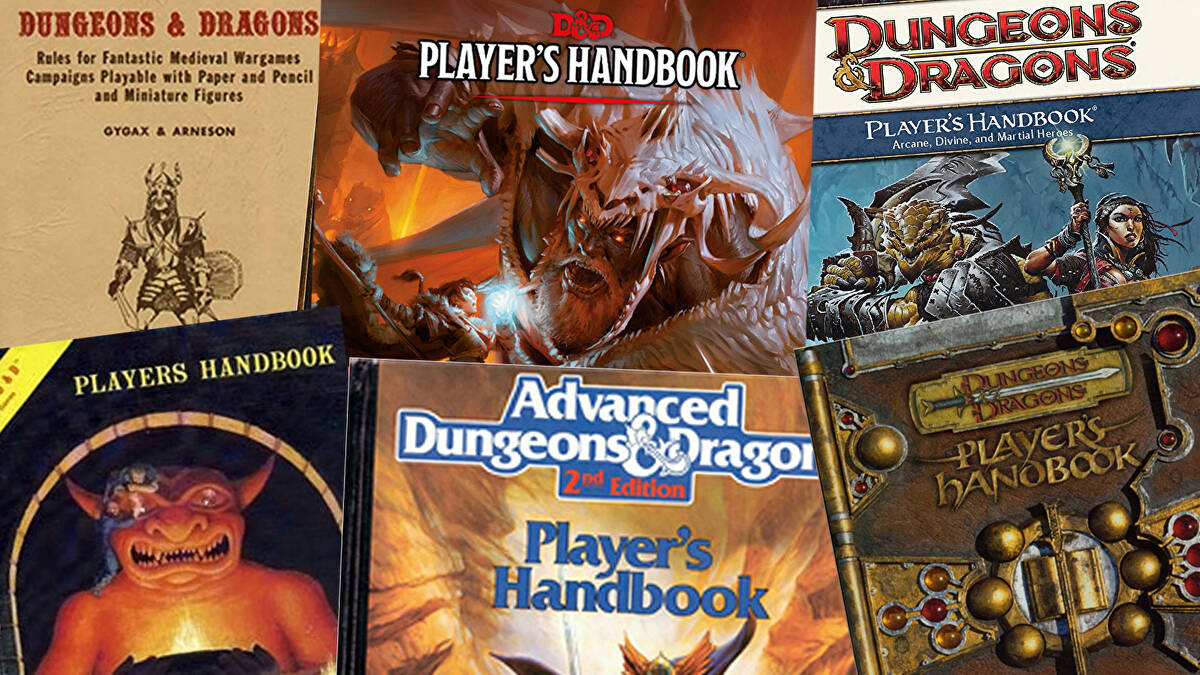
Dungeons & Dragons 5E is probably the most widely known RPG today. Is it the best? I’d say no, but then I also listed it as my second favourite game of 2021, so I clearly enjoy it.

The very fact that we talk about “5E” tells you that the design of the self-described “world’s greatest roleplaying game” has been an iterative process. Today, go to any RPG forum or group and you’ll find it full of people eager to tell you why their edition of choice is just better than any other. Certainly, in my own interactions within the hobby, I’ve spoken to people who think 5E is the best edition of Dungeons & Dragons, and others who despise it. Most of the people I deal with locally, however, don’t really have a point of reference on that. 5E was their entry point and it’s all they really know. I think this will be true of many, many people.
The thing is, whatever version they, or you, or I prefer, this edition is one that has seen huge breakout success for Wizard of the Coast. The mainstream awareness and acceptance of the game has increased hugely, thanks in part to a range of media.

First, the general raising of the profile of fantasy as a genre was, to me, a big factor. Then shows like Stranger Things (yay!) and The Big Bang Theory (boo!) Showing character playing the game. Then, finally, successful, high-production live play content led by Critical Role. I think there are way better live-plays, but there’s no denying that Critical Role has been incredibly influential. My point is that the timing of 5E was really good in terms of hitting just when video content became easier to produce and access, and streaming became a bigger thing.
As such, Wizards have found themselves with a lot of new players who hadn’t taken the plunge into tabletop roleplay before and, as such, have never experienced an edition change. That makes things interesting.

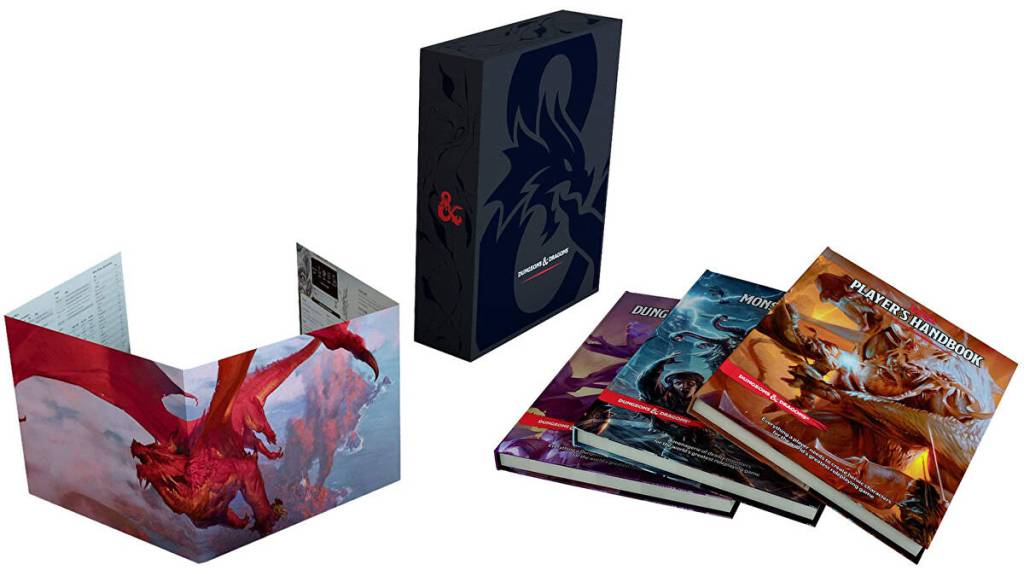
Now, it’s not like 5E is going anywhere right away. They’ve just released a new starter set (pictured above) and have confirmed that there won’t be a major shakeup of the rules until 2024, the 50th anniversary of the original game.
Wizards of the Coast intends to release new, updated versions of the three core books (the Player’s Handbook, Monster Manual, and Dungeon Master’s Guide) in 2024, but they seem to very carefully avoid labelling this as a new edition. The word they are using is “evolution”. The feature they are stressing is it being “backwards compatible”. To me, this shows an awareness that the success of 5E following the previous dominance of Pathfinder over 4th edition has put them on something of a tightrope. They’ve done damn well to build up their playerbase and they want to move the game forward (and sell more books, of course) without throwing that away.
Edition changes fragment player bases, even if the new edition is a marked improvement over what came before. People have made financial and emotional investments in the game and see an edition change as a repudiation of that. Is this a fair assessment? Maybe. I’m guilty of overreacting to edition changes myself. My refusal to play Age of Sigmar seems churlish now that it’s my favourite miniatures game. My reticence at the release of the third edition of Age of Sigmar was likewise premature, given that it’s the best edition we’ve seen. And, remember, we’re talking about tabletop games here. These aren’t video games where the publisher turns off the multiplayer servers and makes your game worthless and unplayable. You can break out the books and dice for years to come. Nobody is taking anything away from you.
So, then, is this going to be a 5.5, rather than a 6E? probably. Yeah, it seems that way. Incremental changes have been happening since 2015. New rules for the Ranger class and racial rule changes have been two of the bigger, more noticeable ones. Even just how adventures are written and presented has changed over the past 7 years. That’s fine. It’s natural that as the writers become more familiar with the system and player preferences shift, things adapt. It’s why we needed a new starter set.
Do we need a new edition, then?
Maybe.
Firstly, there’s no denying that time has passed. About as much time as you’d normally expect for an edition of Dungeons& Dragons, actually. Here’s a chart from Wikipedia showing the lengths of different editions:

Over time, things change. Player tastes and expectations change. Design sensibilities change. The fact that we’ve seen a gradual evolution is evidence of both of these examples. The number of discarded Unearthed Arcana changes tells you there are ideas that WotC wants to play around with, too. It makes sense financially, too. If they’re able to foster a positive transition, think of all the books they could sell.
On the other hand, is 5E really broken? If not, why fix it? There’s a thriving third-party ecosystem that supports the game and generates a lot of good will and, one imagines, a far few sales. The release schedule has also been toned down considerably from the 3E days, with the content being released at a much more gradual pace and not the flood that we saw before. That’s likely helped avoid edition fatigue.

This hedging of bets with a 5.5 edition is probably the right approach at this time. It gives a chance to remix the system, introducing some new ideas without alienating the army of new players that WotC has amassed. I imagine this would also be eased into to some extent. 5E was developed originally as “D&D Next” and underwent extensive public playtests alongside the development process. There’s no reason that this shouldn’t continue. Heck, it’s been going on throughout 5E anyway via the Unearthed Arcana releases. That’s been a really nice touch for me, as it’s helped to give some insight into what the designers at WotC are considering as they further refine the game.
I suppose with a 2024 release and an expectation of significant public playtests, we’re likely to hear more pretty soon. It’s an interesting position that Wizards of the Coast find themselves in, and it’s one that has been created by their incredible success with this edition of D&D. I imagine they will try to build on this by engaging with prominent content creators in anticipation of the new edition and having them run games that highlight positive changes, whilst also stressing that the core game will likely remain pretty similar to what we know now. It’s a great opportunity for another Critical Role book to kickstart the new(ish) edition…
Sorry, I vomited a little at the last bit.

Jokes aside, and even as someone who would much rather play a more interesting RPG, I’m pretty excited to see where WotC takes us over the next couple of years. I do hope they are able to strike a good balance and not lose what they’ve built up.
 No Rerolls
I don’t think you can really compare an edition change of D&D to a miniatures based game of Warhammer. When GW makes a rule change that makes scores of your minis that took hours upon hours to paint essentially useless, that’s soul crushing! With D&D, you really just need to buy a few more books again and/or tweak some old characters/adventures where needed.
LikeLiked by 1 person
It’s a fair point, but it’s the point of reference I had for actually caring about edition changes.
LikeLiked by 2 people
Thanks for the in depth analysis you’ve provided here. Definitely offers some food for thought.
I’m honestly a bit frustrated that the announcement of 5.5/6/”ONE” is reminiscent of buying textbooks as a university student where they keep coming out with updated versions so that you have to spend more money on the most relevant book when there was very little wrong with the last one.
I’m also a bit nervous about the current situation where the DM can’t crit. Still time to work out any of these issues though!
LikeLike