
In this month’s spotlight, we’re turning our attention to King of Tokyo a classic dice game that is far from one of my favourite games, but has continued to make it to the table quite regularly. Most of these plays have been with children and I’ve had a great time playing this game with kids over the past few months. Get ready for a city-stomping good time as we explore the monstrous delights of this thrilling board game.
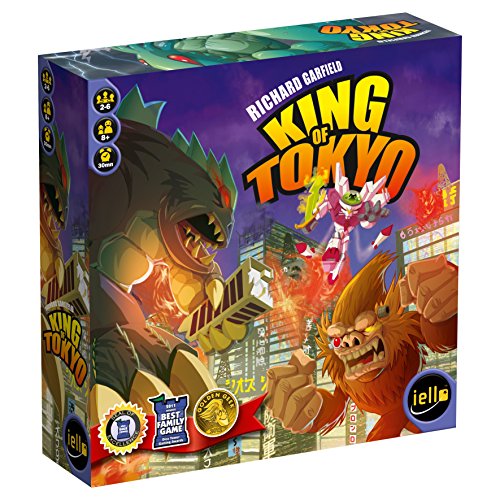
Published by IELLO Games in 2011, King of Tokyo was created by Richard Garfield. If that name is familiar to you, it’s because he’s also the chap behind such other titles as RoboRally, Netrunner, Keyforge, and a little-known card game called Magic: The Gathering. King of Tokyo puts players in the oversized shoes of giant monsters vying for control of the Japanese capital. With a mix of strategy, luck, and bloody-mindedness, this game has become a staple in many gaming circles, offering accessible gameplay with just a little bit of depth that keeps players coming back for more.
The premise is simple: players take on the role of colossal creatures and compete to either be the last monster standing or the first to reach 20 victory points. The city of Tokyo serves as the battleground, with monsters trading blows, gaining points, and buying upgrades.
Central to the excitement of King of Tokyo is the dice-rolling mechanic. As a dice game, this should be unsurprising, I suppose. Each turn, players roll six custom dice, hoping to land on attacks, hearts, energy, or points. Once you’ve taken Tokyo and find yourself trying to keep it for yourself, the decision to stay in there and weather the attacks of other monsters or to retreat and heal up adds a strategic layer to the game. Staying in the city makes you a target but also really helps you rack up those points. The joy of rolling those dice and watching the chaos unfold adds an element of unpredictability that keeps everyone on the edge of their seats.
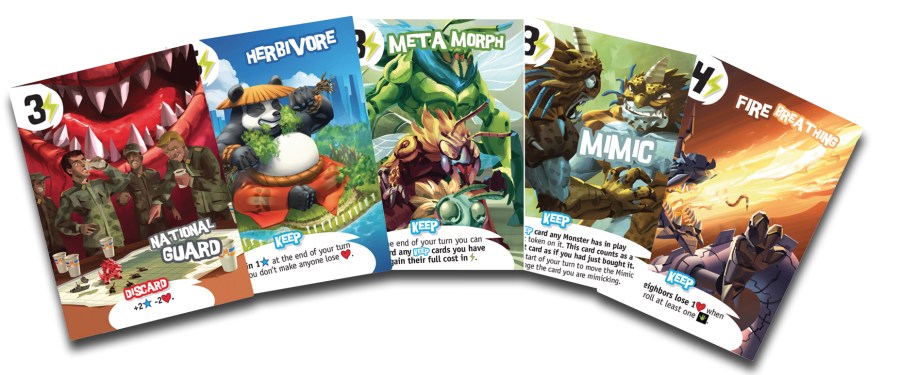
To spice things up, the game features a deck of cards that can be purchased with energy points earned during the game. These cards introduce new abilities, enhancements, and one-off events, allowing players to evolve their monsters in unexpected ways. The combinations of these powers adds a cool twist to every playthrough, ensuring no two games are ever quite the same.
King of Tokyo is an accessible game and, although all dice games are fundamentally based on luck, there is some strategic depth here. The rules are easy to grasp, making it an excellent choice for casual or younger gamers. There are a couple of slightly fiddly abilities that come on the cards, but you can always omit these if they’re going to cause confusion. The colourful artwork, thematic design, and quick gameplay make it a great choice for game nights or introducing newcomers to the world of modern board gaming. There are also some variants with alternative artwork if you’re looking for a slightly different aesthetic.
I’ve seen King of Tokyo described, perhaps facetiously, as “Yahtzee with monsters.” That’s a fair comment, actually. I wouldn’t say that the game really stands tall as a timeless classic, but it brings laughter, competition, and occasional frustration to the table. Its combination of accessible gameplay, strategic depth, and the joy of rolling dice ensures that it remains a staple in the collections of many gamers. As I’ve already mentioned it also works really well with kids.
Roll the dice, unleash your monstrous might, and let the city-stomping madness begin!
Affiliate Links:
- Wayland Games (standard edition)
- Wayland Games (big box edition)
- Amazon (standard edition)
- Amazon (big box edition)
 No Rerolls
Sounds like they had some tip of the hats too the old Rampage games i grew up with
LikeLiked by 1 person
You know, I hadn’t really considered that, but yeah, that does feel right.
LikeLiked by 1 person