
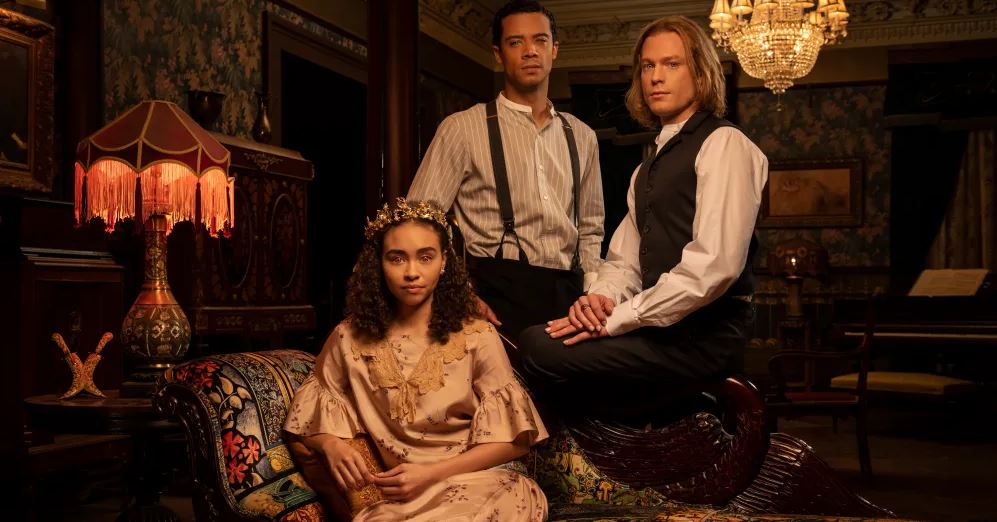
AMC’s Interview with the Vampire sinks its teeth into Anne Rice’s Gothic legacy with a confidence that feels both reverent and revolutionary. From the first frame, the series luxuriates in decadence, with Rice’s beloved New Orleans rendered as a fever dream of jazz, shadows, and whispered promises of immortality. This isn’t a timid adaptation; it’s a bold resurrection, one that dares to reframe Louis’ story through race, queerness, and memory while never losing sight of the intoxicating horror at its core. What emerges is a tale as lush as it is tragic, a drama that seduces the viewer with beauty before revealing the rot beneath.
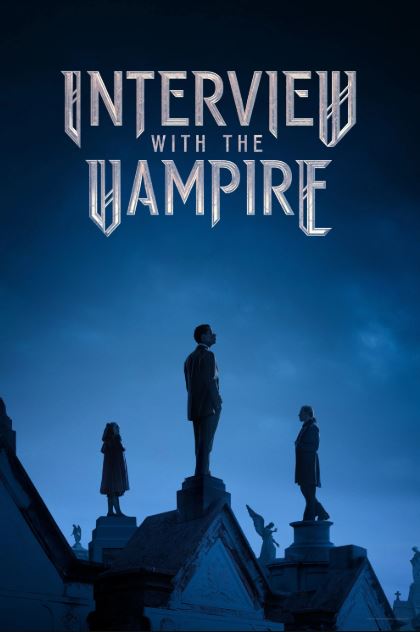
Let’s just make it clear from the get-go: I loved it.
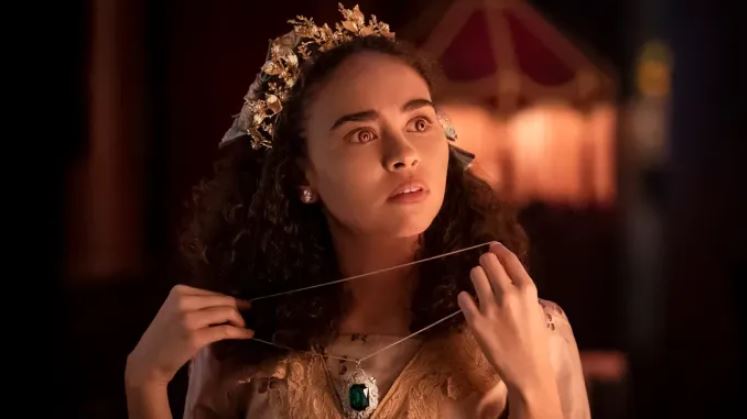
If Interview with the Vampire has a heartbeat, it is Claudia. Bailey Bass delivers a performance that is both ferocious and fragile, embodying the contradictions of a child trapped in eternal adolescence. Her presence electrifies the narrative, forcing Louis and Lestat’s toxic romance into sharper relief. Claudia is more than a fledgling vampire; she is a catalyst. She is a mirror, and a rebellion. Every scene she inhabits brims with urgency as she hungers for agency and rages at confinement. Her life (unlife?) is a desperate search for identity.
What makes Claudia unforgettable is the way the show allows her to be more than a tragic figure. She is witty, defiant, and devastatingly human, a reminder that immortality is not liberation but a prison with gilded bars. In her, the series finds its sharpest emotional edge: the tragedy of youth denied, the horror of desire unchecked, and the beauty of a character who refuses to be diminished. Claudia highlights the cracks in Louis and Lestat’s bond, but it goes further; she shatters them, and in doing so, she becomes the season’s most luminous star.
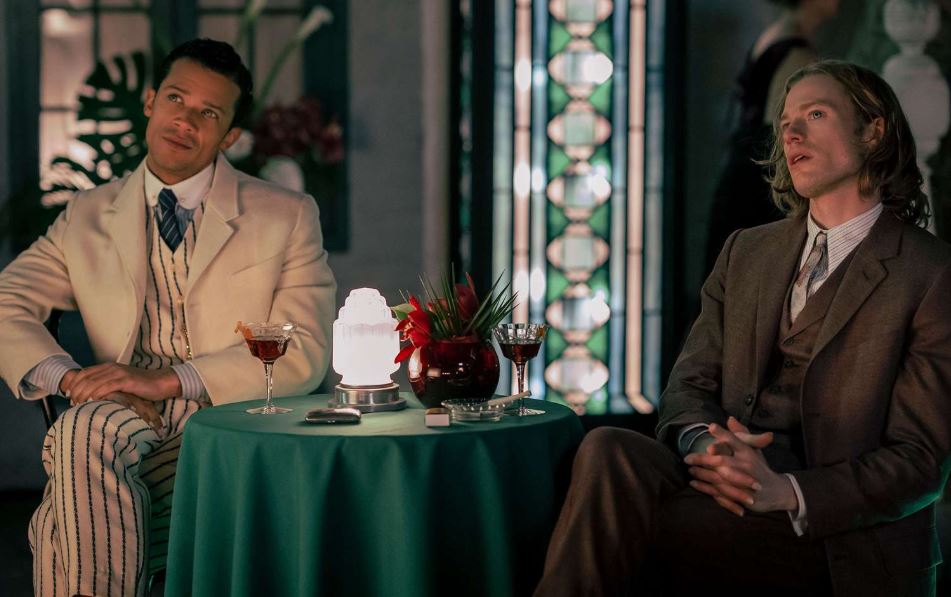
At the core of Interview with the Vampire lies the volatile romance between Louis and Lestat, a relationship that burns with equal parts seduction and cruelty. Jacob Anderson’s Louis is a man perpetually caught between yearning and despair, his restraint and haunted narration giving the story its tragic gravity. I wasn’t a fan of Anderson as Grey Worm in A Game of Thrones, but I found him compelling in this role. Opposite him, Sam Reid’s Lestat is flamboyant, magnetic, and terrifying. He’s a predator cloaked in charm, whose every gesture oscillates between affection and manipulation.
Together, they embody the Gothic paradox: love as both salvation and damnation. Their intimacy is intoxicating, yet it curdles into violence and control, a toxic dance that the series refuses to soften. Claudia’s arrival sharpens this dynamic, exposing the fractures in their bond and forcing Louis to confront the cost of his devotion. Watching them together is like witnessing a storm: beautiful, destructive, and impossible to turn away from. It is this tension, this push and pull of desire and ruin, that makes the season so compelling.
And yet, what makes Interview with the Vampire so intoxicating is not only its characters but the world they inhabit. The series drenches New Orleans in decadence and decay, capturing the city as both a playground and a prison. Jazz spills through the streets, candlelight flickers against velvet drapes, and every frame feels steeped in Southern Gothic grandeur. The cinematography revels in contrasts – beauty and rot, intimacy and spectacle – while the score swells with operatic intensity, underscoring the drama with a sense of inevitability.
This atmosphere is more than decoration; it is the lifeblood of the story. The lush visuals mirror the allure of vampirism, while the shadows remind us of its cost. The show’s style is unapologetically rich, leaning into excess without tipping into parody. It invites viewers to surrender, to be seduced by its beauty even as it whispers of ruin. In this way, Interview with the Vampire becomes an immersion into a world where immortality gleams as brightly as the chandeliers or New Orleans, and corruption lurks in every corner.
Beneath this sumptuous style and the volatile relationships, Interview with the Vampire thrives on its thematic richness. Immortality here is no gift; it is a curse that magnifies desire, grief, and isolation. Louis’ struggle embodies the weight of eternity, a man who cannot reconcile the hunger of his new existence with the conscience of his old life. Lestat, by contrast, revels in the freedom of vampirism, exposing the seductive danger of unchecked power. Their clash is not just personal but philosophical: what does it mean to live forever when humanity slips away?
The series also reframes Anne Rice’s world through lenses of race and queerness, making Louis’ identity as a Black man in 1910s New Orleans central to the narrative. His vampirism becomes entangled with questions of visibility, oppression, and belonging, while his relationship with Lestat is unapologetically queer, presented with a frankness that feels both modern and true to Rice’s spirit. Claudia’s arc adds yet another layer, and her eternal youth becomes a metaphor for agency denied. It’s a reminder of how power and desire can trap even as they liberate.
Finally, the framing device of the interview in Dubai underscores the slipperiness of memory. Louis’ story is not a simple confession but a contested narrative, one that forces viewers to question truth, perspective, and the stories we tell ourselves to survive. In this way, the show becomes a meditation on identity, history, and the haunting persistence of desire.
The true strength of Interview with the Vampire lies in its willingness to take risks and trust the audience to follow. Rather than offering a safe, nostalgic retelling, the series leans into reinvention. It reshapes Louis’ identity, reframes Claudia’s arc, and embraces queerness with unapologetic clarity. These choices don’t dilute Anne Rice’s vision; they sharpen it. They make the story resonate in ways that feel urgent and contemporary.
Equally impressive is the show’s command of tone. It balances operatic excess with moments of piercing intimacy, creating a rhythm that feels both theatrical and deeply human. The production design and cinematography are beautiful, but they also very much serve the narrative, amplifying the tension between allure and decay. Even the interview framing device, with its layers of memory and revision, adds a cerebral edge that elevates the drama beyond simple Gothic spectacle.
Most importantly, the series understands that vampires are not just monsters but metaphors. By weaving themes of race, desire, and power into its fabric, it transforms a familiar tale into something vital. That thematic ambition, paired with fearless performances and a lush aesthetic, ensures that season one doesn’t merely succeed, but thrives.
It should be noted, however, that for all its triumphs, Interview with the Vampire is not without its imperfections. At times, the pacing falters. Episodes can luxuriate so deeply in atmosphere and dialogue that momentum can feel uneven at best. The series’ operatic tone, while intoxicating, occasionally tips into melodrama, risking alienation for viewers less attuned to its Gothic excess.

The framing device in Dubai, though conceptually rich, sometimes interrupts the flow of Louis’ story, pulling the audience out of the lush immediacy of New Orleans. And while the show’s commitment to intensity is admirable, its relentless emotional pitch leaves little room for quieter moments of reflection.
Yet these weaknesses are minor blemishes on an otherwise dazzling canvas. They do not diminish the series’ impact. They merely remind us that ambition often comes with overreach. In the end, the flaws feel less like failures and more like the natural consequence of a show unafraid to bite deeply into its source material.
Interview with the Vampire’s first season is a rare achievement: an adaptation that honours Anne Rice’s Gothic vision while daring to reinvent it for a new era. It thrives on risk, revels in atmosphere, and delivers performances that linger on the mind long after the credits fade. Louis and Lestat’s destructive romance provides the storm, but it is Claudia who emerges as the lightning: brilliant, furious, and unforgettable.
By embracing queerness, race, and the tragedy of immortality, the series transforms familiar vampire lore into something vital and resonant. Its flaws are minor compared to its ambition, and its ambition is what makes it extraordinary. Season one retells a story whilst updating it for a new generation, ensuring that Rice’s vampires still have teeth. And thanks to Bailey Bass’ Claudia, they bite with tragic brilliance.
 No Rerolls
3 Comments