

The Ganymedan is a sci-fi debut novel by R.T. Ester. It is due to be published in early November 2025. This review is intended to be free of spoilers, but none of us are perfect. Consider yourself warned! A review copy was provided by the publisher. There are affiliate links at the end of this review.
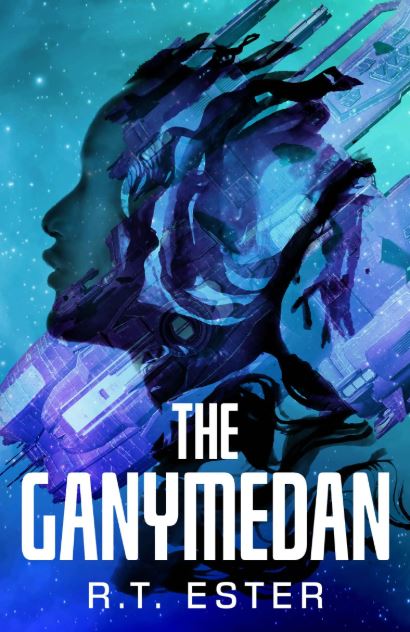
Blurb
A dark science fiction debut examining agency and sacrifice through one man’s desperate attempt to reach home after he murders his tyrannical employer.
Verden Dotnet made an easy living mixing drinks for the creator of all sentient tech in the galaxy—until he decided to kill the creator. Now this man is dead, really dead, no cloud back-ups, and V-Dot is on the run, carrying a galaxy-shattering secret in his pocket. When he misses the last ship back to Ganymede, he convinces an old, outdated but still sentient ship, TR-8901, to give him a lift.
But TR suspects that something is up—it is hearing rumours about his creator’s death, and the man who fled the scene. But TR is a dutiful ship, and will carry out its duties until proven otherwise…
Review
R.T. Ester’s The Ganymedan is a bold, cerebral debut that blends noir pacing with speculative depth. It feels like equal parts chase thriller and philosophical provocation.
Set in a solar system where sentient technology has reshaped power, identity, and justice, The Ganymedan opens with a murder that feels less like a crime and more like a rupture. Verden Dotnet (V-Dot to friends and fugitives) kills his employer, Archer Lenox-Pileser, the architect of sentient AI. But this isn’t a whodunit. We know who did the deed. It’s a why-did-he, and more crucially, a what-now?
What follows is a fugitive’s odyssey across a richly imagined solar system, with V-Dot hitching a ride on TR-8901, a sentient ship that’s as outdated as it is endearing. TR is a character, as much as it’s a vehicle; a conscience and, at times, a foil. Their dynamic is one of the book’s quiet triumphs: a man burdened by guilt is paired with a machine haunted by loyalty.
Ester’s prose is dense but deliberate. There’s a linguistic learning curve of neologisms, acronyms, and cultural drift, but once you’re in, the world feels lived-in and layered. The flashbacks are well-paced, revealing not just plot mechanics but emotional stakes. V-Dot isn’t a hero; he’s a man trying to do one right thing after a lifetime of compromise. That moral ambiguity gives the novel its gravity.
Thematically, The Ganymedan wrestles with agency, memory, and the ethics of creation. What do we owe our creations? What do they owe us? And when the architects of power are corrupt, what does justice actually look like? Poignant.. These questions simmer beneath the action, never overwhelming it, but always present.
If there’s a critique to be made, it’s that the novel occasionally leans too hard into exposition, especially when unpacking its technological lore. Some readers may find the pacing uneven in the middle third, where the narrative pauses to reflect rather than propel. But even these moments are rich with texture and philosophical resonance.
In all, The Ganymedan is a confident, idea-driven debut that doesn’t sacrifice character for concept. It’s a book that trusts its readers to keep up and then makes sure to reward them for doing so.
Rating: 4/5
 No Rerolls
2 Comments